
Pool Cage Rescreening Broward County
We rescreen pool cages and lanais for homeowners across Broward County, replacing torn and sun-brittled panels with mesh suited to each property.
- Free Written Estimate
- Fast Scheduling
- Built for Florida Weather
- Licensed & Insured
- Free Written Estimates
Request Your Free Estimate
Tell us about your screen enclosure and get a free written estimate.
- Free No-Obligation Estimate
- Fast Response Times
- No Pressure Consultation
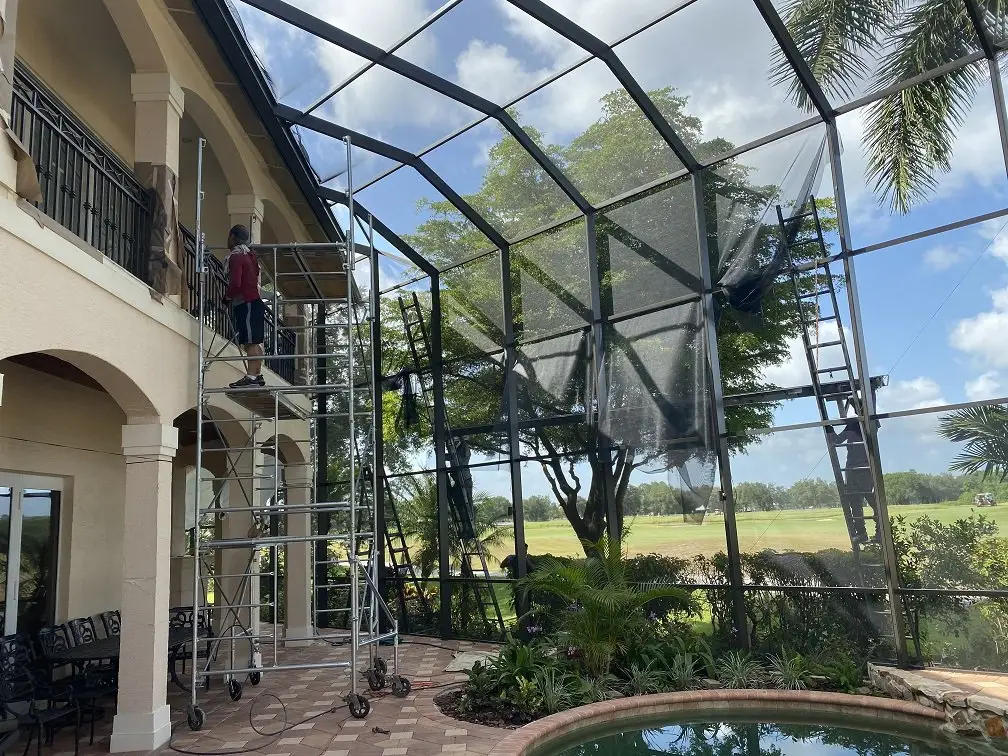
Broward County runs from the Fort Lauderdale coastline inland to Coral Springs and Pembroke Pines, and pool cages here deal with a long, humid season, frequent summer storms, and salt-laden air that travels further inland than most homeowners expect. Screen mesh that looked fine in spring often shows pinholes, loose spline, or sagging panels by the time hurricane season ends, especially on cages that have not been touched since they were built.
We have worked on cages across Broward County, from older enclosures in Hollywood and Davie to newer construction in Miramar and Sunrise, and the patterns repeat: UV-brittled screen on the south and west exposures, corroded spline track near pool decks, and panels torn by wind-driven debris. We assess each cage on site, confirm what the frame and track can still hold, and rescreen with materials matched to the home’s exposure and HOA requirements.
Why Broward Screens Wear Uneven
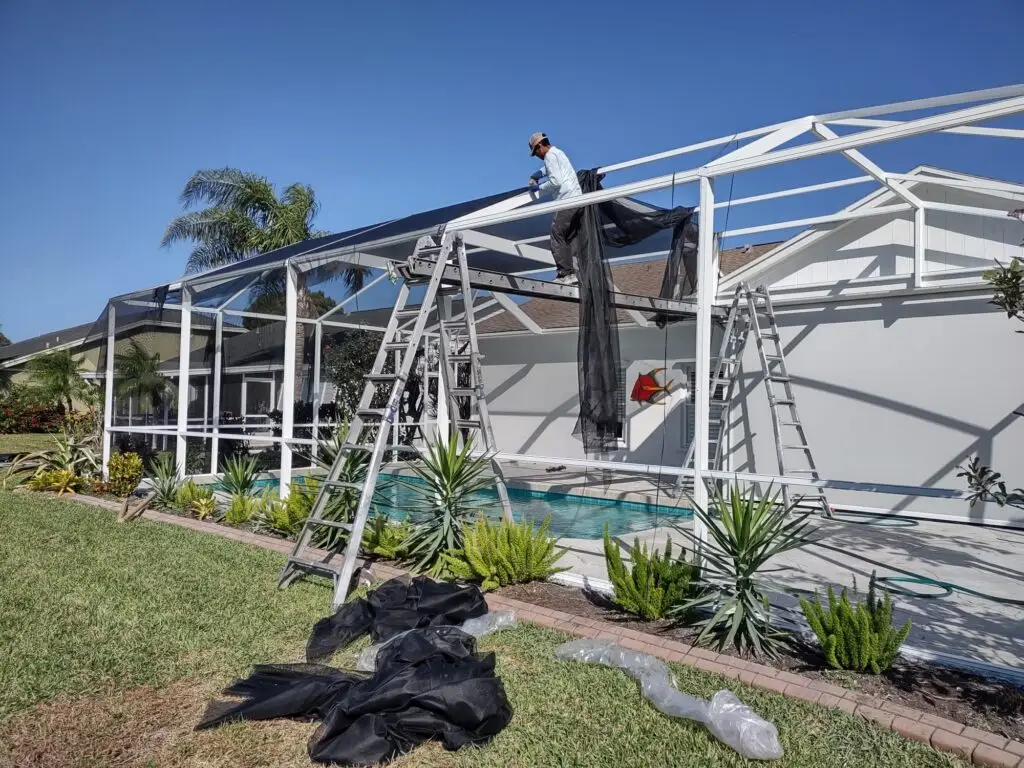
On a single cage, the south- and west-facing panels usually fail first. UV exposure is directional, and Florida sun breaks down polyester screen fibers faster on the sides that take direct afternoon light. A cage in Plantation or Davie may show brittle, discolored mesh on one wall while the shaded north side still looks serviceable after years of the same weather.
Proximity to water changes the timeline further. Homes near the Intracoastal in Fort Lauderdale or along canals in Hollywood and Miramar deal with salt drift that settles into spline channels and corrodes fasteners, even blocks from the ocean. Inland communities like Coral Springs see less salt but more wind-driven debris from summer storms, which tears screen at the corners and along the frame.
Add in panel age and prior repairs. Many cages in Sunrise and Pembroke Pines have had patches added over the years, and patched sections age differently than the original mesh. By the time we inspect a cage, it is common to find three or four distinct wear patterns across one structure, which is why rescreening is almost never a uniform job panel to panel.
Our Rescreening Process, Step by Step
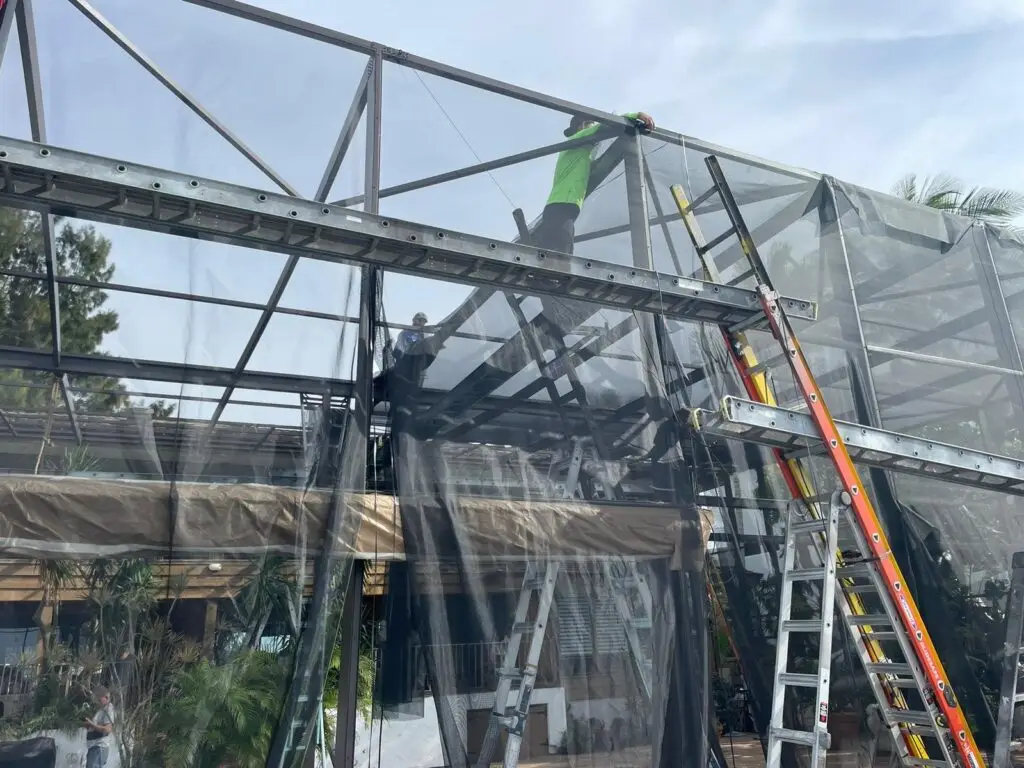
We start with a full walk of the cage, panel by panel, checking spline channels, frame fasteners, and the condition of the aluminum itself. On older enclosures, especially those built before recent code updates, we also look for stress points where panels meet the frame, since that is where screws loosen and tracks warp over time.
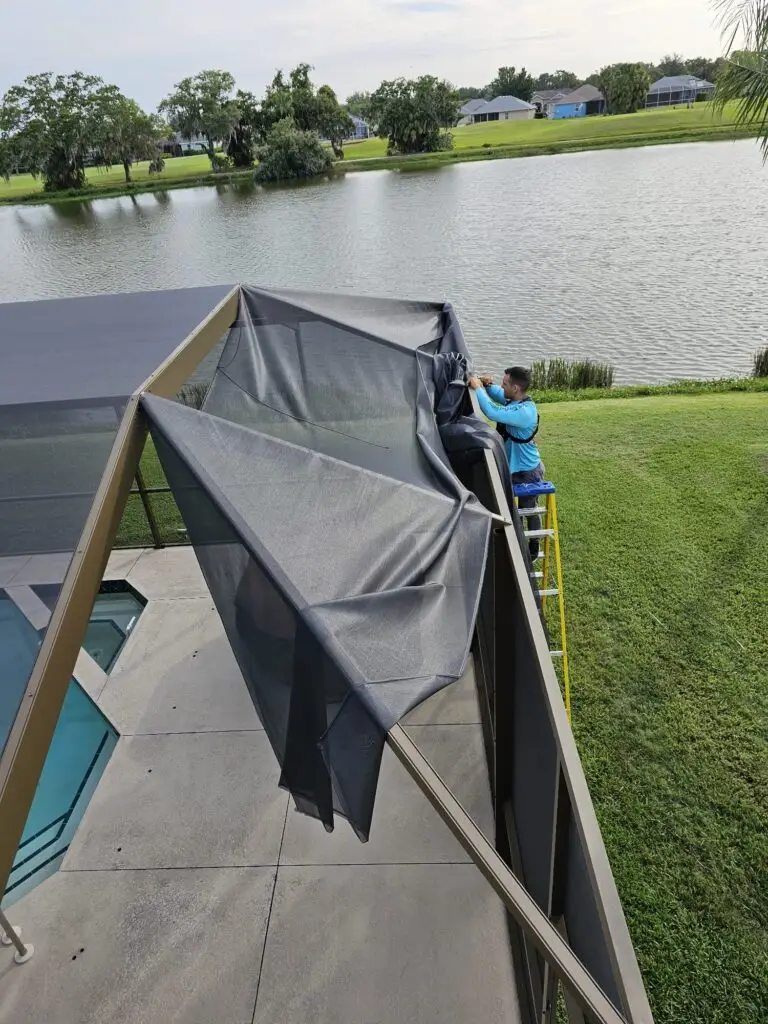
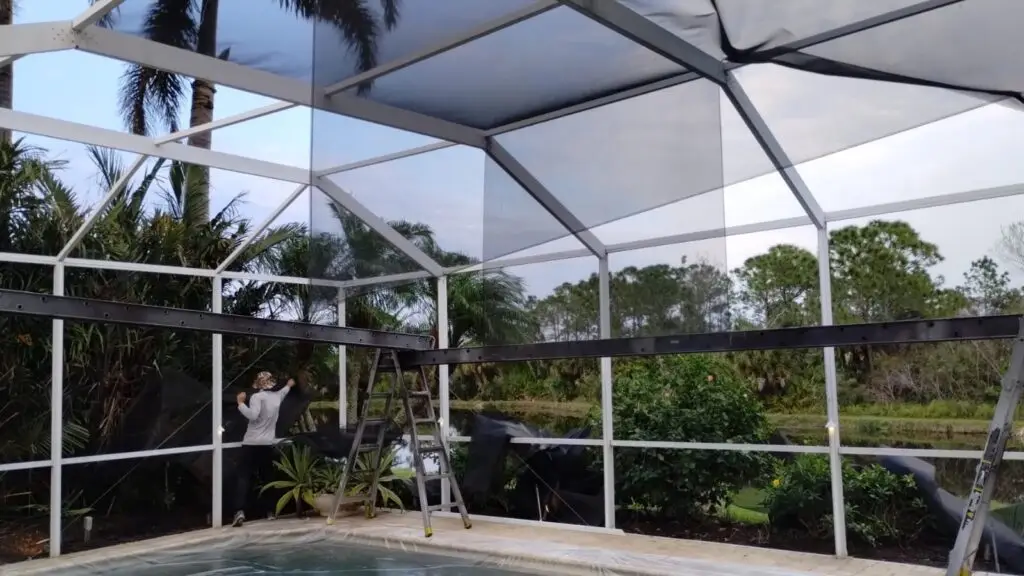
Failed screen is cut out and spline is removed from the track. If the spline channel is cracked or the aluminum is bent, we address that before any new mesh goes in, since rescreening over a damaged track leads to early failure. Homeowners choose between standard fiberglass mesh, heavier pet-resistant mesh, or solar screen depending on sun exposure and how the lanai is used.
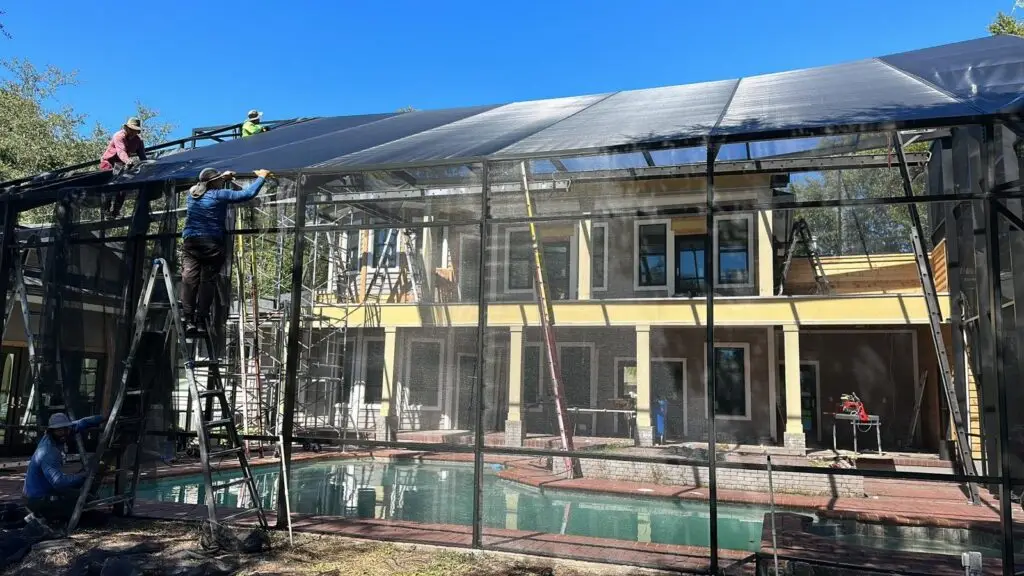
New screen is cut oversized, rolled into the track with fresh spline, and trimmed flush. We reinstall panel hardware, test each section for tension and fit, and clean up debris before walking the cage again with the homeowner. Most rescreening jobs, depending on cage size and panel count, run from a single day to a few days of on-site work.
- Inspection of mesh, spline, and track condition on every panel
- Removal of failed screen and damaged spline
- Mesh selection: standard, pet-resistant, or solar screen
- Reinstallation with new spline and hardware checks
- Final walkthrough and cleanup before sign-off
Scheduling, Access, and HOA Approvals
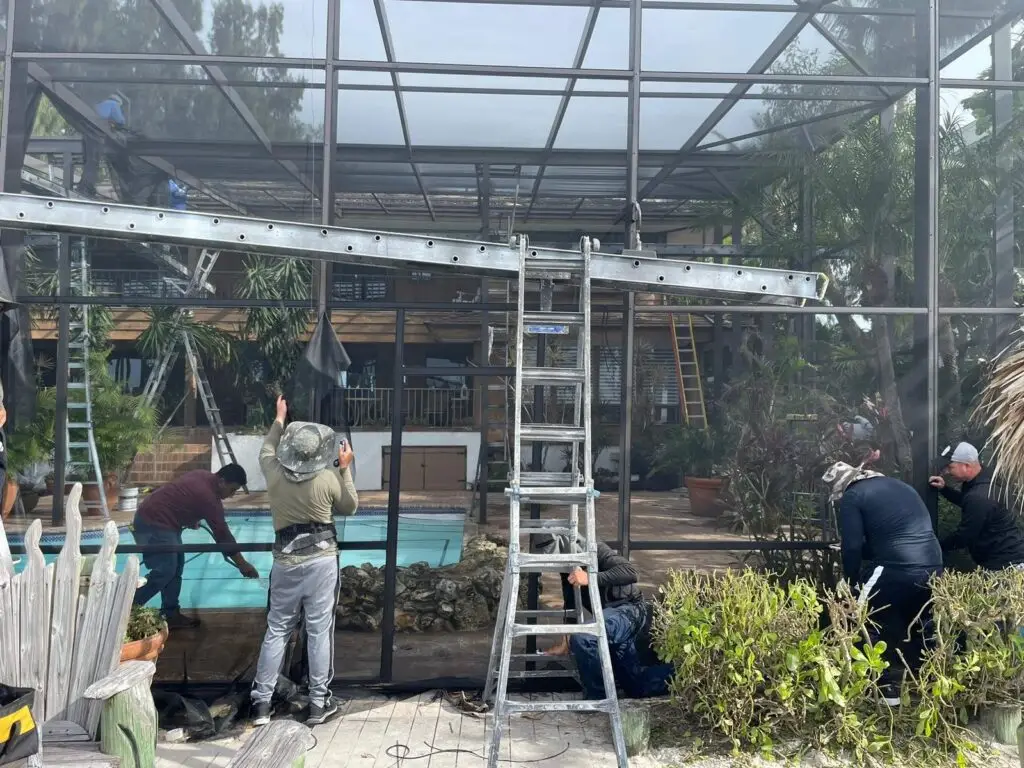
Broward County spans gated communities, condo associations, and open neighborhoods, so access varies more than the work itself. In Weston or parts of Miramar, a gate code or guard sign-in is routine. In older Fort Lauderdale and Hollywood neighborhoods, crews usually walk straight into the backyard. We ask for gate instructions, HOA contacts, and any community work-hour restrictions when we schedule, so the rescreen isn’t held up on arrival day.
Many associations across Broward, especially in Pembroke Pines, Coral Springs, and Sunrise, specify an approved mesh color or require an architectural review before rescreening begins. Charcoal and black mesh are the most commonly approved shades because they reduce glare and match existing cages, but some communities also restrict panel pattern or require matching screen density across a shared property line. We can supply spec sheets for whatever documentation your board needs.
- Confirm gate codes, lockbox access, or guard-gate sign-in before the crew is routed
- Check HOA or condo documents for approved mesh color and type
- Submit material specs for architectural review if your community requires it
- Note any restricted work hours, especially in age-restricted or condo communities
- Flag shared cages or party-wall screens that may need neighbor notification
Mistakes That Shorten a Rescreen Job
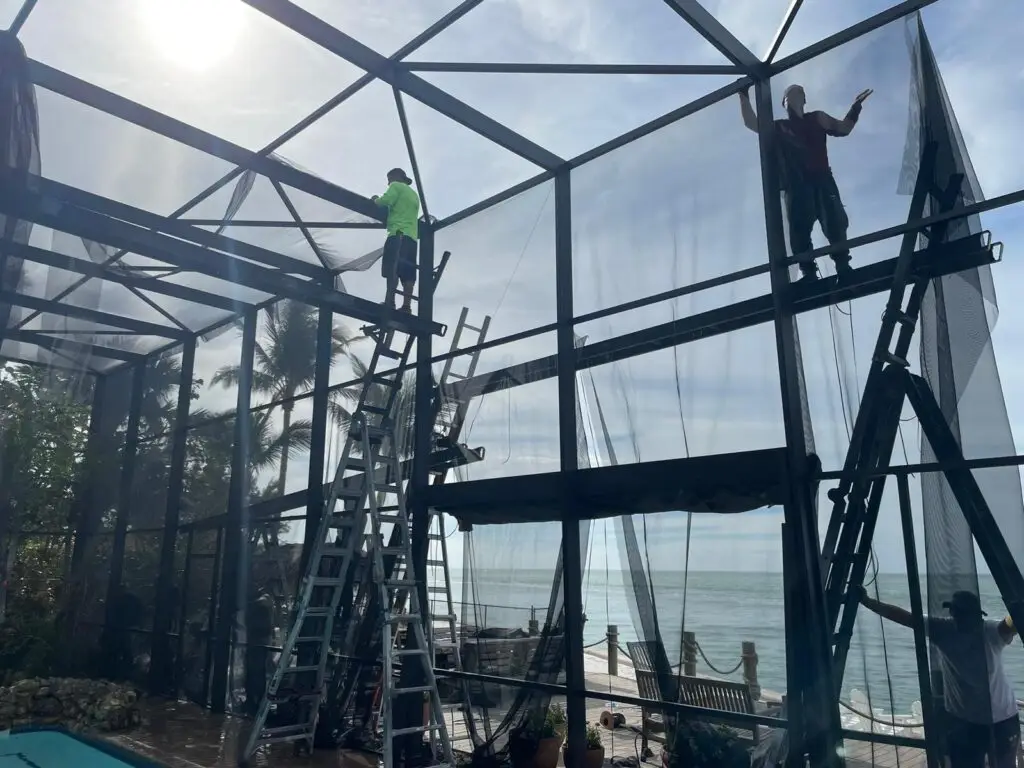
The most common shortcut is reusing worn spline to save time. Spline hardens and cracks under Broward’s heat and UV load, and once it’s brittle, new screen pulled into an old channel will work loose within a season or two, usually starting at the corners where tension is highest. We replace spline as a standard part of the job rather than inspecting it panel by panel for reuse.
The second issue is screening over a frame that’s already corroding. Aluminum cages near the coast in Hollywood, Pompano Beach, or Deerfield Beach develop pitting and white oxidation at fastener points and joints, often hidden under old screen. New mesh stretched over a weakened frame or failing fastener will outlast the metal underneath it by only a year or two. We check frame condition and hardware before cutting any new screen, and flag corrosion repair separately so it’s addressed, not covered up.
Process and Timeline
- Full cage walkthrough to assess spline channels, frame condition, and existing mesh type
- Written estimate covering mesh type, color, and any frame or fastener repairs needed
- Scheduling coordinated around HOA access rules, gate codes, and homeowner availability
- Removal of old screen and spline, with frame cleaned and corrosion spot-treated where found
- Installation of new spline and mesh panel by panel, with tension checked on each run
- Final walkthrough with the homeowner to confirm fit, trim lines, and site cleanup
Most single-family pool cage rescreens in Broward County are completed in one to three days, depending on cage size and the extent of any frame repair needed.
Communities We Serve in Broward County
Pool Cage Rescreening throughout Broward County, including Fort Lauderdale, Pembroke Pines, Hollywood, Miramar, Coral Springs, Pompano Beach, Davie, Sunrise, Plantation, Deerfield Beach, Lauderhill, Tamarac, Weston, Margate, Coconut Creek, North Lauderdale, Oakland Park, Hallandale Beach, Lauderdale Lakes, Parkland, Cooper City, Dania Beach, West Park, Wilton Manors, Lighthouse Point, Broadview Park, Southwest Ranches, Pembroke Park, Lauderdale-by-the-Sea, Roosevelt Gardens, Hillsboro Beach, Washington Park, Sea Ranch Lakes, Lazy Lake.
Broward County Pool Cage Rescreening FAQ
How long does pool cage rescreening take in Broward County?
A typical lanai with one or two screen doors takes about one day, while a larger two-story or pool-plus-patio enclosure can run two to three days depending on panel count and frame condition. Crews account for Broward's afternoon thunderstorms when scheduling, so the quoted window usually includes a buffer day.
What screen mesh holds up best against Broward's sun and salt air?
Fiberglass screen is the standard choice for most Broward homes because it resists UV breakdown and handles coastal humidity well, while homes closer to the Intracoastal or ocean in places like Fort Lauderdale or Hollywood sometimes do better with a heavier mesh or No-See-Um weave for salt exposure and smaller insects. We go over mesh options and fit them to the home's location during the estimate.
Will rescreening fix a cage frame that is rusting or sagging?
New screen will not correct a bent, corroded, or sagging aluminum frame, so any loose fasteners, rusted screws, or structural sag needs to be addressed first. We flag frame issues during the estimate and recommend repair or reinforcement before new panels go in, since screen installed on a compromised frame will not hold tension properly.
Do I need HOA approval before rescreening my lanai in a gated community?
Many Broward communities, including gated sections in Coral Springs, Pembroke Pines, and Miramar, have architectural review rules covering screen color, mesh type, and sometimes frame color, so it is worth checking your HOA packet before work begins. We can supply spec sheets or material details homeowners need for an approval request.
Can you rescreen just the torn panels instead of the whole cage?
Yes, partial rescreening is common and often makes sense when only a few panels near a pool deck or roofline have failed while the rest of the screen is still sound. Mesh color and age can vary slightly between older and newer panels, which we point out during the estimate so there are no surprises.
Does rain or an active storm season delay rescreening work?
Light rain alone does not usually stop a rescreening job, but active storms, lightning, or sustained wind will pause work for safety and to avoid stretching screen in unstable conditions. During the June through November storm season we build extra flexibility into scheduling across Broward routes.
More Pool Cage Services in Broward County
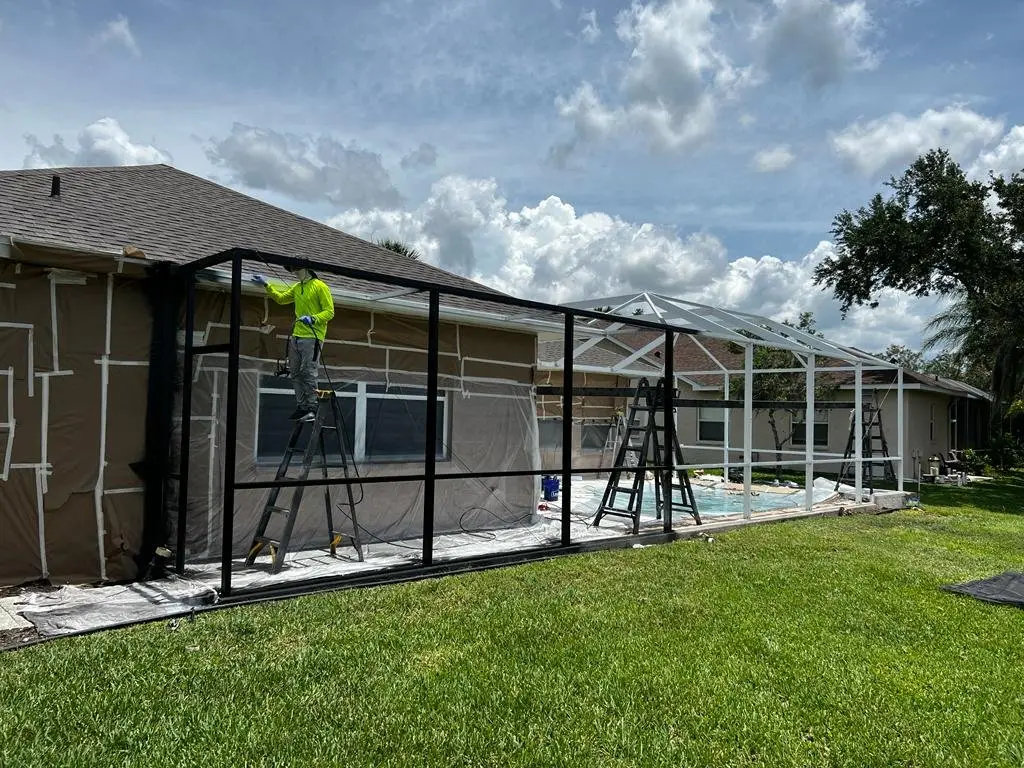
Beyond rescreening, we also handle full pool cage painting for Broward homeowners looking to restore faded or chalking aluminum frames. Pool Cage Painting.
Nearby Areas We Also Serve
Crews routinely run routes beyond the core county to handle cages in the surrounding South Florida communities that share the same climate and HOA patterns. Miami-Dade County and Palm Beach County.
Statewide details, colors and the full process are on our main pool cage rescreening page.
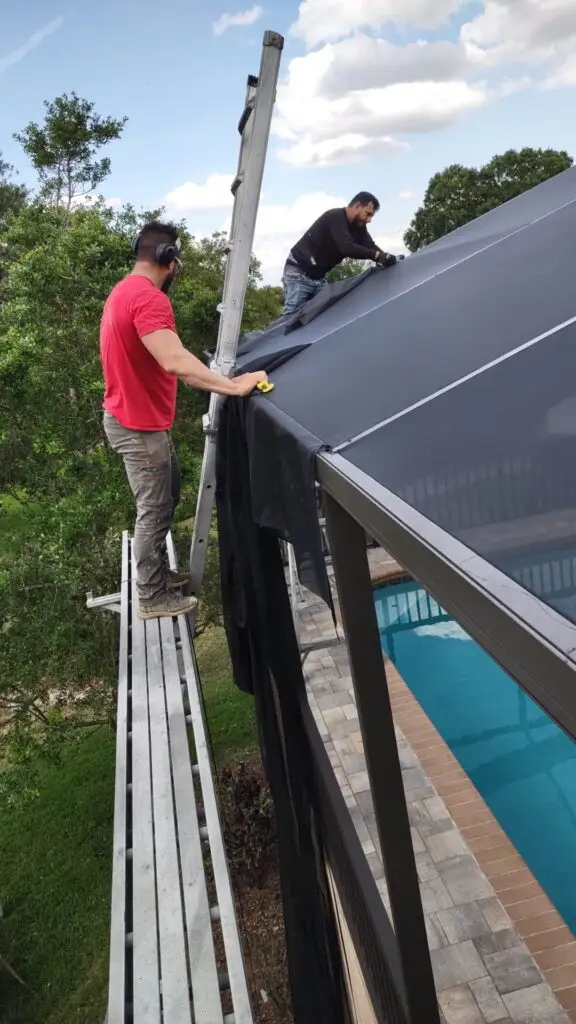
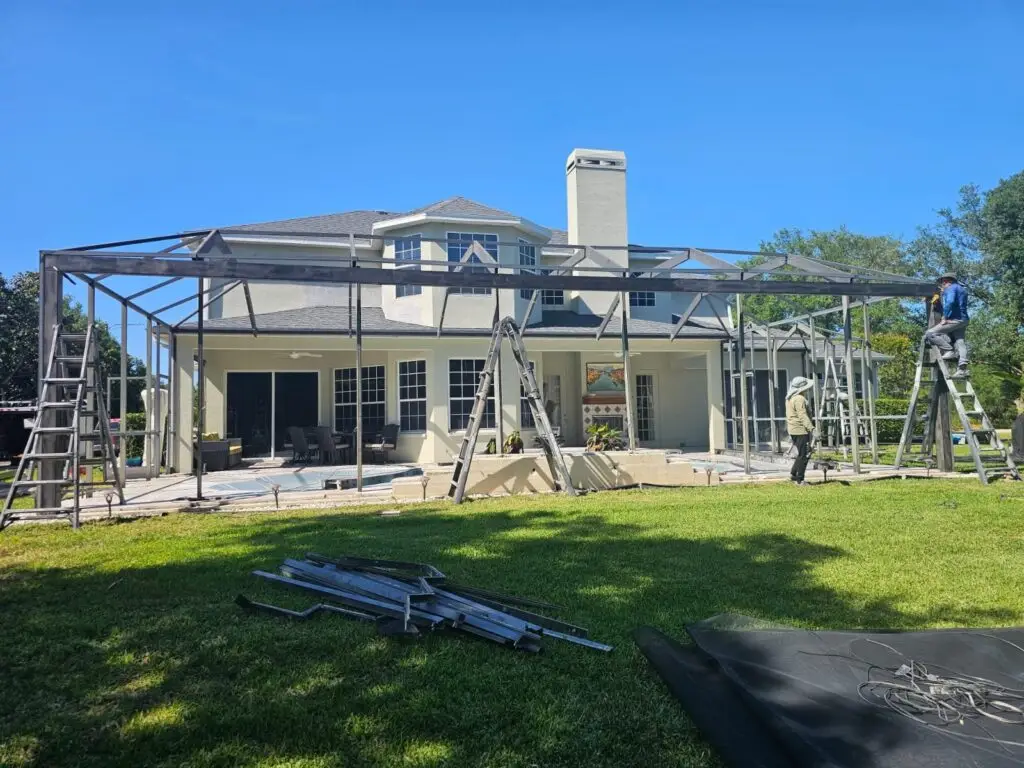
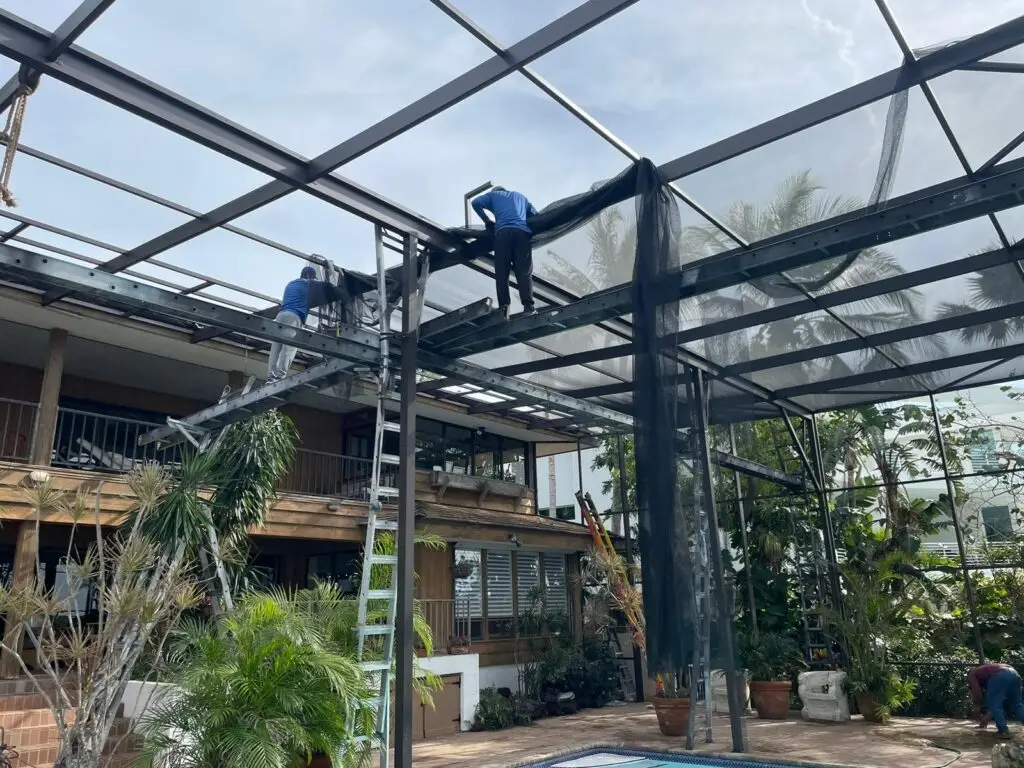
Recent Work
Request a Broward County Estimate
Send a few photos of the cage along with the property address in Broward County, and we will put together a written estimate based on the panel count, mesh condition, and frame details visible in the images. For anything you would rather discuss directly, call (844) 222-2115.
Last reviewed: October 28, 2026