
Pool Cage Rescreening in Pine Island FL
ABC Pool Cage Painting sends crews to Pine Island to replace torn or sun-worn screens with mesh and fasteners matched to barrier-island wind and salt exposure.
- Free Written Estimate
- Fast Scheduling
- Built for Florida Weather
- Licensed & Insured
- Free Written Estimates
Request Your Free Estimate
Request a free written estimate for your Pine Island screen enclosure.
- Free No-Obligation Estimate
- Fast Response Times
- No Pressure Consultation
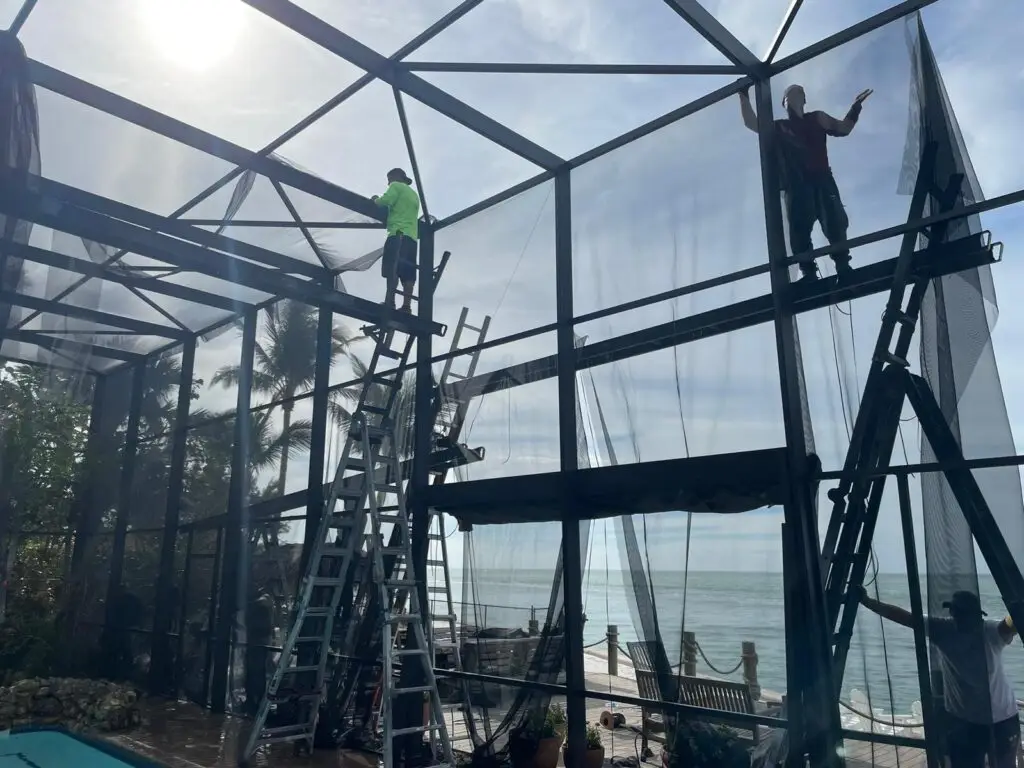
Pine Island sits off the mainland between Charlotte Harbor and Matlacha Pass, and that position matters for pool cages. Homes in Bokeelia, St. James City, and Matlacha sit closer to open water and mangrove shoreline than most of Lee County, so screens take in more wind-driven salt spray and stronger gusts off the pass. Panels that would last a decade inland often show pinholes, brittleness, or pulled staples sooner here.
ABC Pool Cage Painting’s crews work throughout Pine Island, driving over on Pine Island Road to assess the enclosure, measure panel sizes, and check the frame before quoting mesh and labor together. Most homes get a mix of standard and no-see-um screen depending on which side faces the water, and every estimate is written down, not guessed at on the spot, so homeowners can compare it against other bids without pressure.
Why Pine Island Screens Wear Faster
Salt doesn’t need a direct ocean view to do damage. On Pine Island, it rides inland on wind off Charlotte Harbor and Matlacha Pass, settling on screen mesh and frame joints even on calm days. That fine residue holds moisture against aluminum and fiberglass strands, which is why homes in Bokeelia and St. James City often need rescreening sooner than a similar cage in Cape Coral or Lehigh Acres.
UV exposure compounds the problem. Florida sun breaks down the polymer coating on fiberglass screen over time, and that process speeds up once salt has already made the mesh porous. The result is a screen that looks intact from the driveway but tears easily at the spline channel, especially on south- and west-facing panels that take the most afternoon sun.
Canal-front and open-water lots common in Matlacha and parts of St. James City see this wear pattern first. Screens there often need attention two to three years ahead of inland properties, even when the aluminum frame itself is still sound.
From Torn Panel to Finished Enclosure
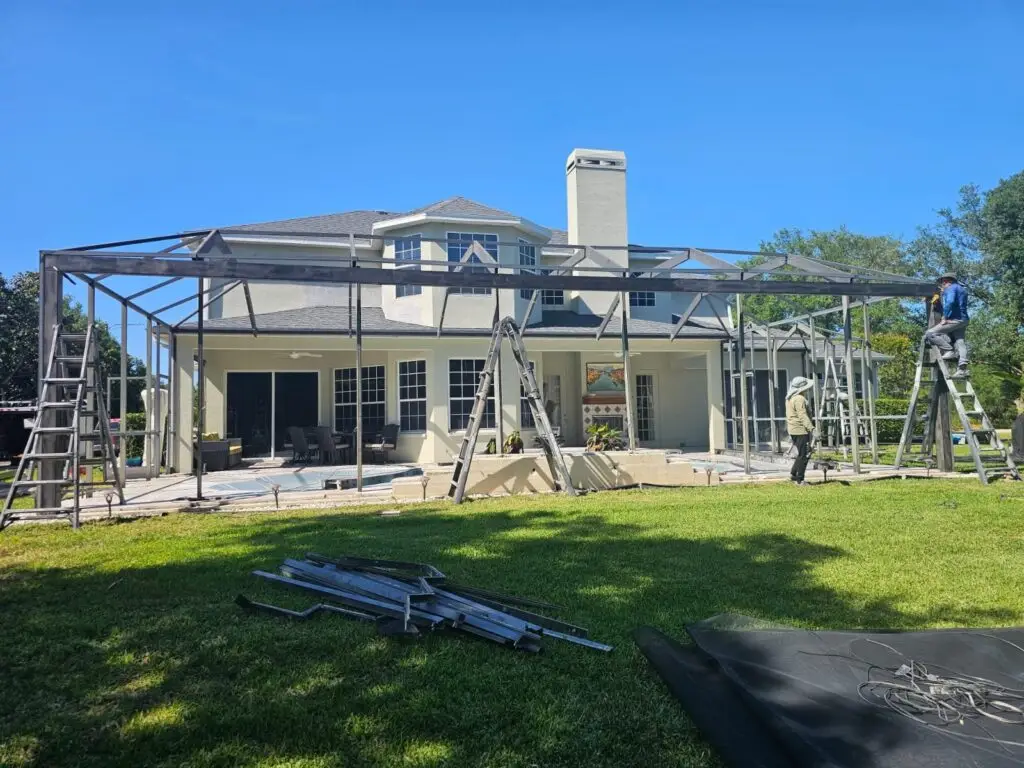
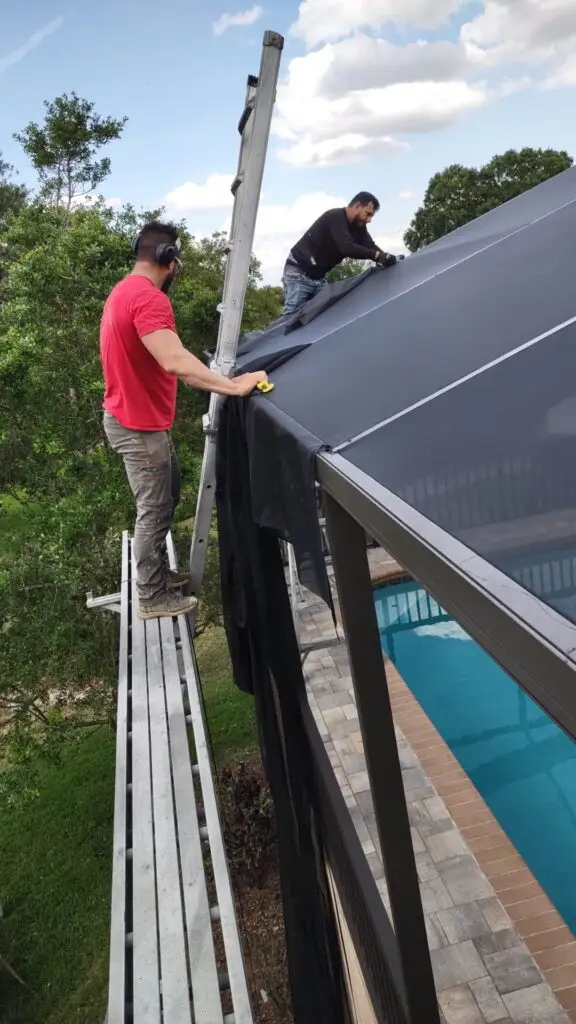
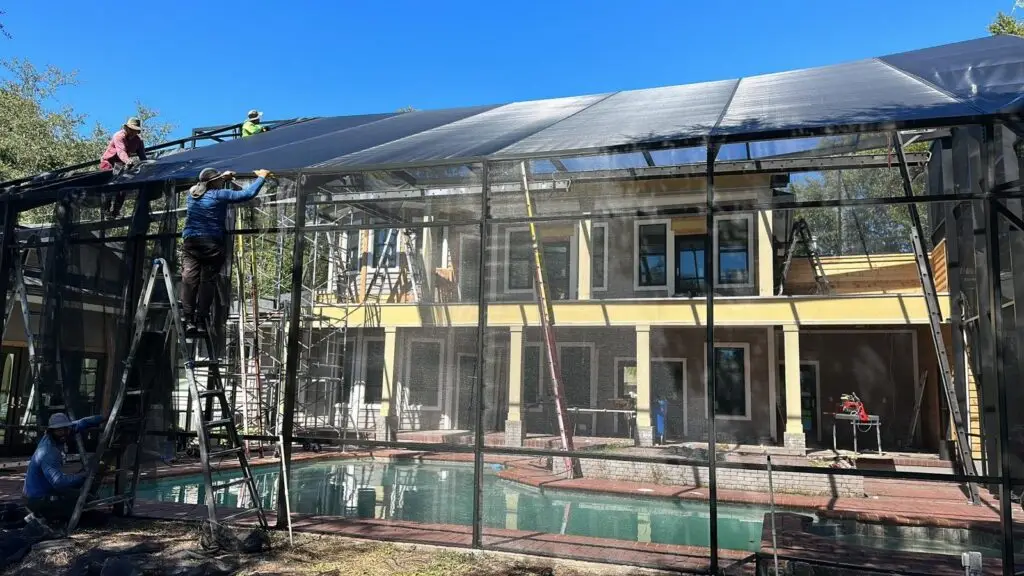
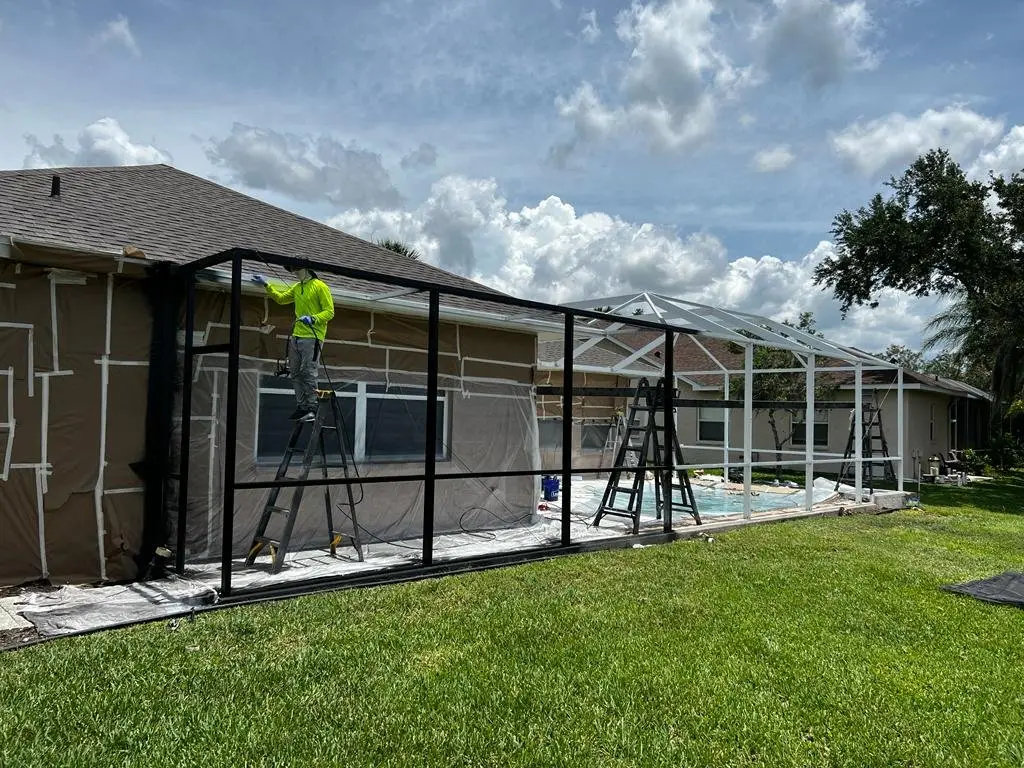
Rescreening starts with a walk-around inspection of every panel, checking for brittleness, pinholes, and loose spline before any screen comes out. This also includes a check of the frame itself, since bent or corroded aluminum components need repair or replacement before new screen goes in, otherwise the new mesh fails at the same stress points as the old.
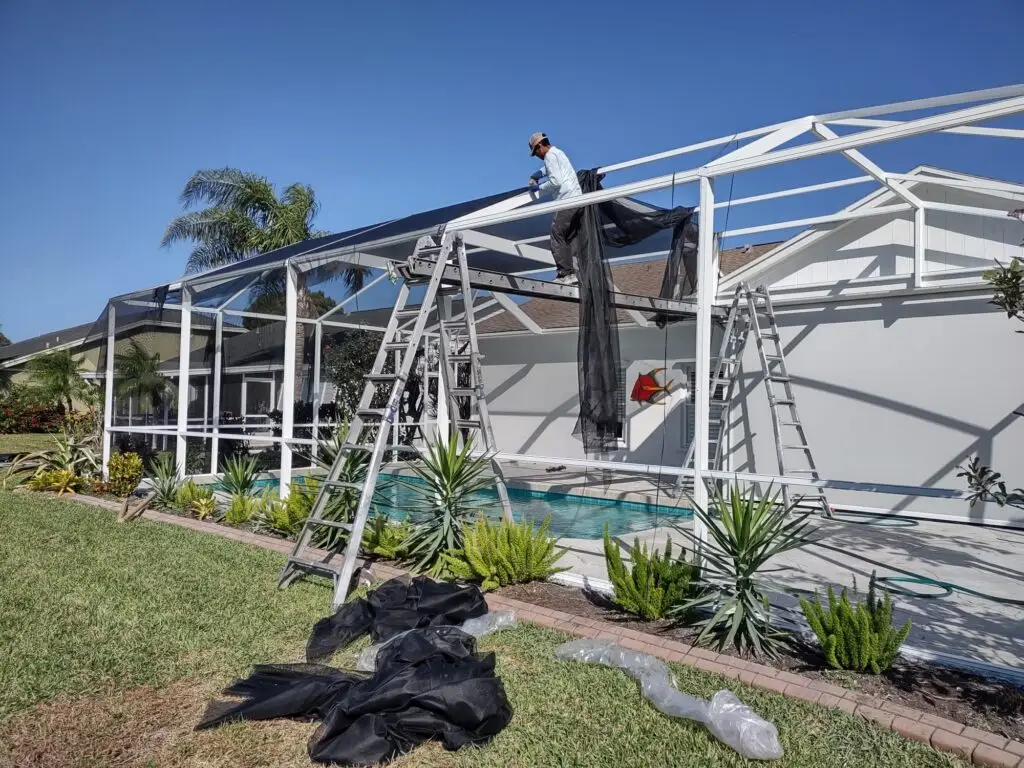
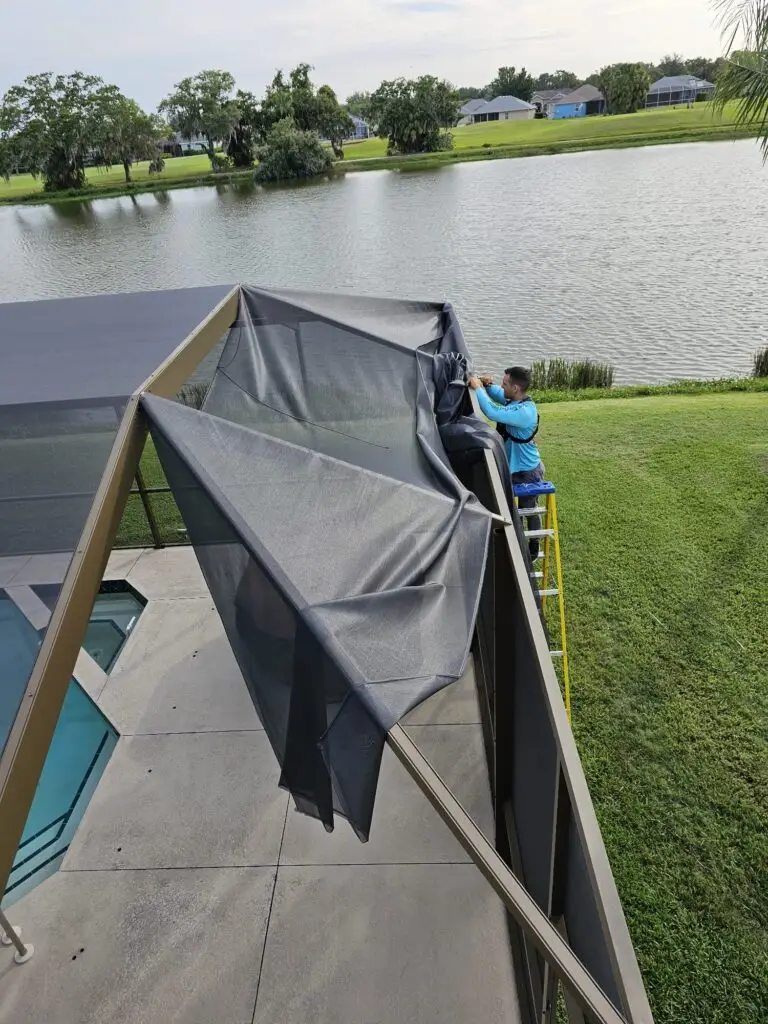
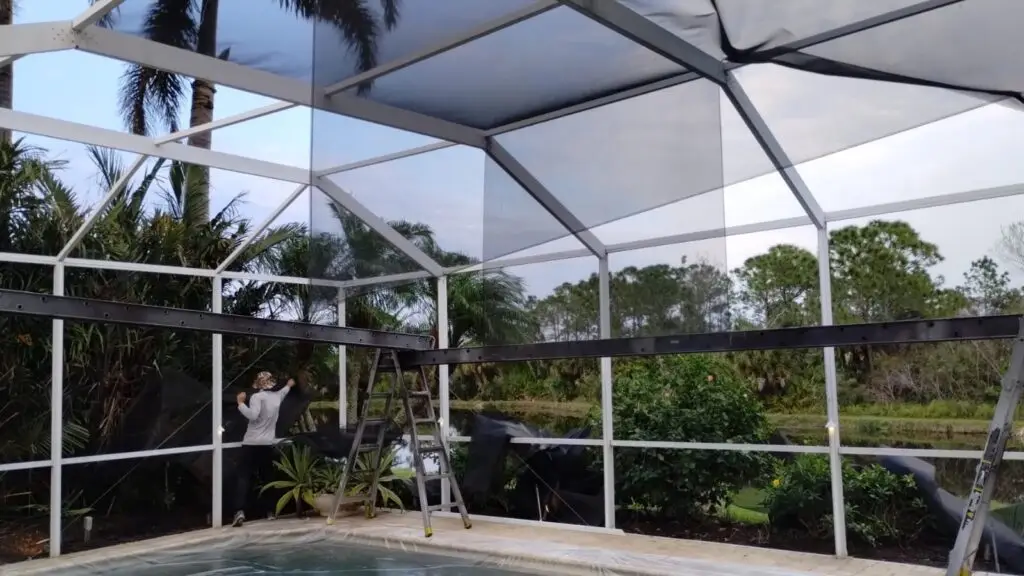
Once the frame is confirmed sound, old screen and spline are removed panel by panel, and the track is cleaned of debris and old spline fragments. New mesh is cut to size and rolled into the spline channel under tension, which keeps it from sagging or developing wrinkles later. Mesh choice depends on the homeowner’s priorities for visibility, airflow, and pet resistance.
Timelines for a full rescreen typically run from one to three days depending on cage size and panel count. Work is scheduled around Southwest Florida’s rain patterns, since wet or high-wind conditions make precise mesh tensioning difficult. Cleanup includes removing all old screen material and spline scraps from the pool deck and surrounding landscaping.
- Frame and panel inspection before any screen removal
- Spline channel cleaned and checked for damage
- Mesh options include standard, pet-resistant, and clear-view screen
- Installation tensioned to prevent sagging and wrinkling
- Full cleanup of old materials from decks and plant beds
Scheduling Around Island Access and Weather
Pine Island connects to the mainland by Stringfellow Road through Matlacha, and that single route shapes how crews plan a rescreen job. Materials, ladders and screen rollers get loaded with the day’s weather in mind, since a delay at the swing bridge or a stalled truck on the causeway can cost more time here than it would in Cape Coral or Fort Myers.
Summer afternoons bring the same pattern seen across Lee County: clear mornings followed by storms rolling in by early afternoon. Crews aim to finish screen installation and cleanup before that window, since wet mesh and wind make panel work unsafe and slow. Jobs scheduled May through September often start earlier in the day for this reason.
Homes near canals in St. James City or Bokeelia sometimes have dock equipment, boat lifts, or seawall access that affects where ladders and staging can go. We account for this during the estimate walk-through, along with any gate codes or narrow side-yard access common in older Pine Island lots.
Mistakes That Shorten a Rescreen Job
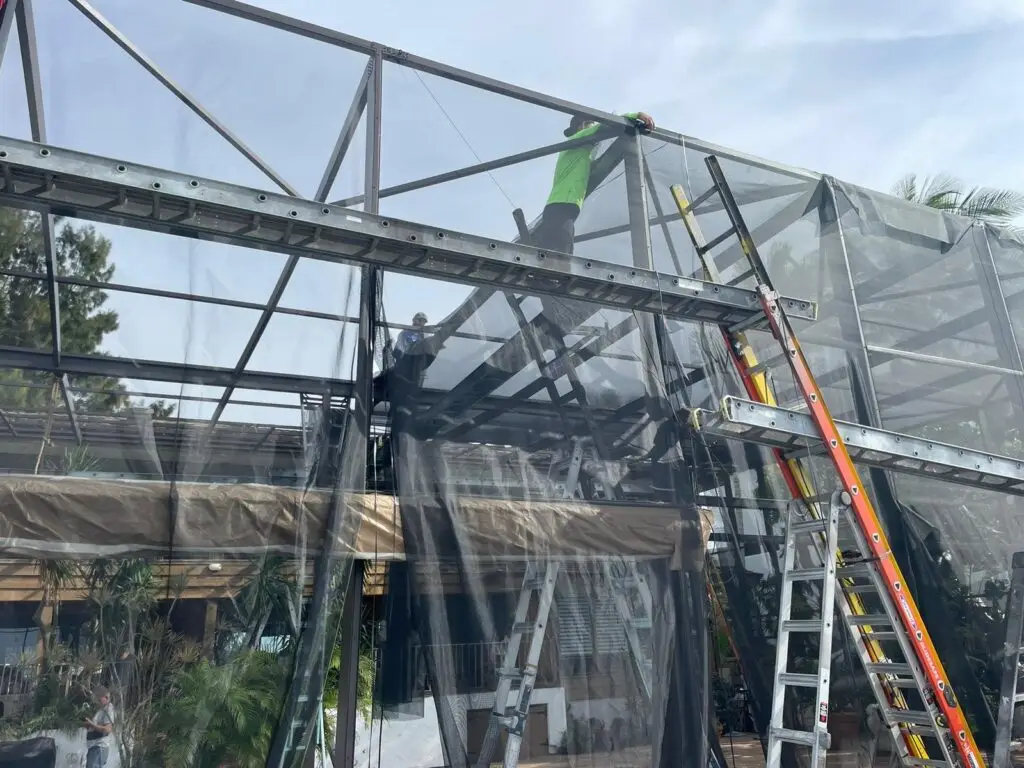
A rescreen is only as good as the frame underneath it. Reusing a bent or corroded aluminum frame member to save time usually means the new screen stretches unevenly within a season, especially on panels that catch direct wind off the harbor. We flag bent framing during inspection rather than screening over it.
Spline that’s cracked, hardened, or the wrong gauge for the channel is another shortcut that fails early. Old spline loses flexibility faster in Florida’s UV exposure, and reusing it instead of replacing it is one of the more common reasons a rescreen job needs repair within a year or two.
Mesh choice matters more on Pine Island than in a sheltered Fort Myers subdivision. A pool cage facing open water or exposed to sustained wind benefits from a heavier gauge or tighter weave than one in a tree-shaded interior lot, and using a generic mesh everywhere ignores that difference.
- Bent or twisted frame channel reused instead of straightened or replaced
- Brittle spline left in place to cut costs
- Standard fiberglass mesh used on wind-exposed panels that call for heavier gauge
- Skipping a walk-around inspection of every panel before ordering material
- Ignoring loose fasteners or corroded screws that will work loose again
Process and Timeline
- Schedule a free written estimate and walk-around inspection of the cage and surrounding access
- Confirm frame condition, spline type, and mesh selection based on panel exposure
- Order materials sized to the specific frame channels and panel dimensions on your enclosure
- Remove old screen and spline, then inspect and repair any frame issues found underneath
- Install new spline and mesh panel by panel, checking tension and fit as work progresses
- Walk the finished enclosure together and note any touch-up items before closing out the job
Most Pine Island rescreening jobs take one to three days on site, depending on cage size and how much frame repair is needed.
Pine Island Pool Cage Rescreening FAQ
How long does pool cage rescreening take for a typical Pine Island home?
Most single-family lanais are rescreened in one to two days once the crew is on site, depending on the cage size and number of panels. Larger pool cages or homes with second-story screen sections, more common on the canal lots near Matlacha, can run closer to three days.
What screen mesh holds up best against salt air near Matlacha and St. James City?
Fiberglass screen is the standard choice for salt exposure since it will not corrode, and it holds up well on waterfront lots along Matlacha Pass and the Pine Island Sound side of St. James City. For homes wanting a clearer pool view, a heavier no-see-um mesh is available, though it requires more frequent cleaning in salt air.
Do you need to replace the whole cage or just the torn screen panels?
In most cases only the torn or brittle panels need new screen, while the aluminum frame stays in place. A full cage replacement is only needed when the frame itself is structurally compromised, which we would point out during the estimate rather than assume.
Can rescreening be done if my pool cage frame has some rust or bent corners?
Light surface rust and minor bent corners are common on older Pine Island cages and usually do not stop a rescreen, since the frame can often be straightened or spot-repaired first. If corrosion has weakened the aluminum at connection points, we will flag that separately so screen is not installed over a frame that needs structural attention.
Will a bigger storm season affect scheduling for homes on Pine Island?
Yes, scheduling tightens up before and after active tropical storm periods, since screen and panel replacement demand rises across Lee County at the same time. Booking an estimate early in the season, rather than waiting until a storm has already damaged the cage, generally means a shorter wait for the actual rescreening work.
Do HOA or deed restrictions in Pine Island communities limit screen color or mesh type?
Some Pine Island neighborhoods and waterfront communities have deed restrictions covering screen color, typically limiting choices to standard charcoal or black, and occasionally specifying mesh density near the pool area. We ask for a copy of the relevant HOA guidelines before ordering material so the rescreen matches what the community allows.
Nearby Areas We Also Serve
Crews assigned to Pine Island also serve several surrounding Lee County communities on the same scheduling route. Fort Myers, Cape Coral, Bonita Springs, Estero, Lehigh Acres and North Fort Myers.
Statewide details, colors and the full process are on our main pool cage rescreening page.
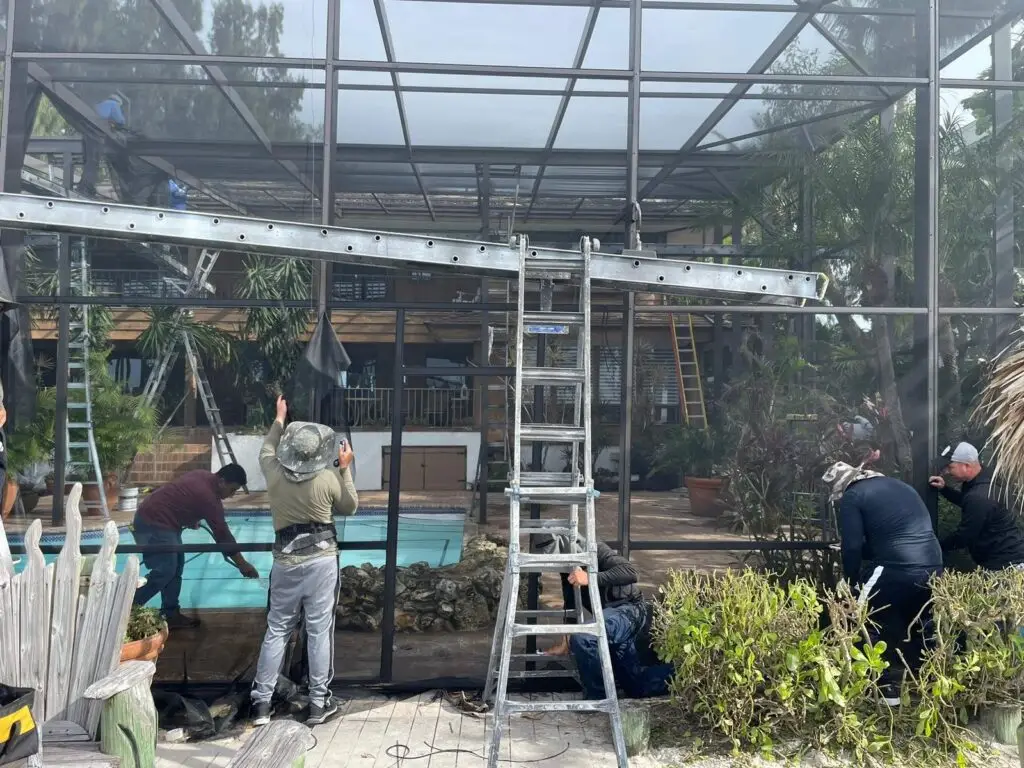
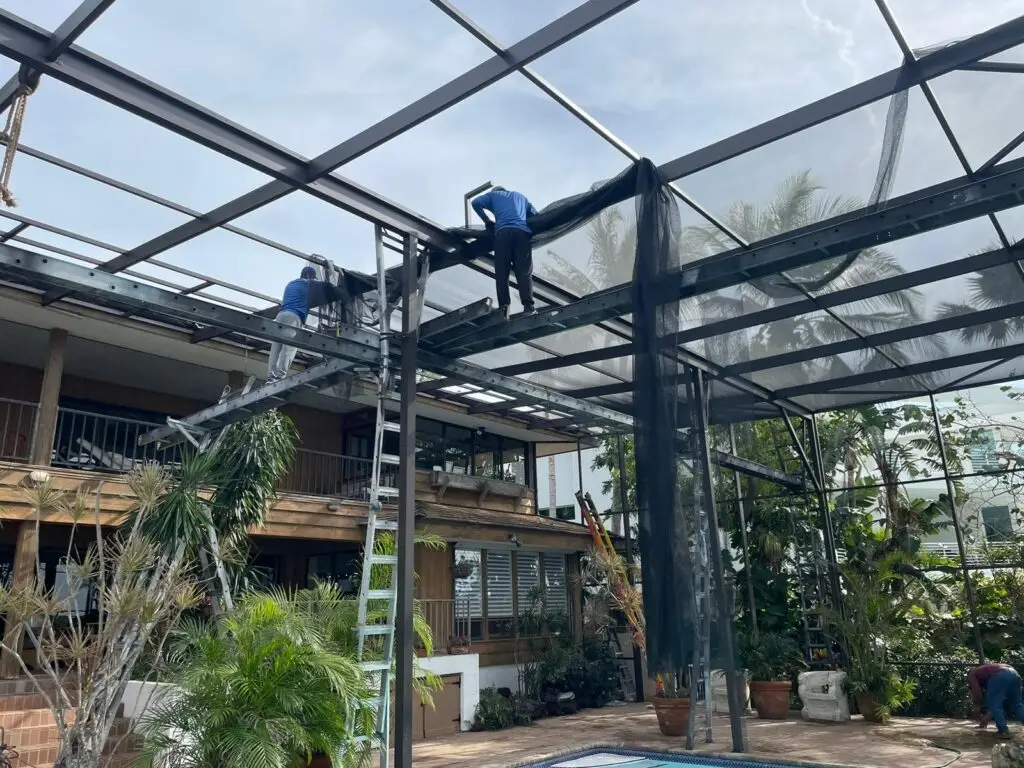
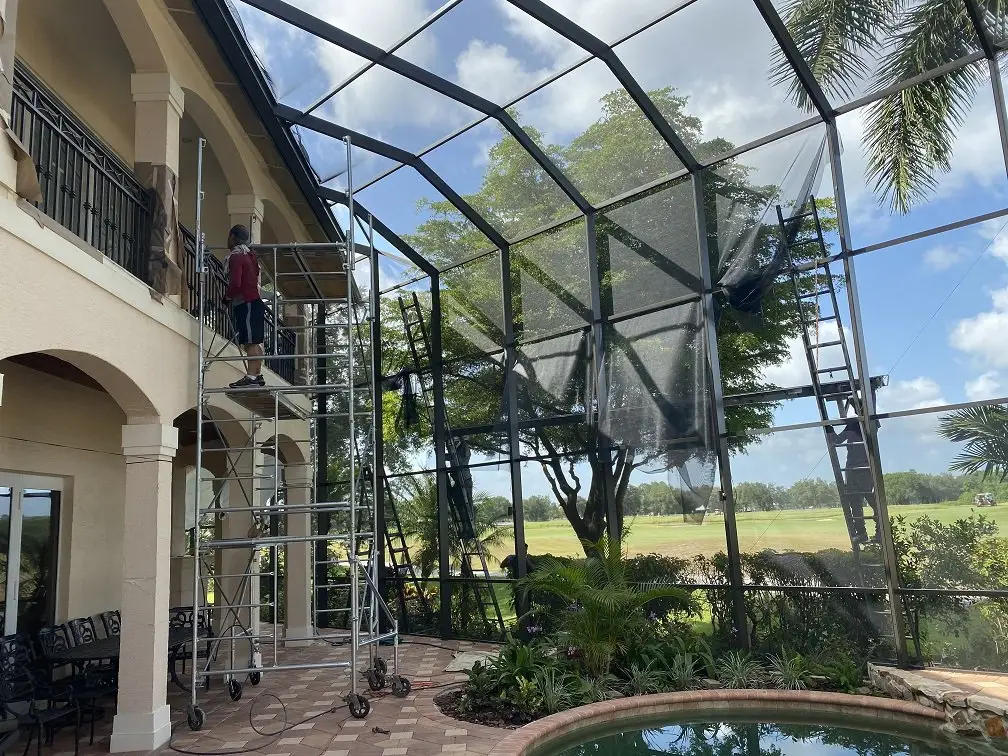
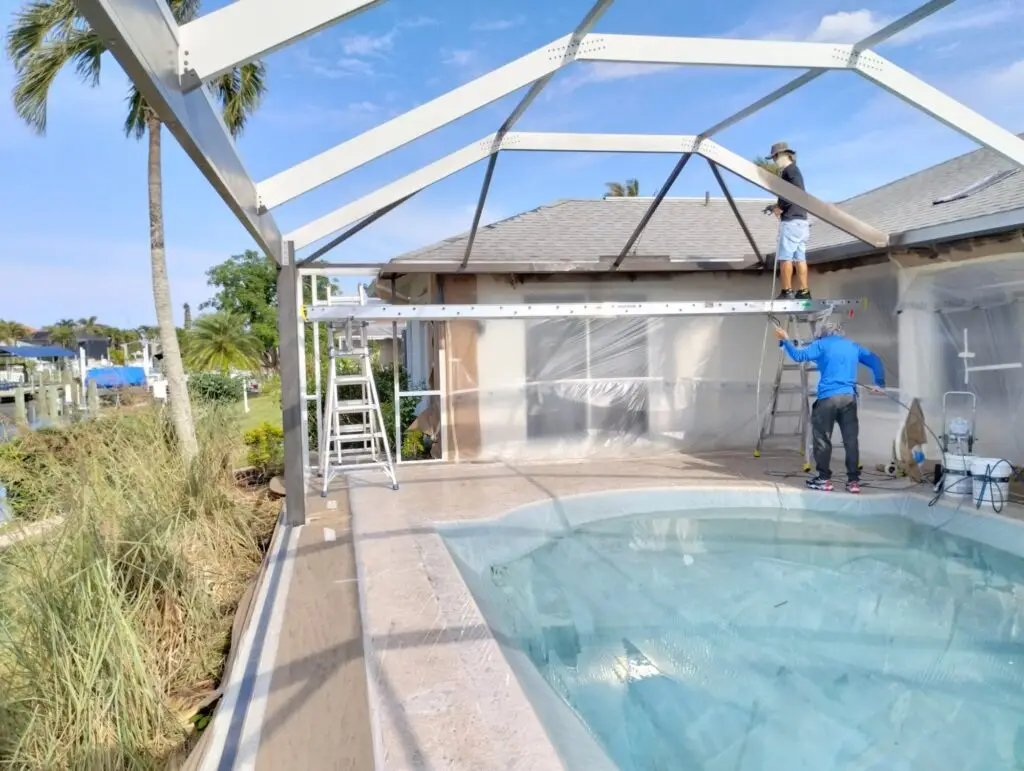
Recent Work

Request a Pine Island Estimate
Send a few photos of the pool cage along with the property address, including the general area such as Matlacha, St. James City, Bokeelia or Pineland, and a written estimate will follow based on the cage size, frame condition and mesh type needed. Questions before then can go to (844) 222-2115.
Last reviewed: November 3, 2026