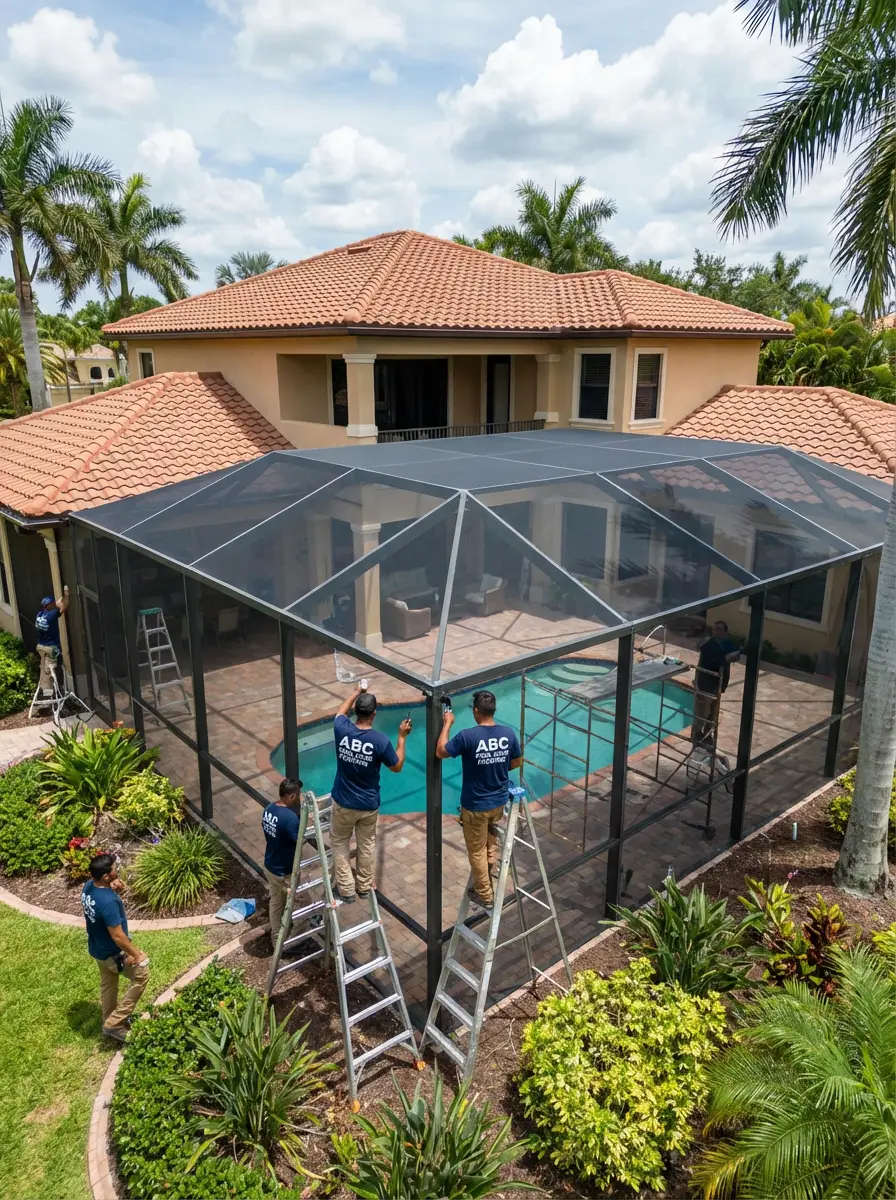
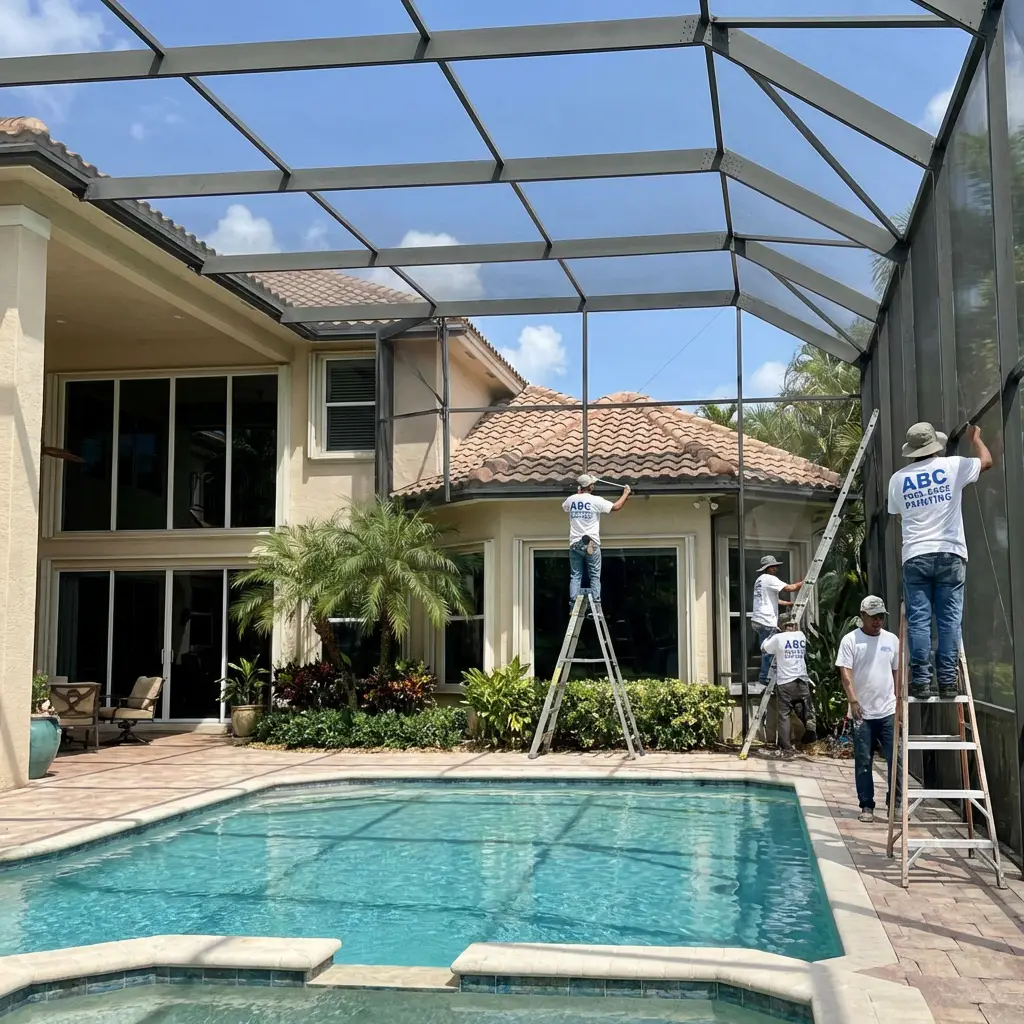
Homeowners often plan to paint the cage this year and rescreen next year, or the other way around. When the screen is aging along with the finish, doing both in one project is cheaper and gives a better result. Here is why.
The Screen Comes Out Anyway
A full repaint is best done with the screen removed so the frame can be stripped, primed and sprayed on every face. Removing screen that is going to be replaced within a year or two and then reinstalling it is wasted labor twice over.
Hardware Gets Fixed Once
Stainless screws, new door closers and latches, chair-rail caps and cable checks belong to both projects. Combining them means one visit, one set of masking and protection, and one mobilization.
A Uniform Result
A freshly painted frame with grey, patched screen looks unfinished; new screen on a chalked, streaked frame looks the same. Doing both produces the enclosure that looks new from the street and from the lanai.
The Right Moment for Upgrades
With the frame prepared and the screen out, this is the economical time to convert the view wall to a panoramic picture-window layout, add no-see-um mesh on the waterside walls, put pet screen on the bottom row, or add a second door.
When to Keep Them Separate
If the screen was replaced recently and is still dark and tight, paint alone makes sense; the screen is masked and worked around. If the frame finish is sound and only the screen has aged, rescreen alone. The photo review tells you which case you are in. See pool cage painting, rescreening and, for the combined structural project, restoration.