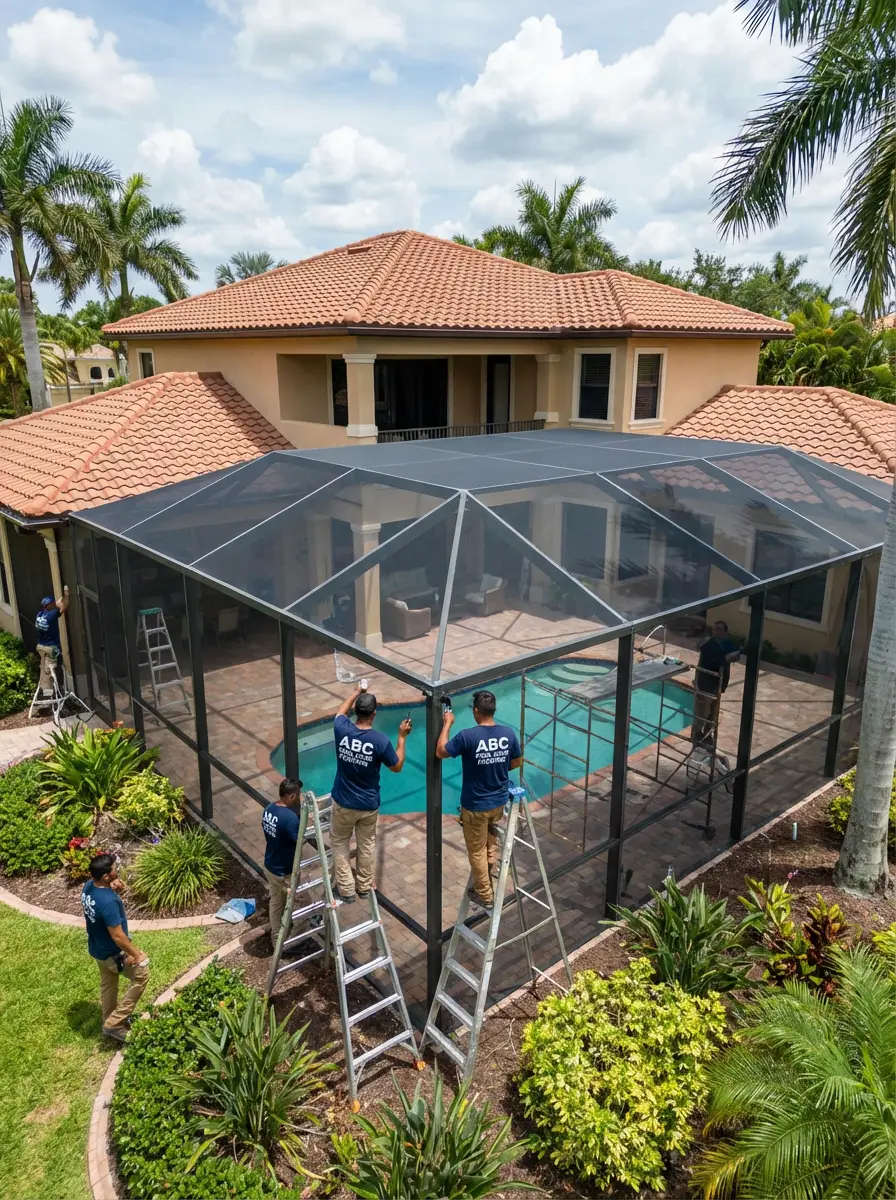
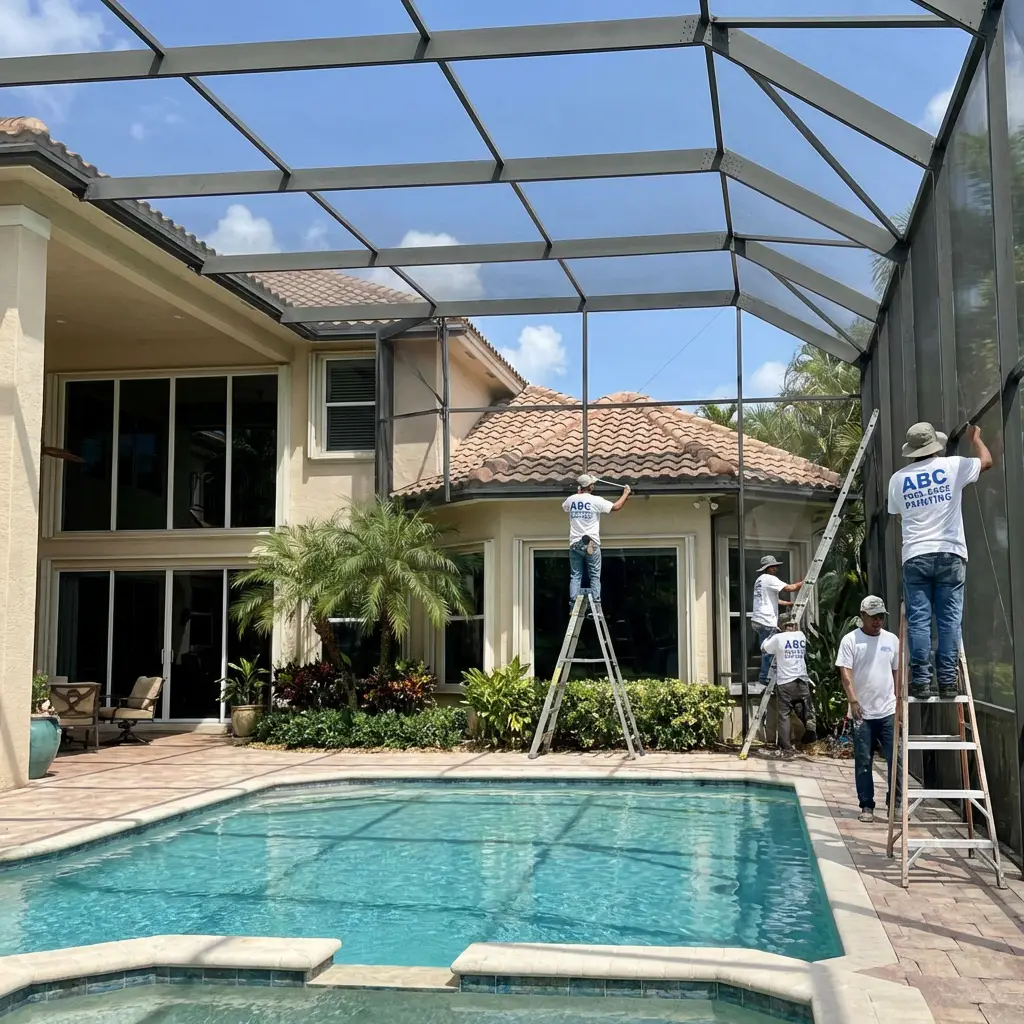
A torn panel is the most common pool cage call there is, and the right response depends on the other panels, not the torn one. Here is the two-minute check we run on every screen repair request.
Look at the Panels Next to It
If the neighboring panels are dark, tight and flexible, replace the torn one and stop there. If they are grey, papery or sag between the bars, the whole fabric has aged out and the torn panel is simply the first to go. Repairing it alone means another call next month.
Check How It Tore
- A clean tear in the middle from a branch, a tool or a pet: a repair.
- A tear along the spline line: the channel is rough or corroded, or the spline has shrunk; the run needs new spline and a cleaned channel, and often the wall.
- Multiple small holes across a panel: UV degradation; plan a rescreen.
Check the Frame Before New Screen
New mesh on a bent bar or a rusting channel fails early. Sight along the bar, look for rust at the screws and make sure the spline channel is clean. Small hardware problems are fixed during the repair; a frame that has chalked or is streaking rust is a candidate for a restoration where the screen goes onto a recoated frame.
Roof Versus Walls
Roof panels take the sun and the debris and age first. A common middle path is a roof-only rescreen when the walls are still good; it is quoted as its own line.
Use the Repair Visit Well
Whether it is one panel or a full rescreen, the visit is the time to replace a sagging door closer, a broken latch or the cracked chair-rail cap, and to switch the lower panels to pet screen or the waterside wall to no-see-um mesh. The screen repair and rescreening pages explain both options, and the city pages, from Tampa to Marco Island, add local mesh advice.