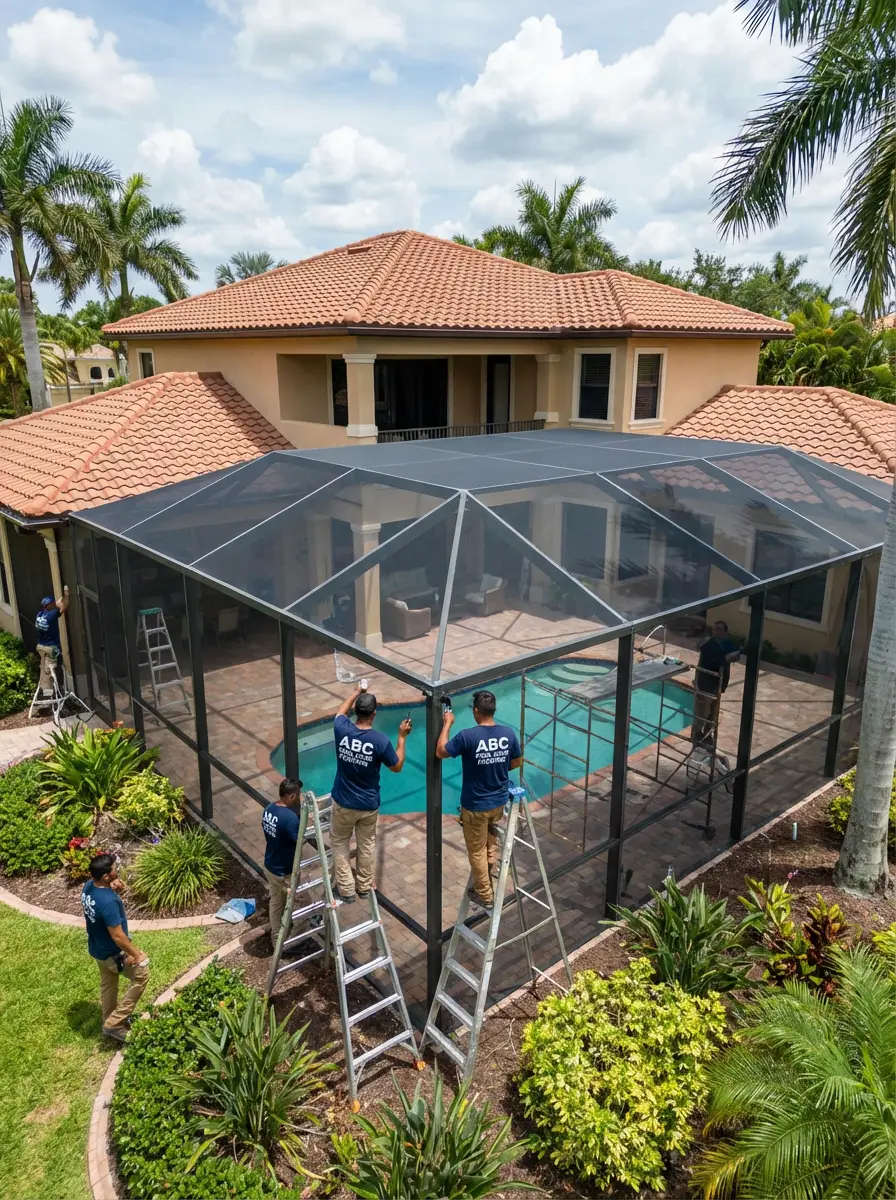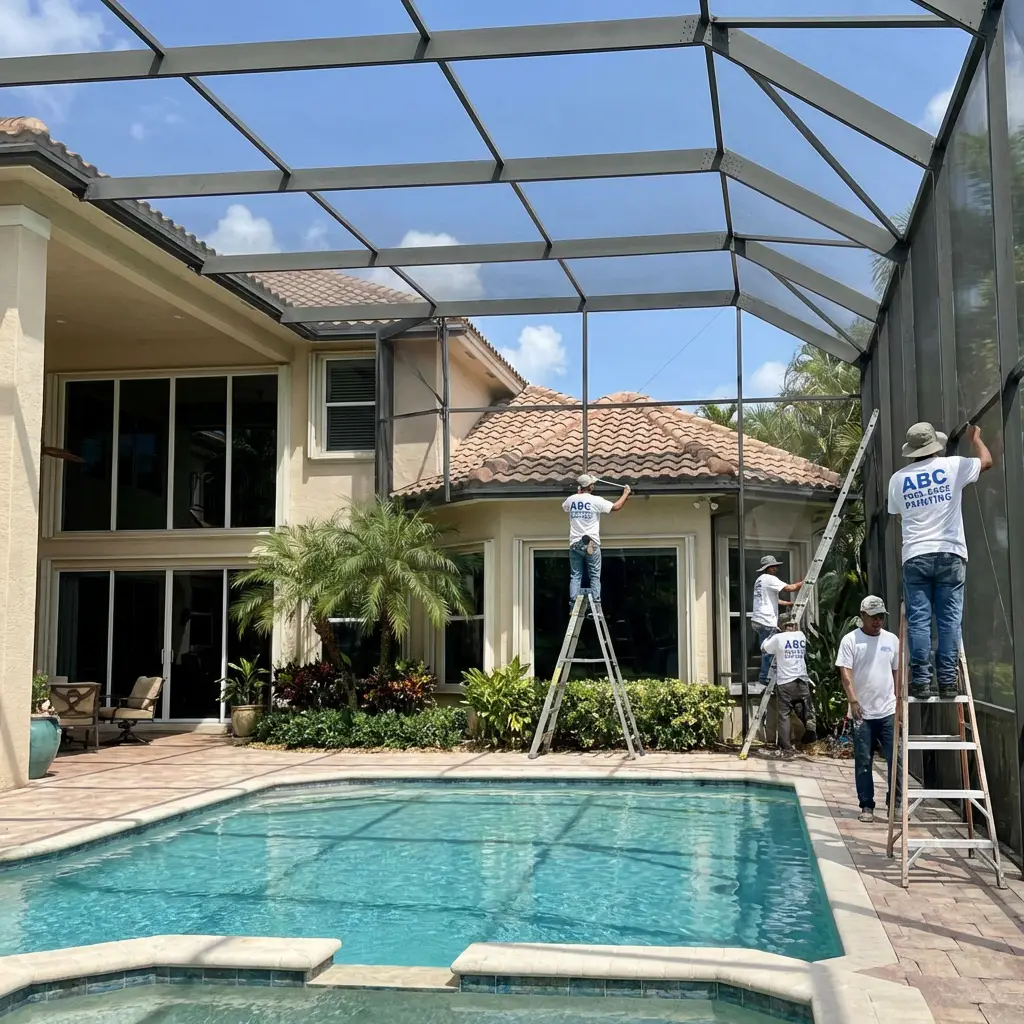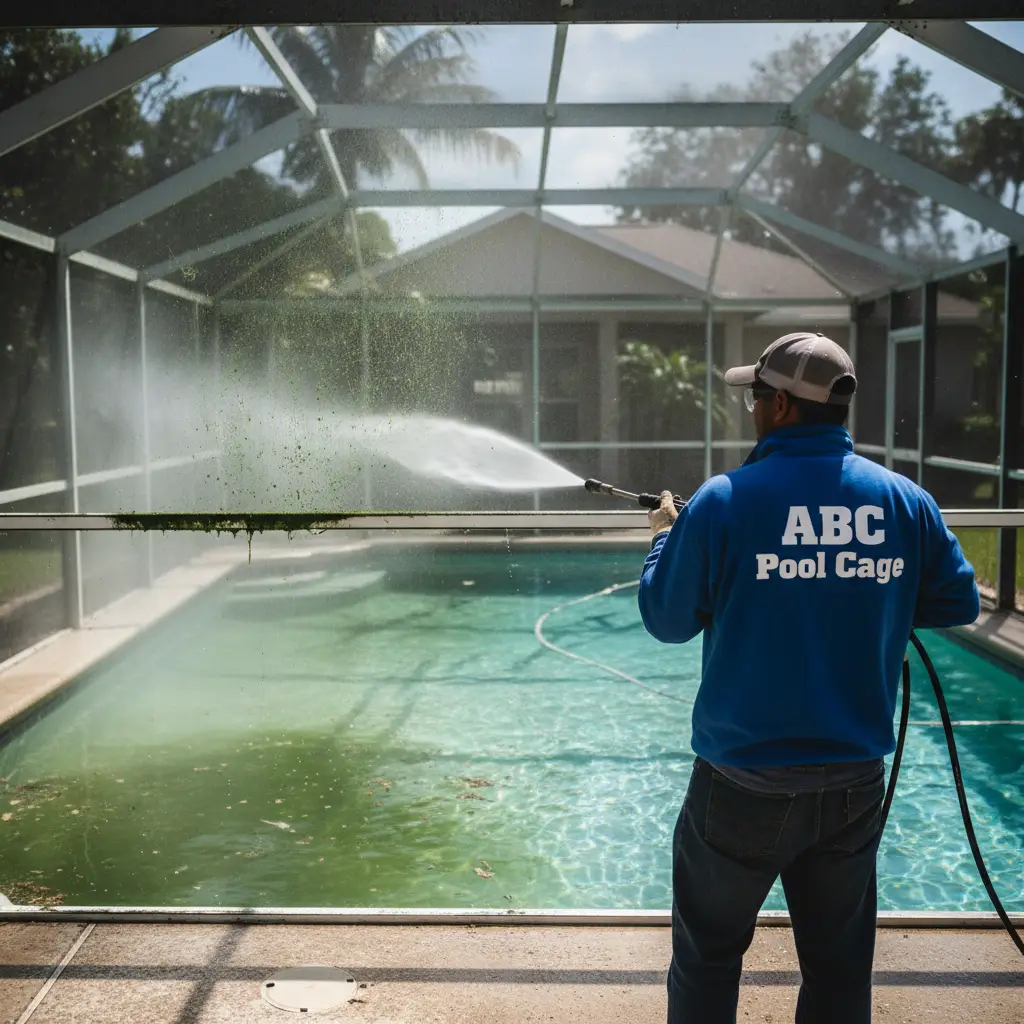
Pool Cage Care is crucial to its long-term performance. It also keeps your pool area safe and visually appealing. Patio screens, often made from aluminum and mesh, face harsh weather, pool chemicals, and normal wear and tear. Learn more about pool cage repair and maintenance!
This guide will walk you through practical steps to extend the life of your pool cage, preserve its appearance, and protect your investment.
What Are the Common Issues Pool Cages Face?
Pool cages are exposed to various environmental and physical challenges, including:
- Corrosion and Rust: Aluminum resists corrosion, but moisture and pool chemicals can still cause corrosion over time.
- Mesh Damage: Tears and holes in mesh screens can result from storms, pets, or flying debris.
- Fading Paint or Coating: UV rays can cause the paint or protective coating to fade, making the pool cage look aged.
- Loose Screws and Bolts: Over time, everyday use and stress can loosen screws and bolts.
Understanding these issues helps prevent and address them effectively. Visit our Facebook page!
How Can You Clean Your Pool Cage Properly?
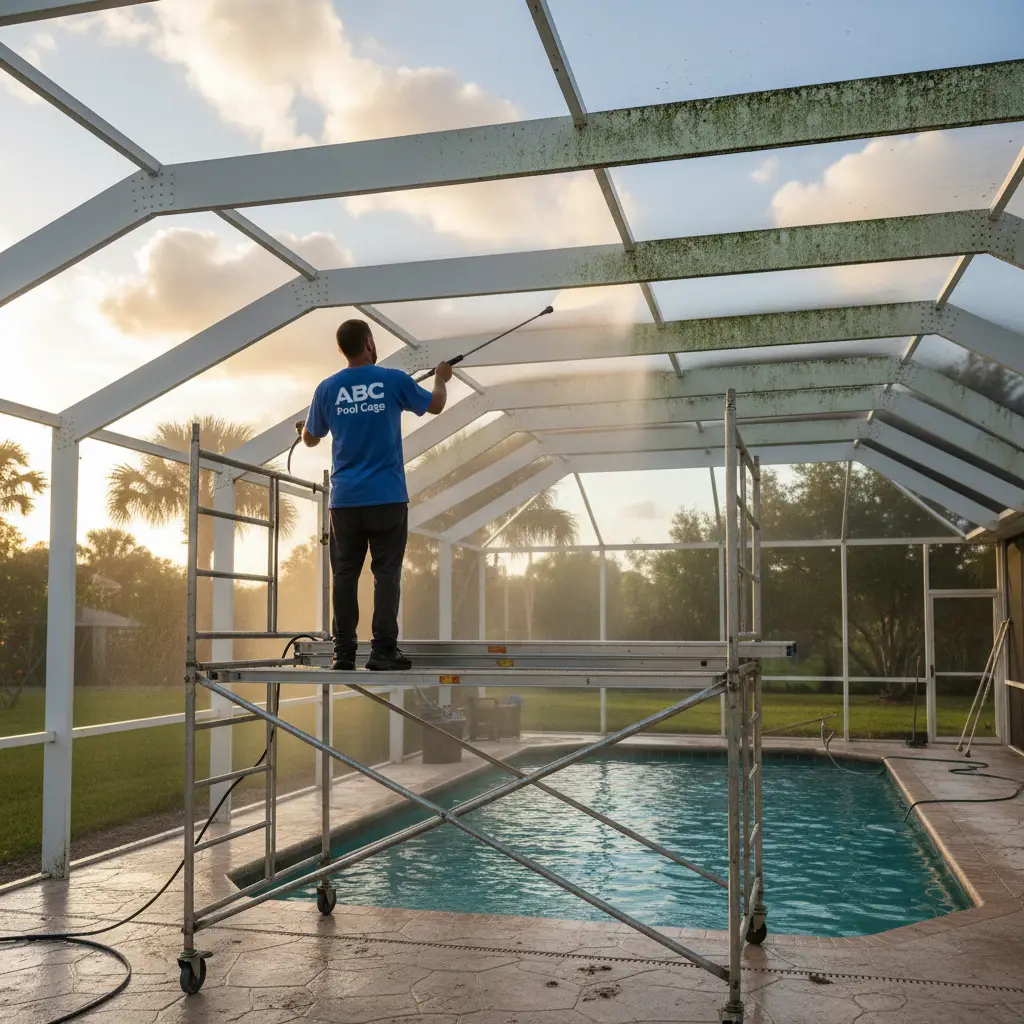
Regular Pool Cage Care and cleaning are the first steps in Pool Cage repair and in maintaining your pool enclosure. Here’s how to clean it effectively:
- Rinse with pressure washing:
Use a garden hose to rinse off dirt, dust, and debris. This prevents buildup that can lead to stains or corrosion. - Use a Mild Cleaning Solution:
Mix water with a gentle detergent or a specialized patio enclosure cleaner. Avoid harsh chemicals like bleach, as they may damage the coating or mesh. - Scrub Gently:
Use a soft-bristled brush to scrub the aluminum frame and mesh. Focus on corners and joints where dirt often accumulates. - Rinse Thoroughly:
Ensure all soap residue is rinsed away to prevent streaks or potential damage to the coating. - Dry Properly:
Allow the cage to air dry or use a microfiber cloth to wipe down the frame for a spotless finish.
Why Is Repainting Important for Pool Cage Repair and Maintenance?
Repainting your pool cage improves its look. It also provides additional protection against environmental damage. Here’s what you need to know:
- When to Repaint: Consider repainting if the paint is peeling, fading, or if you notice exposed aluminum.
- Choose the Right Screen Material and Paint: Pick high-quality, weather-resistant paint. Use screen material made for outdoor aluminum surfaces.
- Preparation Is Key: Clean and sand the aluminum frame before painting to ensure proper adhesion.
- Professional Help: For a flawless finish, consider hiring professional painters who specialize in patio enclosures.
How Can You Repair Damaged Mesh Screens?
Damaged mesh screens can compromise the functionality of your pool cage. Here’s how to address it:
- Identify the Damage: Inspect for tears, holes, or sagging mesh.
- Patch Small Tears: Use a mesh patch kit to fix minor damage.
- Replace Entire Panels: For extensive damage, replace the entire screen panel.
- Prevent Future Damage: Trim nearby trees and avoid placing sharp objects near the mesh.
What Are the Benefits of Regular Inspections?
Conducting regular maintenance inspections can help identify issues early and prevent costly Pool Cage repairs. Check for:
- Loose stainless steel Screws and Bolts: Tighten or replace as needed. This helps maintain the patio enclosure’s structural integrity.
- Corrosion or Rust: Address corrosion promptly by cleaning and applying a protective coating.
- Worn Out Mesh: Replace any worn or damaged mesh.
- Paint Condition: Touch up areas with peeling or faded paint.
How Can You Protect Your Pool Cage from the Elements?
Protecting your pool cage from environmental factors can significantly extend its lifespan. Consider these tips:
- Apply a Protective Coating:
Use a clear, weather-resistant coating to shield the aluminum from corrosion and UV damage. - Install Gutter Systems:
Proper drainage systems can prevent water from pooling around the base of the cage. - Use Pool Covers:
Covering your pool reduces the amount of moisture and chemicals that reach the patio enclosure. - Add Landscaping:
Planting shrubs or trees can act as windbreakers, reducing the impact of strong winds on the patio enclosure.
Why Consider Professional Maintenance Services?
While DIY maintenance is effective, professional patio enclosure services offer several advantages:
- Expertise: Professionals have the tools and knowledge to address complex issues.
- Efficiency: Save time and effort by outsourcing maintenance tasks.
- Long-Lasting Results: Quality materials and techniques ensure durability.
If you live in Sarasota, Florida, or nearby areas, hiring local pros can help. They know the climate and common issues.
Frequently Asked Questions about Pool Cage Care
1. How often should I clean my pool cage?
Cleaning every 3 to 6 months is recommended. You may need to clean more often if your patio enclosure is near trees. More frequent cleaning may also be needed with heavy use.
2. Can I repaint my pool cage on my own?
Yes, but ensure you use the right pool screens, paint, and tools. Hiring patio enclosure professionals can ensure a smoother, longer-lasting finish while adhering to all building codes.
.
3. How do I prevent algae growth on my pool cage?
Regular pressure washer cleaning and the use of an anti-algae spray can help prevent growth.
4. What’s the average lifespan of a pool cage?
Proper pool cage maintenance can last 10–20 years.
5. How do I know if it’s time to replace my pool cage?
If the structure is badly corroded, the mesh is badly damaged, or the aluminum structures are bent, it may be time to replace them.
By following these maintenance tips and fixing issues fast, you can keep your outdoor living space
and patio enclosure strong and attractive. Your screen enclosure can last 20+ years with proper care.
Share this post: