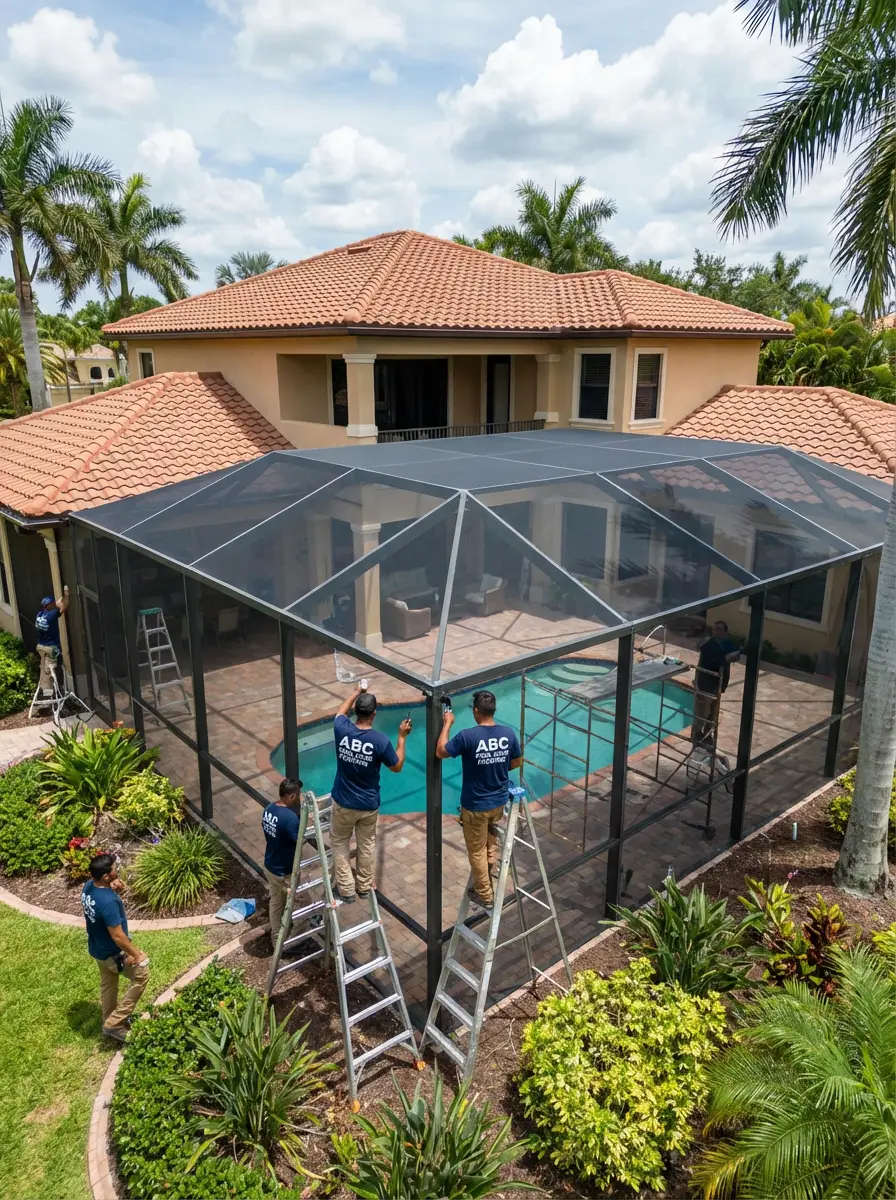
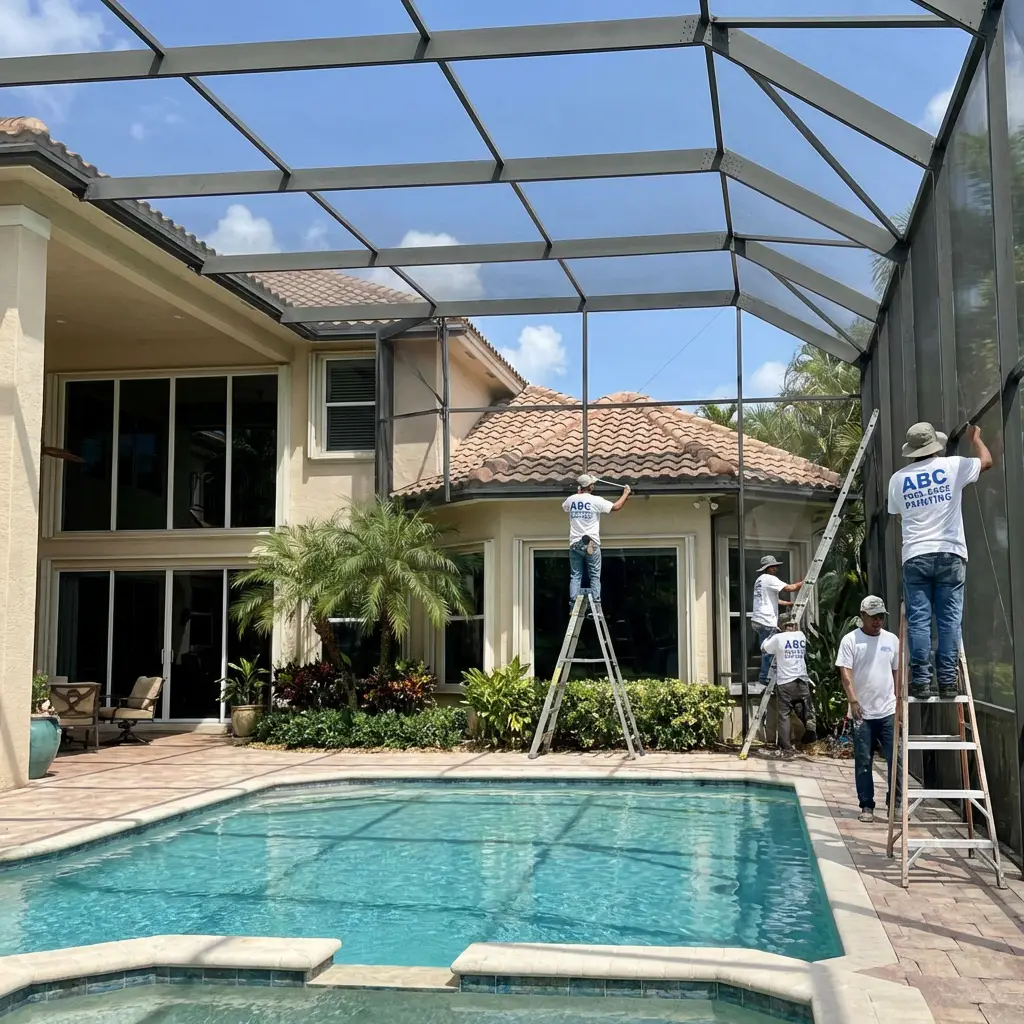
Why is Pool Cage Painting essential? Pool enclosures are a staple of Florida living, protecting your swimming area from debris, bugs, and harsh weather while extending your outdoor enjoyment. However, after years of exposure to intense sunlight, humidity, and storms, even the most durable pool cages begin to show their age. Faded paint, rust spots, and worn screens can transform your once-pristine poolside retreat into an eyesore that detracts from your property’s value.
If you’re facing this dilemma, you’re probably weighing your options: Should you invest in pool cage painting and restoration, or is it time for a complete replacement? The answer isn’t always straightforward, but understanding the costs, benefits, and potential drawbacks can help you make an informed decision.
Pool cage painting involves more than a simple coat of fresh paint. It’s a comprehensive restoration process that includes surface preparation, specialized coatings, and often rescreening to bring your enclosure back to life. While this investment can significantly improve your pool area’s appearance and extend the structure’s lifespan, it also comes with challenges that homeowners should carefully consider.
Understanding Pool Cage Painting Costs
The cost of pool cage painting varies significantly based on several factors, making it essential to understand these factors before committing to the project. Size plays the primary role—larger enclosures naturally require more materials and labor. The condition of your existing structure also impacts costs, as heavily damaged or corroded areas need extensive preparation work before painting can begin.
Location affects pricing as well. Pool cage painting in Sarasota, FL, or Tampa pool cage painting services may have different rates based on local labor costs and competition. Generally, you can expect to pay between $3 and $8 per square foot for professional pool cage painting, with most homeowners investing between $2,000 and $6,000 for a complete restoration.
The type of paint and preparation required significantly influences the final cost. High-quality marine-grade coatings like Sherwin-Williams BOND-PLEX Acrylic Coating cost more upfront but provide superior durability and longevity. Cheaper paint options may seem attractive initially, but they often require more frequent repainting, making them costlier over time.
Don’t forget about additional expenses beyond the paint itself. Pool cage painting and rescreening typically go hand-in-hand, as screens must be removed before painting and replaced afterward. New screens can add $1 to $3 per square foot to your project cost, but they’re often necessary to complete the restoration properly.
The Pool Cage Painting Process
Professional pool cage painting follows a meticulous process designed to ensure maximum durability and appearance. The work begins with protecting your pool and surrounding areas using thick plastic covers and tape to prevent contamination from paint overspray.
Screen removal comes next, as all existing screens and splines must be carefully taken down and disposed of. This step is crucial because paint cannot be applied effectively with screens in place, and attempting to paint around them results in an uneven, unprofessional finish.
Surface preparation is perhaps the most critical phase of pool cage painting. The entire structure is pressure-washed with specialized equipment to remove loose paint, oxidation, mold, and other contaminants. Areas with corrosion receive additional attention through sanding to create a smooth, clean surface that promotes proper paint adhesion.
After pressure washing, the structure is wiped down with alcohol-soaked rags to ensure complete cleanliness. This attention to detail separates professional pool cage painting from amateur attempts and significantly impacts the quality and longevity of the final result.
The actual painting process typically involves applying two coats of high-quality acrylic coating using spray equipment. Rolling or brushing paint onto aluminum enclosures doesn’t provide the even coverage necessary for a professional finish. Specialized spray tips minimize overspray while ensuring complete coverage of all surfaces.
Benefits of Pool Cage Painting
A professionally painted pool cage delivers numerous advantages that extend well beyond simple aesthetics. The most immediate benefit is the dramatic improvement in your property’s curb appeal. A fresh, uniform finish transforms a tired-looking enclosure into an attractive feature that complements your home’s exterior.
Cost-effectiveness represents another significant advantage of pool cage painting over complete replacement. While painting requires a substantial investment, it typically costs 30-50% less than installing a new enclosure. These savings allow homeowners to address aesthetic and functional concerns without the major expense of total replacement.
Protection against corrosion and rust considerably extends your enclosure’s lifespan. Quality marine-grade coatings create a barrier against moisture and salt air, preventing oxidation that can lead to structural weakening. This protection is especially valuable in coastal areas where salt exposure accelerates metal deterioration.
Pool cage painting also provides an opportunity to update your enclosure’s color to match changes in your home’s exterior or landscaping. Many homeowners choose neutral tones like white or bronze, but custom colors allow for personalization that reflects your style preferences.
Enhanced property value is another compelling benefit. A well-maintained pool enclosure signals to potential buyers that the property has been cared for, potentially increasing your home’s market appeal and sale price.
Drawbacks and Challenges
Despite its benefits, pool cage painting comes with several challenges that homeowners should understand before proceeding. The labor-intensive nature of the work requires specialized skills and equipment that most general contractors don’t possess. Finding qualified painters who specialize in aluminum enclosures can be difficult, leading to scheduling delays.
Weather dependency presents ongoing challenges throughout the project. High humidity, rain, or excessive wind can halt work and extend project timelines. Florida’s unpredictable weather patterns often complicate scheduling and may require flexible timing to complete the work properly.
The spray application method, while providing the best finish, requires extensive masking and protection of surrounding areas. Even experienced painters may struggle with overspray on windy days, potentially affecting pool decks, landscaping, or nearby structures.
Surface preparation quality directly impacts the final result, and inadequate prep work leads to paint failure. Without proper cleaning, etching, and priming, even high-quality paint may not adhere properly, leading to peeling, flaking, or premature deterioration.
Screen replacement adds complexity and cost to the project. Removing and reinstalling screens requires additional contractors or specialized skills, increasing both the timeline and expense of the restoration.
When Painting Makes Sense
Pool cage painting represents the best choice under specific circumstances. If your enclosure’s structural integrity remains sound but the finish shows signs of fading, chalking, or minor oxidation, painting can effectively restore its appearance. This scenario commonly occurs with enclosures that are 10-15 years old and have received regular maintenance.
Budget constraints often make painting the practical choice when replacement costs exceed your available funds. A quality paint job can extend your enclosure’s life by 10-15 years, providing time to save for eventual replacement while maintaining your outdoor space’s functionality and appearance.
Color updates or style changes also justify painting expenses. If you’ve updated your home’s exterior or want to refresh the look of your pool area, painting offers an affordable way to achieve these aesthetic goals without major construction.
Properties in less harsh environments may benefit more from painting than those in extreme coastal conditions. Enclosures protected from direct salt spray and severe weather typically respond better to restoration efforts and maintain painted finishes longer.
Alternatives to Consider
Before committing to pool cage painting, consider alternative solutions that might better address your specific situation. Complete replacement makes sense when structural damage is extensive, screens require frequent repairs, or the enclosure is nearing the end of its useful life.
A partial restoration focusing on the most visible or damaged sections can provide improvement at a reduced cost. This approach works well when budget constraints limit comprehensive restoration but some improvement is necessary.
Professional cleaning and minor repairs sometimes address concerns without full painting. Pressure washing, spot treatments, and screen repairs can significantly improve appearance and function at a fraction of the cost of painting.
Upgraded materials during replacement offer long-term value that painting cannot match. Modern enclosures feature improved powder coating, stronger aluminum alloys, and better screen materials that resist fading and damage more effectively than older installations.
Making the Right Decision for Your Home
Pool cage painting can be worth the investment when your enclosure’s structure remains sound but needs aesthetic and protective restoration. The key lies in realistic expectations, proper contractor selection, and understanding the long-term maintenance requirements of any painted surface.
Consider your budget, timeline, and long-term plans for your property when making this decision. If you plan to stay in your home for many years and your enclosure has good bones, painting represents a smart investment. However, if you’re dealing with structural issues or planning to sell soon, replacement might provide better value.
Research contractors carefully, focusing on those who specialize in pool cage painting and can provide references from recent projects. The quality of workmanship directly impacts your satisfaction with the final result and the durability of your investment.
Meta data
Meta title
Pool Cage Painting: Is It Worth the Investment?
Meta description
Discover if pool cage painting is worth it. Learn about costs, benefits, and alternatives to make the best decision for your Florida pool enclosure.