
Pool Cage Rescreening in New Port Richey, FL
We replace torn, sun-brittle and storm-damaged screens on New Port Richey pool cages, matching screen type and gauge to your enclosure's age and sun exposure.
- Free Written Estimate
- Fast Scheduling
- Built for Florida Weather
- Licensed & Insured
- Free Written Estimates
Request Your Free Estimate
Request a free written estimate for your pool cage screens.
- Free No-Obligation Estimate
- Fast Response Times
- No Pressure Consultation
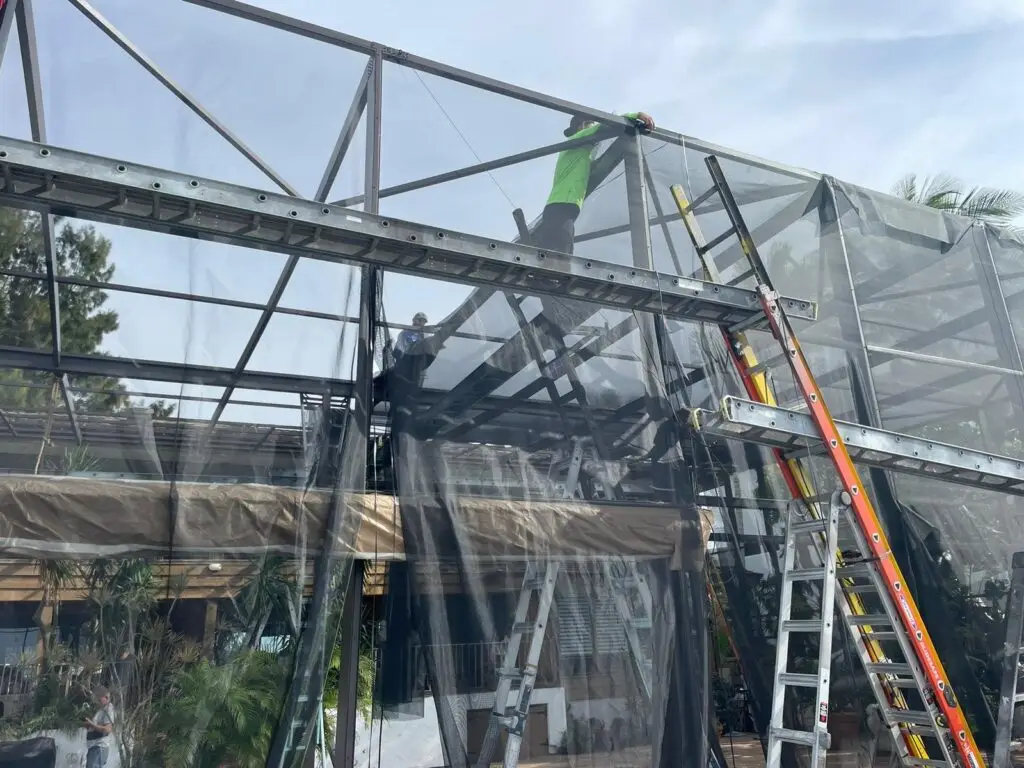
New Port Richey sits along the Pithlachascotee River near Florida’s Nature Coast, a few miles north of Tampa Bay and inland from Port Richey. The humidity, afternoon thunderstorms, and stretches of direct Gulf-adjacent sun put steady stress on pool cage screening. Panels in older neighborhoods near the river and in mobile home and manufactured housing communities common to the area often show more wear, since many of these cages were screened years ago with lighter-gauge mesh not built for today’s storm patterns.
We have worked on cages across New Port Richey, from older site-built homes to newer construction near Trinity and Little Road, and the damage we see repeats itself: brittle screen that tears at the frame, pulled spline, and panels clouded from UV exposure. Rescreening addresses this directly, restoring airflow and visibility without the cost of replacing the aluminum frame itself, which is usually still sound.
Sun, Storms, and Screen Wear by Neighborhood
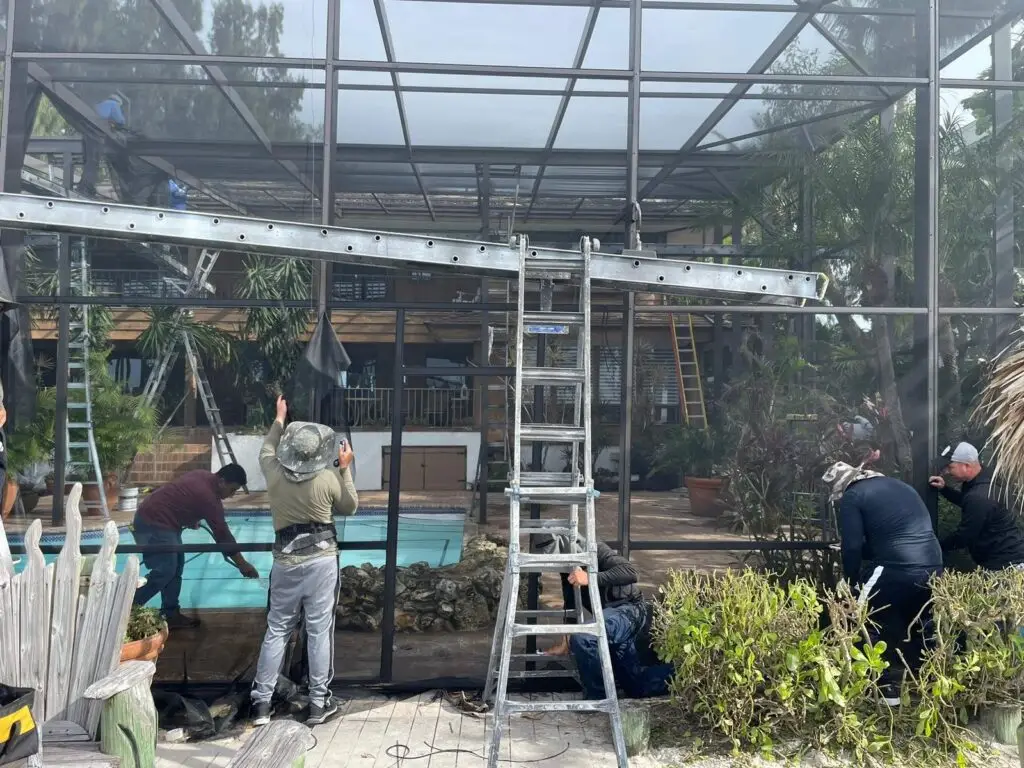
Screen life in New Port Richey depends heavily on which side of the cage faces the afternoon sun. West and south-facing panels take the brunt of UV exposure through the summer months, and that’s usually where we find brittle, discolored screen first, regardless of how new the rest of the cage looks.
Neighborhoods with mature tree canopy, like pockets near Orange Lake and Magnolia Valley, see less direct sun but more debris and branch strikes during storms. Manufactured home communities, common throughout this part of Pasco County, often have older cage frames with screen that was never upgraded, so tears cluster around panel edges and corners where spline has dried out.
Summer thunderstorms roll in most afternoons from June through September, and wind-driven rain finds any weak spline or loose panel fast. A cage that looks fine in spring can show torn or ballooning screens by fall if the spline channel has already started to crack from sun exposure.
How We Rescreen a Pool Cage
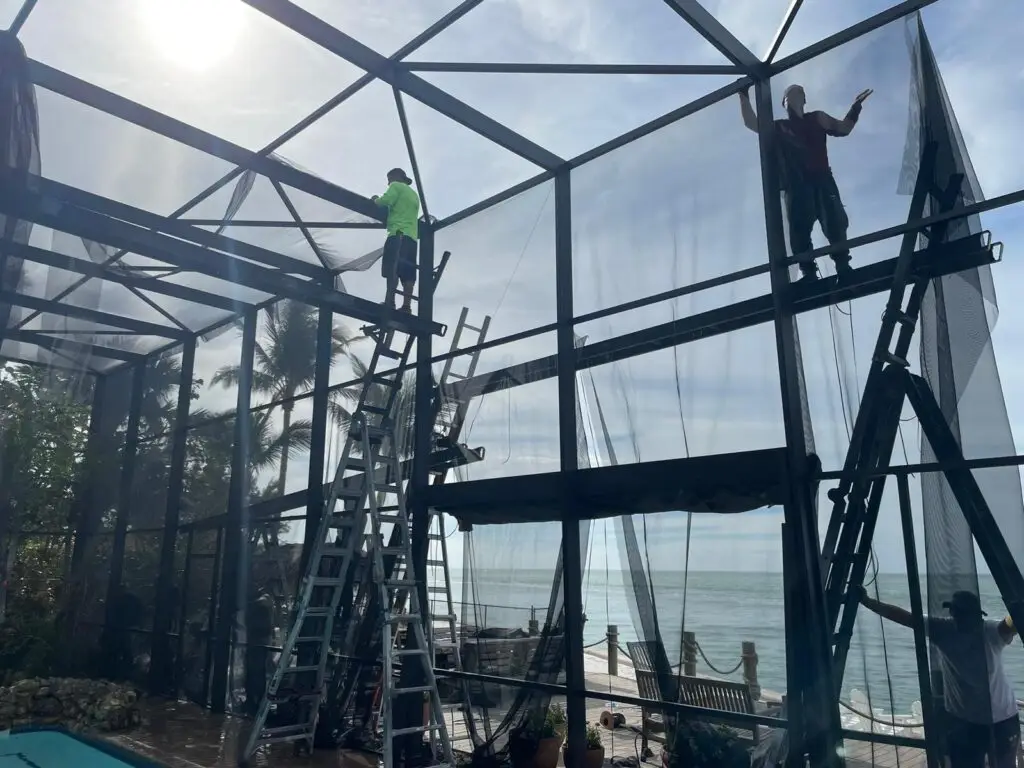
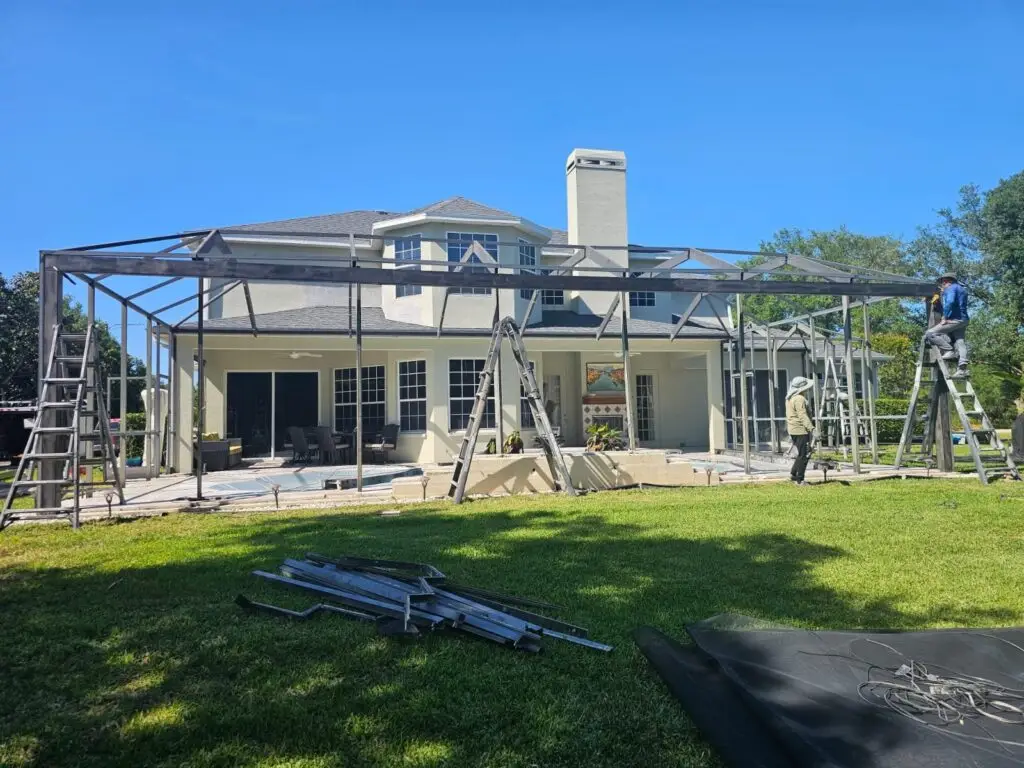
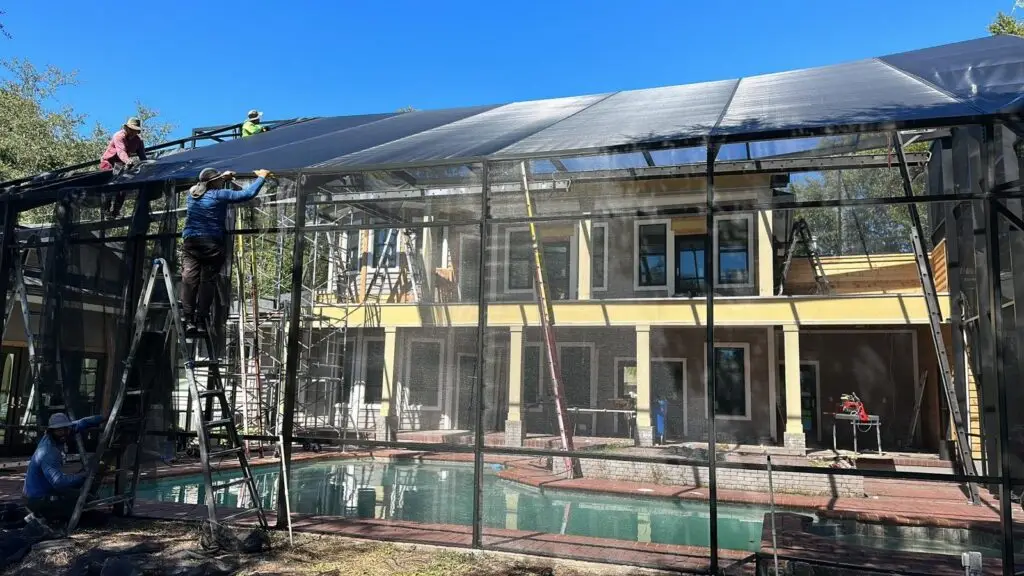
We start by walking the full cage, panel by panel, checking frame condition, spline channels, and how each screen is holding tension. This tells us whether a panel needs new screen only or whether the frame itself has issues that should be addressed first, since rescreening a bent or corroded frame section doesn’t hold up long.
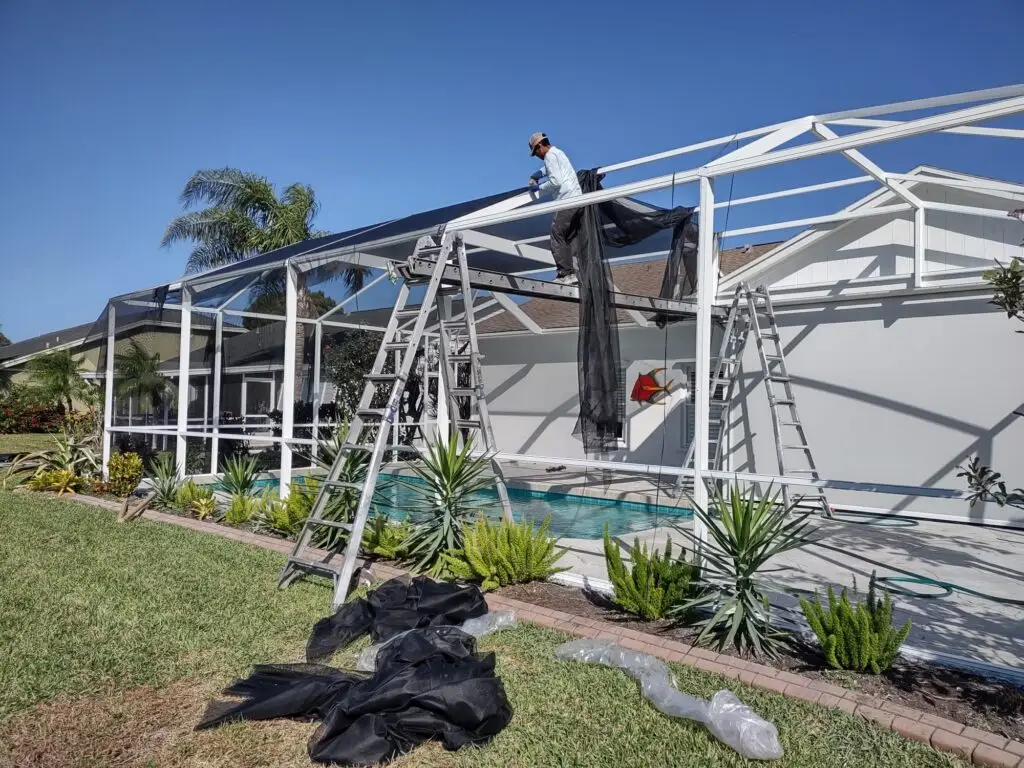
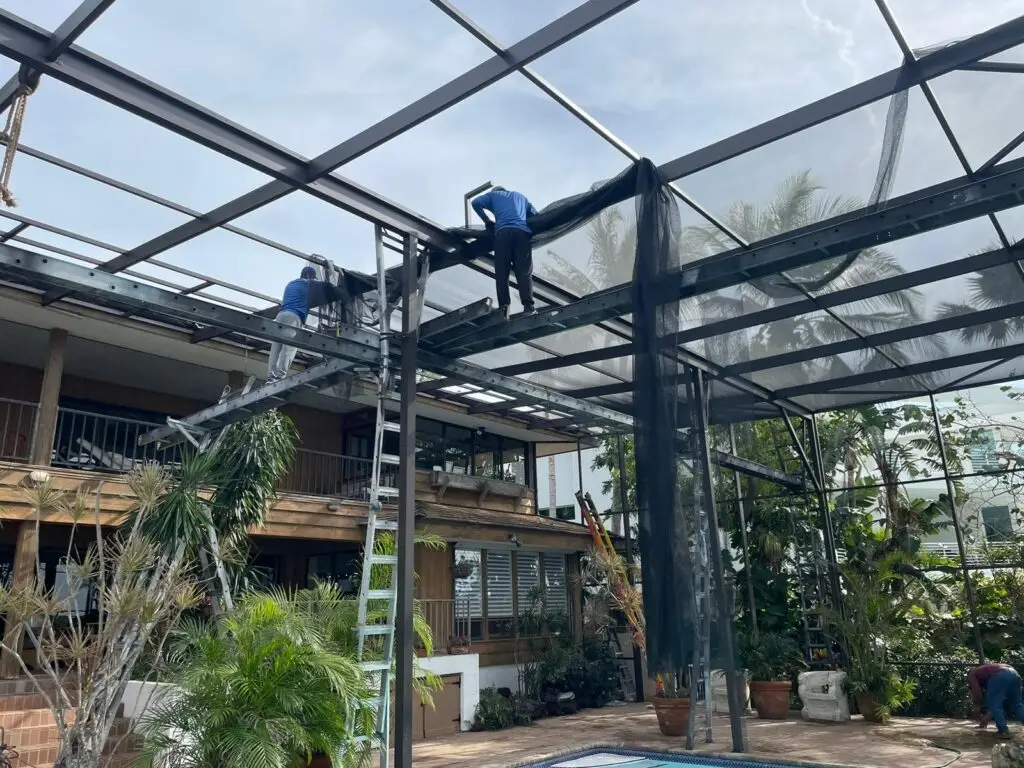
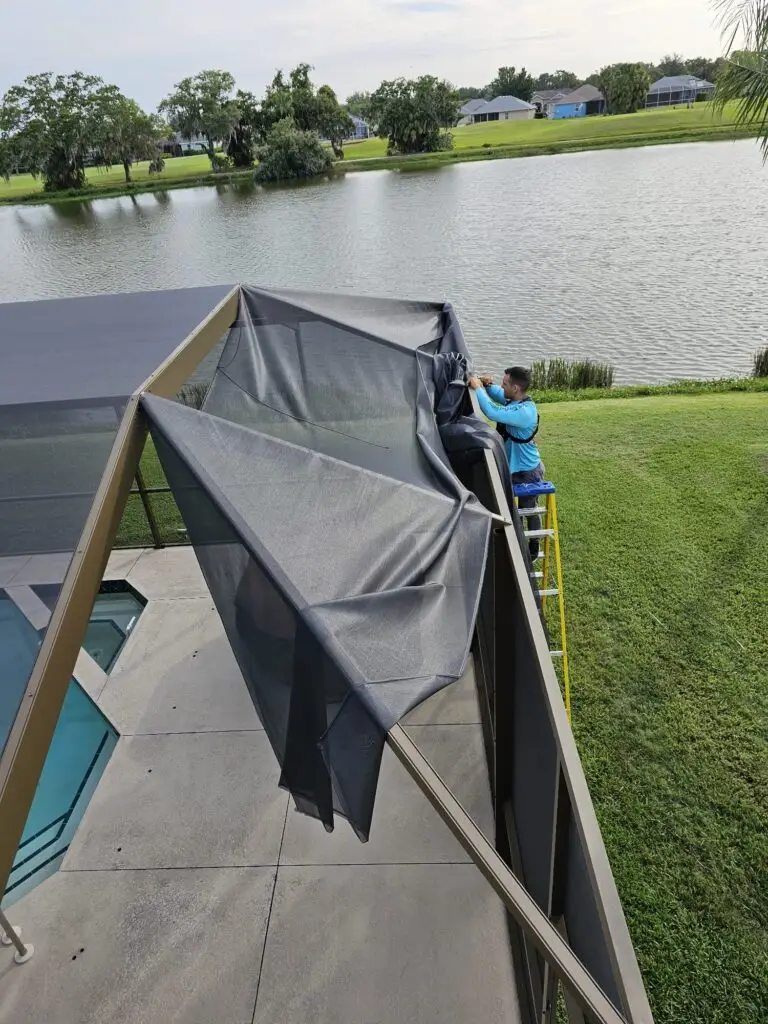
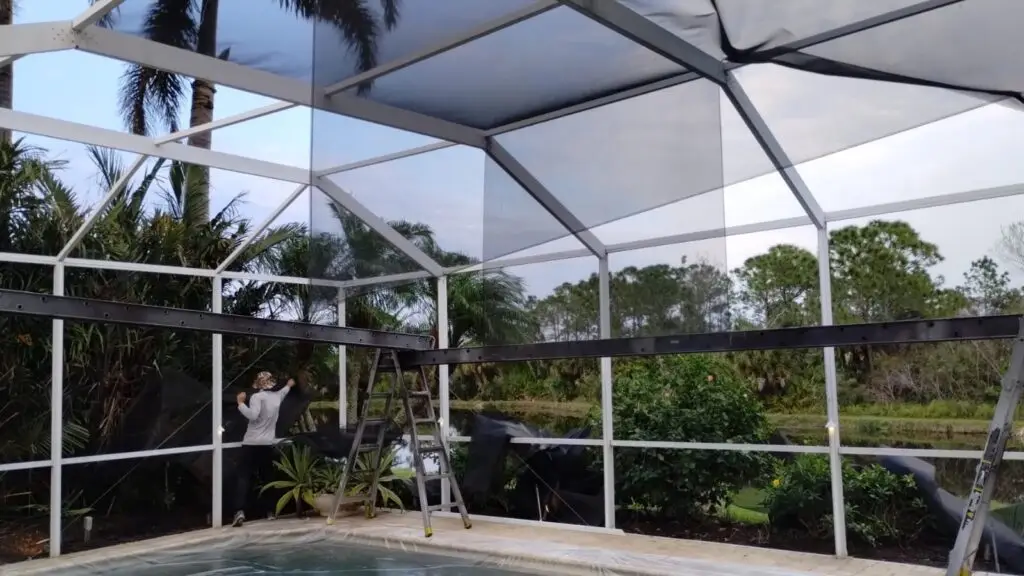
Old screen and spline are removed cleanly from each panel frame without stretching or distorting the aluminum. We then cut new screen to size with extra material for tensioning, lay it into the channel, and roll fresh spline to lock it in place, working panel by panel so the cage stays functional during the job.
Material choice matters here. Standard fiberglass screen suits most homes, while pet-resistant or solar screen fits households with dogs or west-facing lanais that take heavy sun. Each panel is tensioned by hand so it sits drum-tight without stressing the frame, then checked once more before we move to the next one.
- Panel-by-panel inspection of frame and spline condition
- Careful removal of old screen without warping the frame
- Screen selection: standard, pet-resistant, or solar options
- Hand-tensioning each panel for a tight, even fit
- Final walk-through check before the job is called complete
Timeline, Access, and HOA Approval
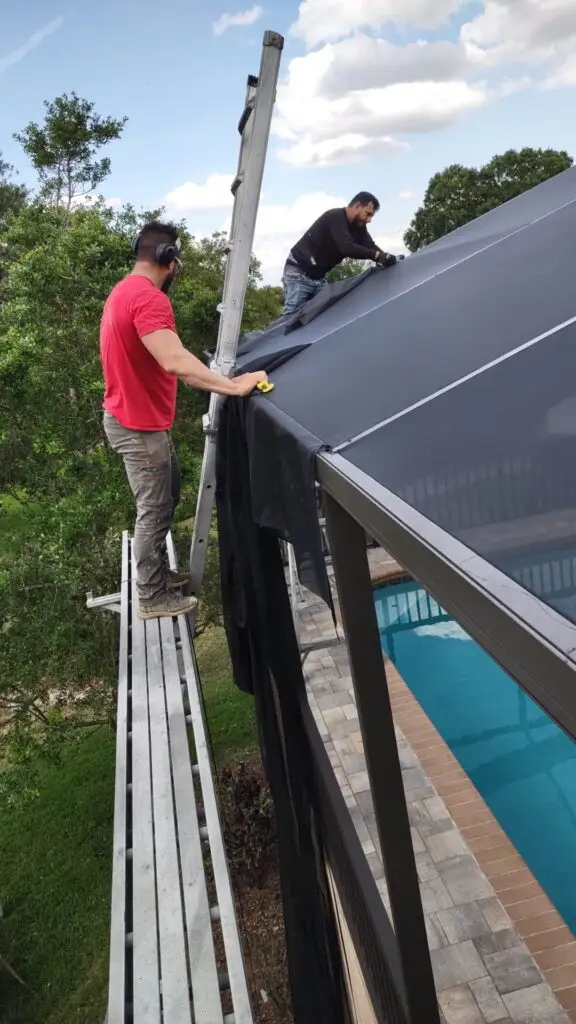
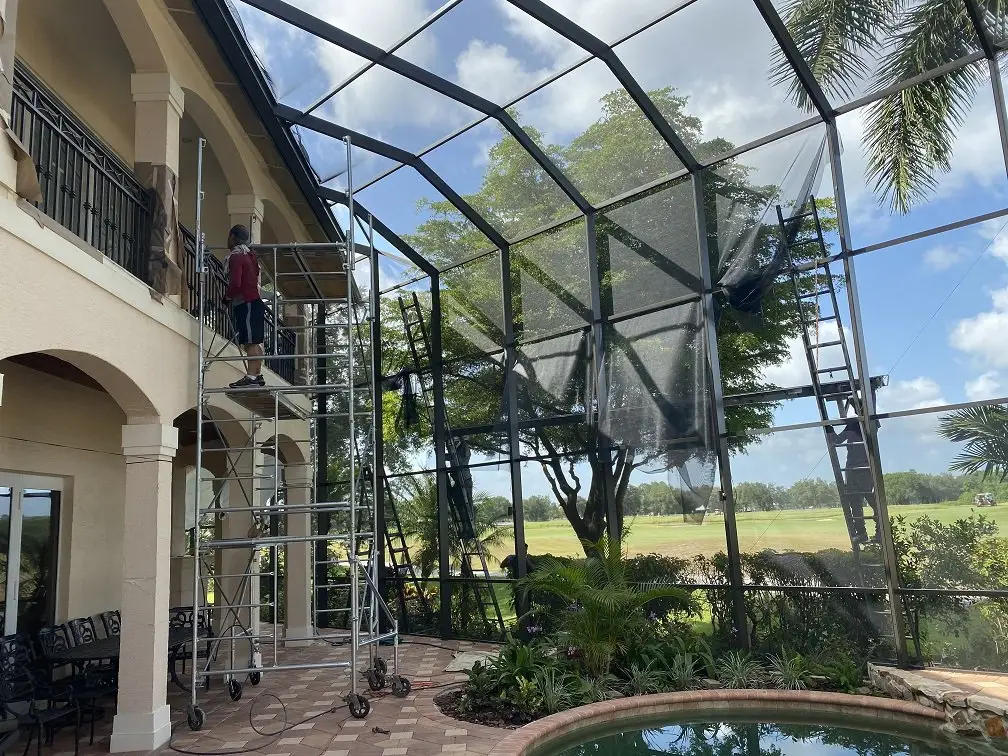
Most rescreening jobs in New Port Richey run one to three days, depending on cage size and how many panels need full screen replacement versus spot repair. Two-story cages and pool enclosures with custom panel shapes, common in some of the newer construction near Trinity and Little Road, take longer because each panel is measured and cut individually.
We need clear access to the lanai, including gates wide enough for ladders and a path that is not blocked by patio furniture, grills, or potted plants. Pets should be kept indoors during the work, since panels are open while old screen is removed and new screen is fitted.
Many New Port Richey neighborhoods, including deed-restricted communities along the coast and some of the 55-and-over communities inland, require HOA approval before exterior work begins, even for rescreening that does not change color. We can provide a written estimate and material specifications for submission, but the homeowner is responsible for getting approval before we schedule the job.
- Typical job length: one to three days for most residential cages
- Clear access to gates, ladders, and panel areas needed
- Pets kept indoors during active screen removal and installation
- HOA or community approval should be secured before scheduling
- Rain delays are common in summer and are rescheduled, not rushed
Mistakes That Shorten a Rescreen Job
A frequent problem we see on estimates is mismatched mesh gauge, where a previous rescreen used a lighter screen than the frame and spline channel were built for. This causes screens to bow, pull loose at the corners, or tear within a year or two, especially on panels facing west or south where heat and UV exposure are highest.
Skipping a frame inspection is another shortcut that costs homeowners later. If a frame is bent, corroded at the fasteners, or no longer square, new screen stretched over it will fail early regardless of material quality. We check each panel’s frame before fitting screen, not after.
Patching a torn panel instead of replacing the full screen may look fine for a season, but the surrounding mesh is usually just as brittle from sun exposure and will tear again nearby. We replace screen panel by panel so the whole enclosure ages at the same rate, which also keeps the finished look consistent.
- Mismatched mesh gauge leads to bowing and early tearing
- Bent or corroded frames should be repaired before rescreening
- Patching brittle screen instead of replacing the panel
- Inconsistent mesh weight across panels shortens overall lifespan
Process and Timeline
- Schedule a free written estimate and walk the cage panel by panel.
- Confirm mesh type, gauge, and panel count, and note any frame repairs needed.
- Submit specifications to the HOA or community association if approval is required.
- Remove old screen and spline, inspect and clean the frame channels.
- Cut and install new screen panel by panel, checking tension and fit.
- Final walkthrough to confirm all panels are secure and debris is cleared from the yard.
Most New Port Richey rescreening projects take one to three days from start to finish, not counting any time needed for HOA approval.
New Port Richey Pool Cage Rescreening FAQ
How long does pool cage rescreening take for an average New Port Richey home?
Most residential cages take one to three days depending on the size of the enclosure and the number of panels being replaced. Weather is the main variable, since wind and rain can push a job back a day or two during the summer storm season.
What screen mesh holds up best against Florida sun and storms?
Standard fiberglass insect screen is the common choice for most homes and holds up well with regular cleaning, but many homeowners near the Gulf upgrade to a heavier pet-resistant or solar mesh for added durability. We go over mesh weight and UV resistance options during the estimate so you can weigh cost against how long you want the screen to last.
Do I need HOA approval to rescreen my pool cage in New Port Richey?
Many New Port Richey communities, including some deed-restricted neighborhoods and manufactured home parks, require a submission before rescreening or changing screen color. We can provide the material and color details you need for your HOA paperwork, but approval and timing are between you and your association.
Can you rescreen just the damaged panels instead of the whole cage?
Yes, spot rescreening of individual torn or sagging panels is common and often the right call if the frame is sound and the rest of the screen is in good shape. We inspect the full cage first so you know whether a partial job will leave mismatched screen age next to newer panels.
Will rescreening fix sagging or bowed screen panels?
New screen stretched tight across the existing spline channel will usually correct minor sag, but if the bowing comes from a bent frame member or stripped spline track, the frame needs repair first. We flag frame issues separately on the estimate so rescreening isn't done over a problem that will reappear.
How do I know if I need rescreening or if the whole cage needs replacing?
If the aluminum frame is straight, free of rust-through, and the fasteners are holding, rescreening is usually enough even if the screen itself is badly torn. Full cage replacement comes into play when the frame has corroded at the footings or joints, which we check during the on-site walkthrough.
More Pool Cage Services in New Port Richey
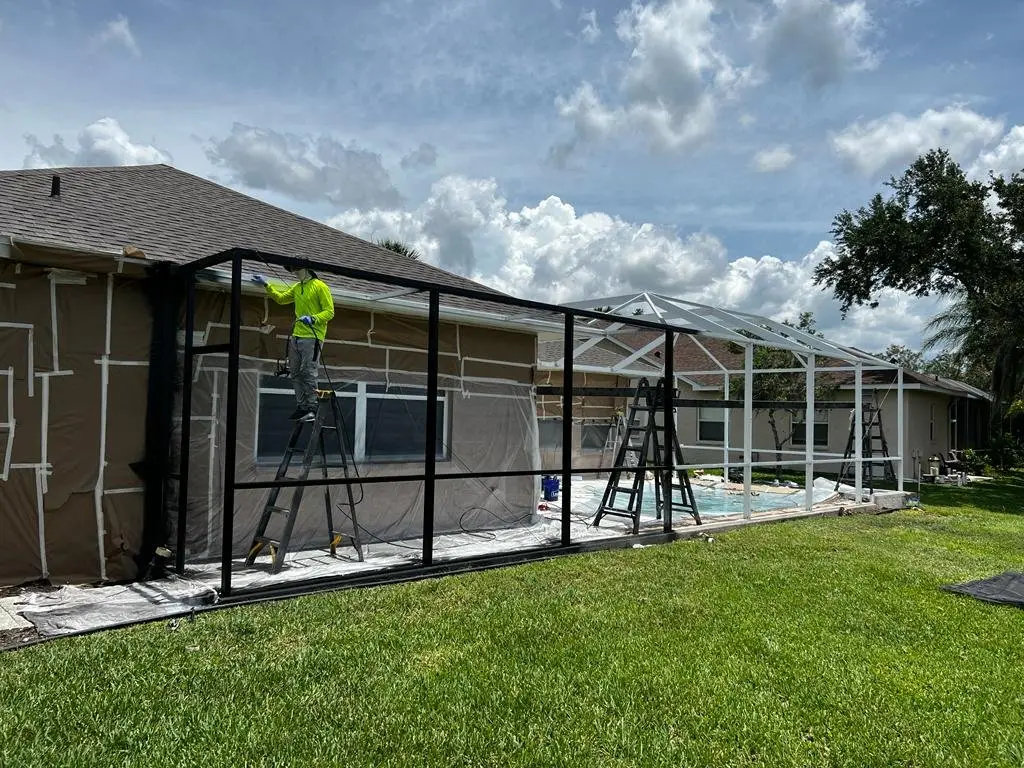
Beyond rescreening, we also handle cage painting for homeowners in New Port Richey who want to refresh faded or chalking aluminum frames. Pool Cage Painting.
Nearby Areas We Also Serve
Crews working out of New Port Richey also take on rescreening projects in the surrounding Pasco and Pinellas communities. Wesley Chapel, Bradenton, Tampa, Sarasota, Naples and Fort Myers.
Statewide details, colors and the full process are on our main pool cage rescreening page.
Recent Work
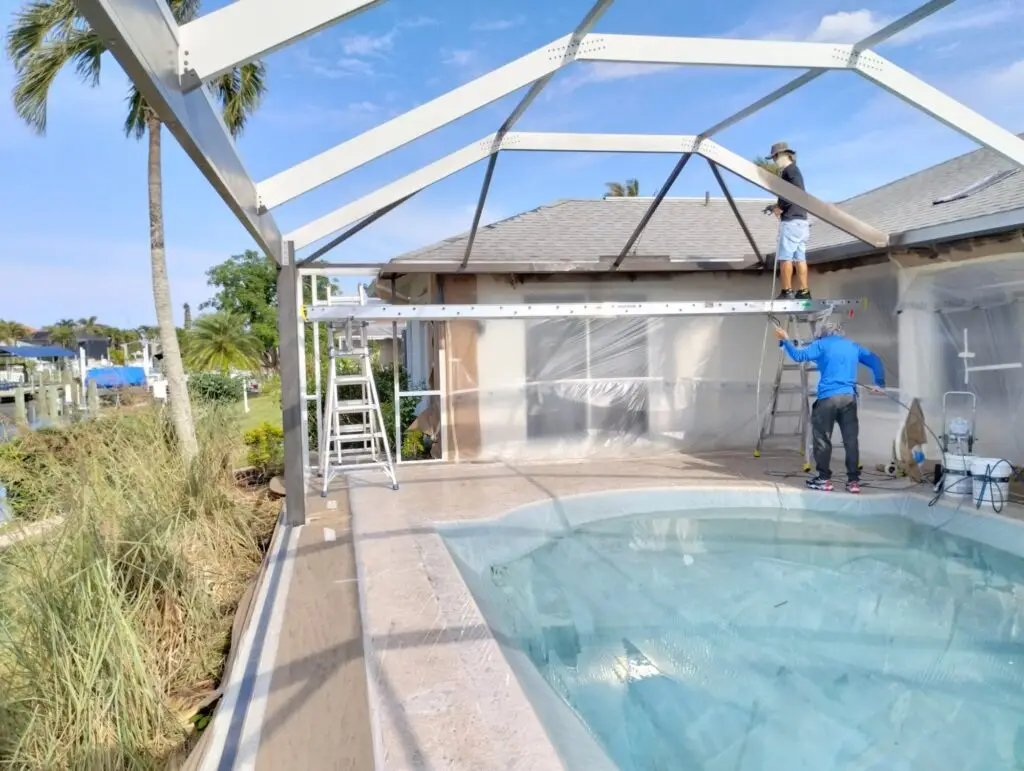
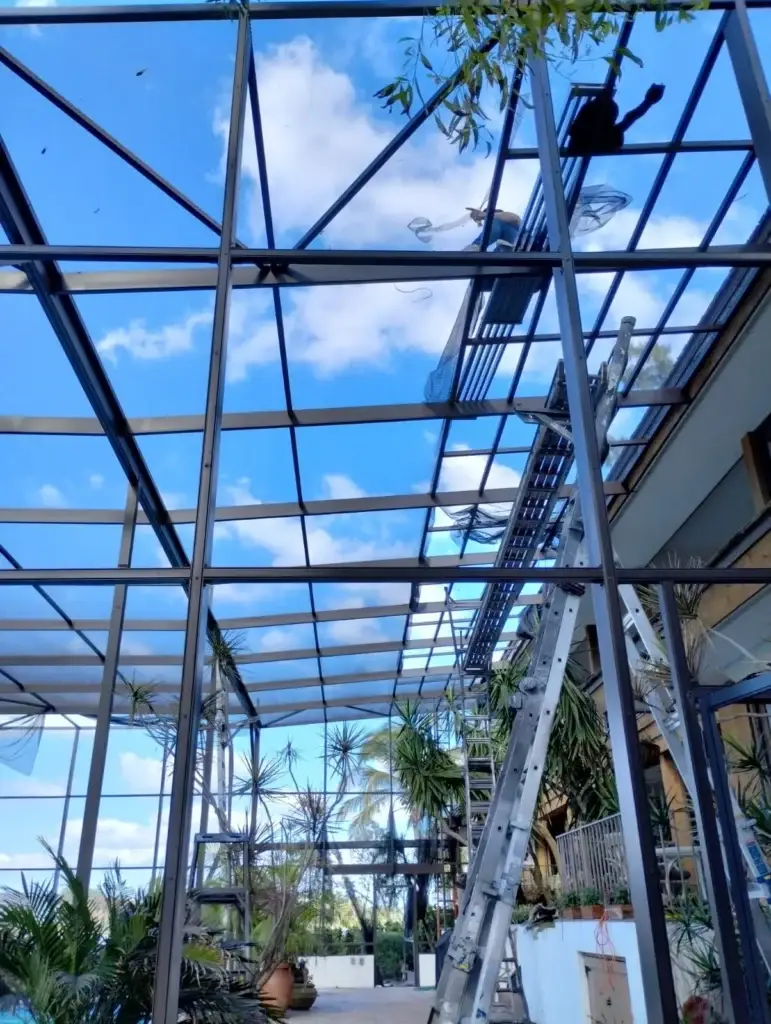
Request a New Port Richey Estimate
Send a few photos of your pool cage along with your New Port Richey address through the form, or call (844) 222-2115, and we'll follow up with a written estimate. There's no cost or obligation to request one.
Last reviewed: October 30, 2026