
Pool Cage Rescreening in North Fort Myers
We replace torn, sagging, or sun-worn screen panels on North Fort Myers pool cages with materials chosen for Southwest Florida sun and salt air.
- Free Written Estimate
- Fast Scheduling
- Built for Florida Weather
- Licensed & Insured
- Free Written Estimates
Request Your Free Estimate
Tell us about your cage and we will schedule a free on-site estimate.
- Free No-Obligation Estimate
- Fast Response Times
- No Pressure Consultation
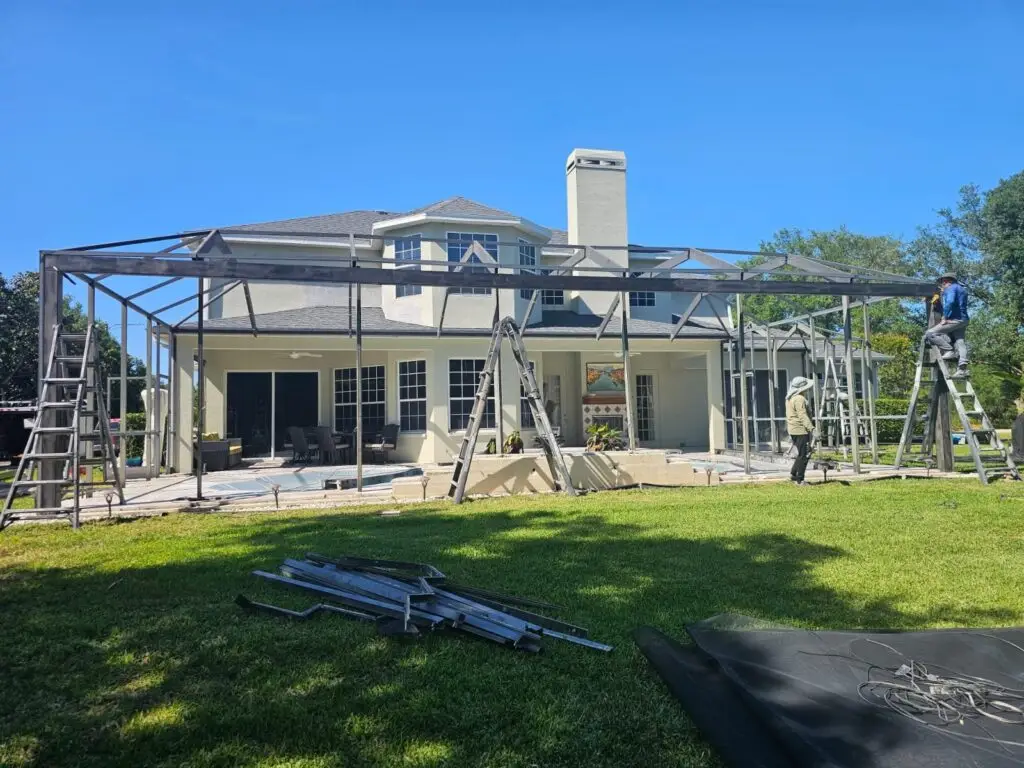
North Fort Myers sits across the Caloosahatchee River from downtown Fort Myers, and many of its roughly 43,000 residents live in riverfront communities, manufactured home parks, and older subdivisions where pool cages have been standing for decades. Constant humidity, UV exposure, and river-adjacent moisture break down screen fiber faster than most homeowners expect, especially on cages facing west or south toward open water.
We have worked on cages across North Fort Myers, from older aluminum frames near the river to newer enclosures further inland toward Bayshore and State Road 78. Rescreening restores airflow and visibility without the cost of a full cage replacement, and we match panel spacing, screen weight, and frame condition to what your enclosure actually needs rather than a one-size approach.
River Humidity and Screen Wear Patterns
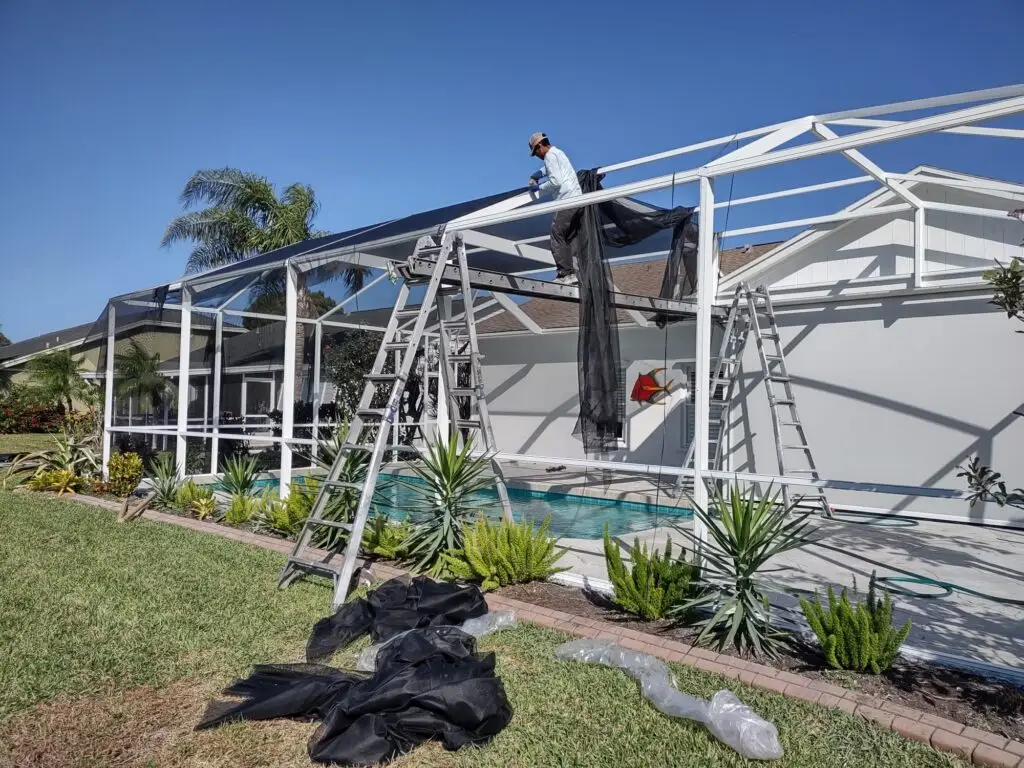
Neighborhoods along the Caloosahatchee, from Moody River Estates to the older streets near Hancock Bridge Parkway, carry moisture in the air most of the year. That dampness settles into screen fiber and aluminum fasteners, and it does not dry out fully even on sunny days once tree canopy or a riverfront lot blocks airflow across the cage.
Older North Fort Myers subdivisions tend to have mature oak and pine cover, which keeps pollen, leaf debris, and organic matter sitting on screen panels for weeks at a time. That buildup holds moisture against the mesh and feeds the dark mildew staining we see on porch and lanai panels that face north or stay shaded most of the day.
West-facing panels tell a different story. They take direct afternoon sun across the river with little obstruction, and that UV load dries out polyester and fiberglass screen fiber from the inside. By the time a homeowner notices sagging or small tears, the mesh nearby is usually brittle enough to fail with the same amount of pressure.
The Rescreening Process, Panel by Panel
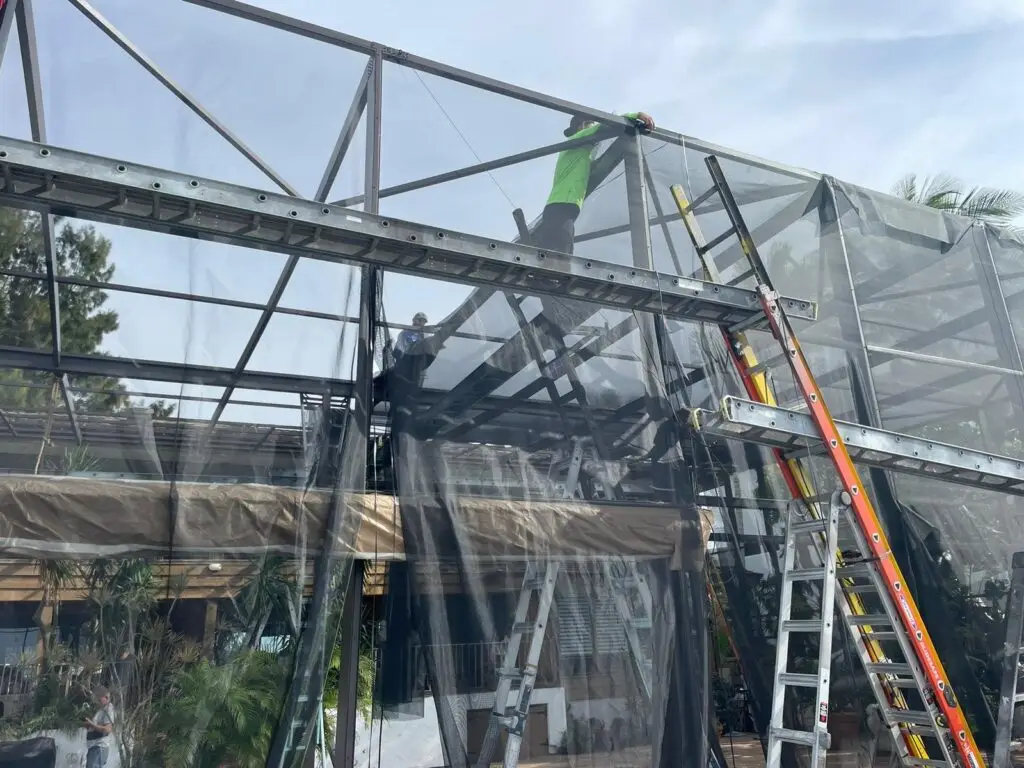
We start with a walk-around inspection, checking every panel for brittleness, discoloration, and loose spline before touching a screwdriver. This is also when we look at the aluminum frame itself, since bent or corroded framing changes how a panel should be re-tensioned and sometimes needs attention before new screen goes in.
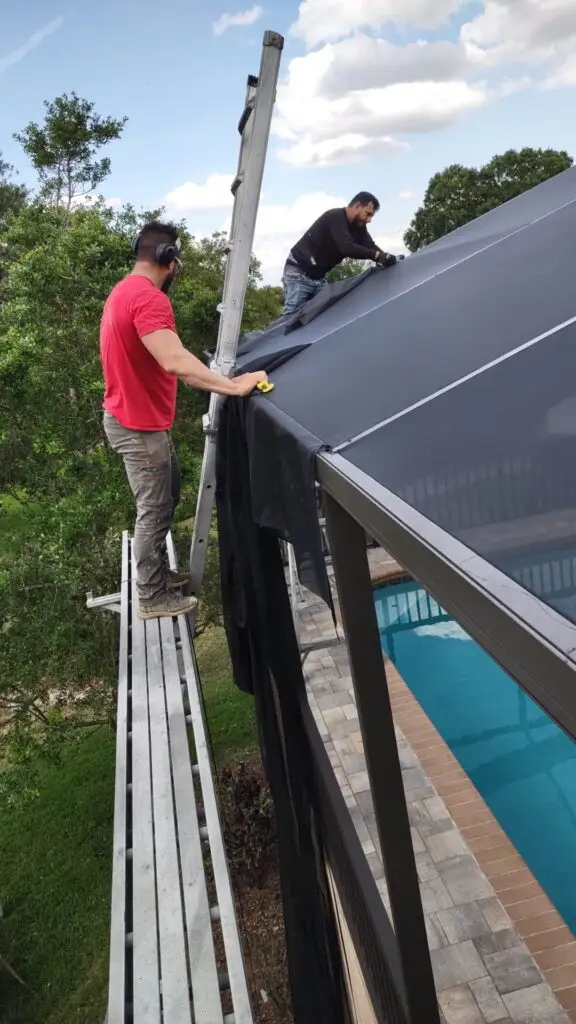
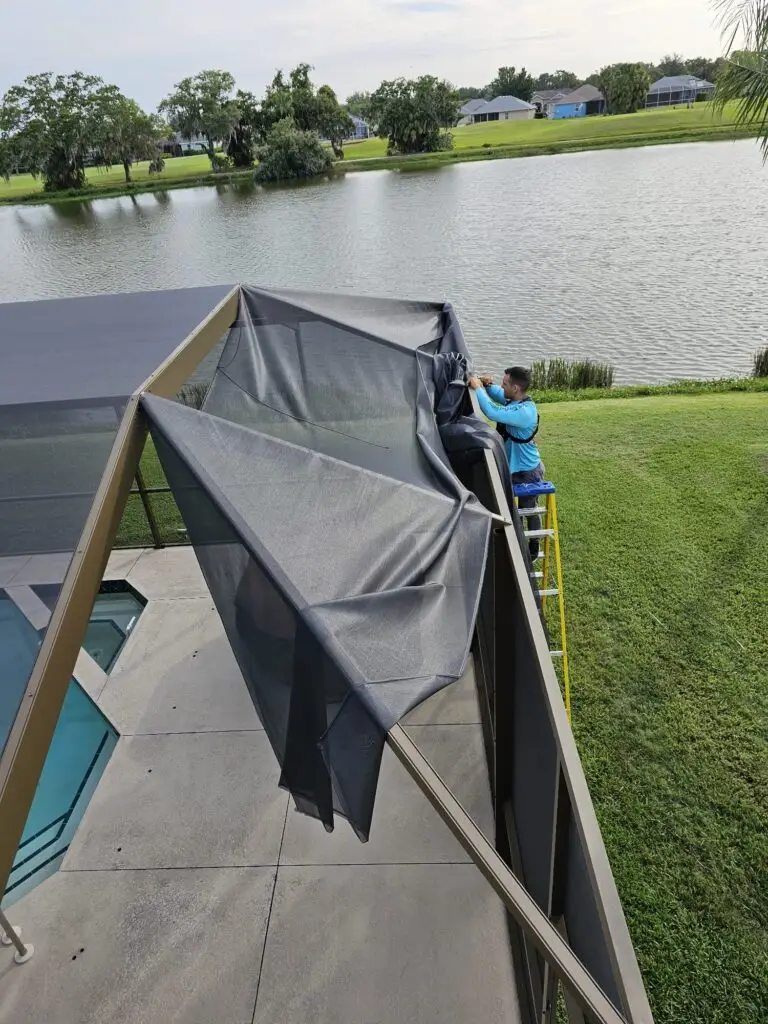
Old screen and spline come out panel by panel, not all at once, so the frame keeps its shape and nearby panels stay secure while work is underway. Spline channels get cleaned of old rubber, dirt, and corrosion residue before new spline is seated, since a channel packed with debris will not hold a screen tight for long.
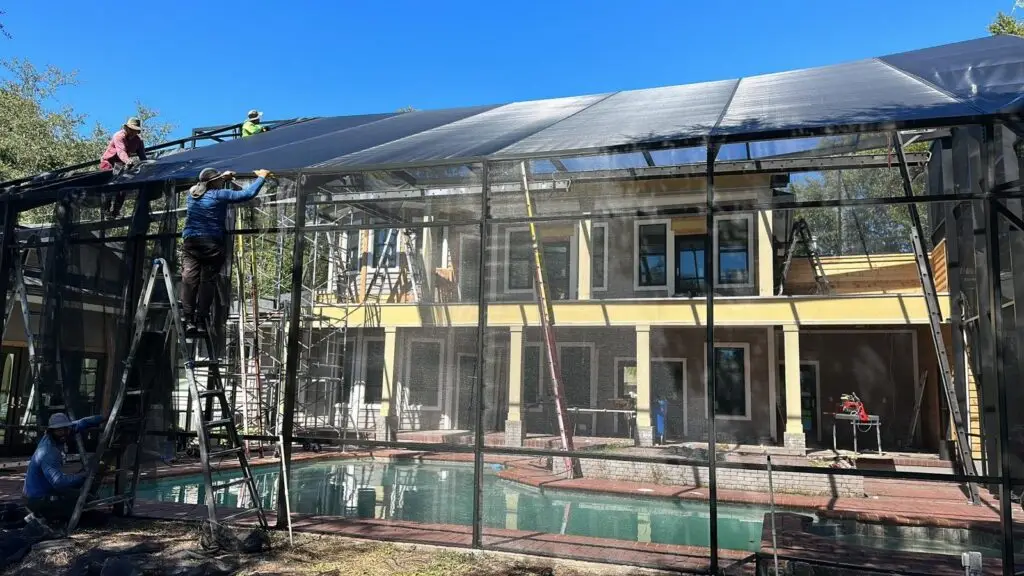
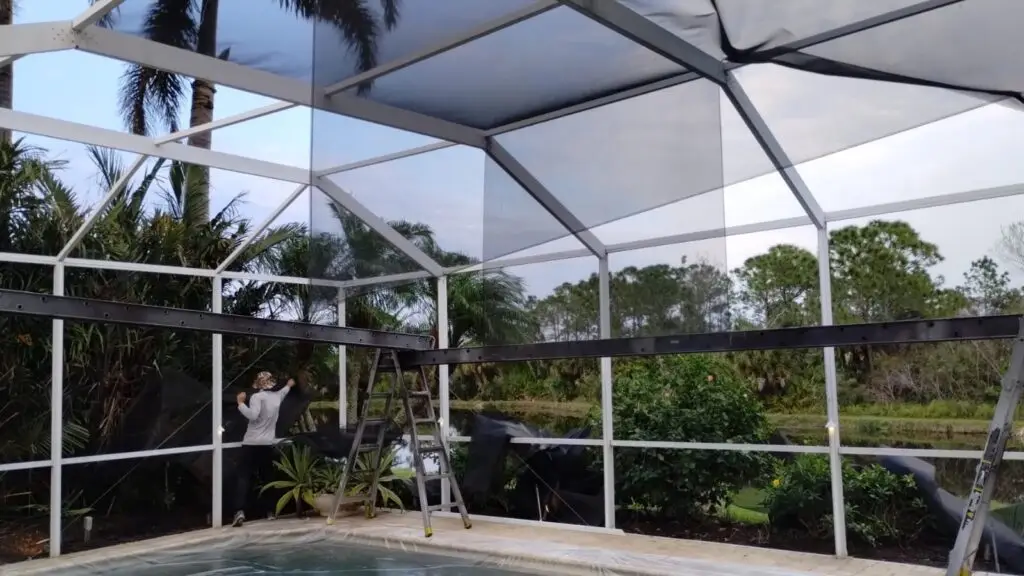
New mesh is cut with margin, stretched evenly across the panel, and rolled into the channel under consistent tension so it reads flat rather than wavy. We check each finished panel against its neighbors before moving to the next, which keeps tension consistent across a full cage rather than just on the panels closest to the ladder.
- Frame and fastener check before any screen is removed
- Panel-by-panel removal to preserve structural integrity
- Spline channels cleaned before new spline is installed
- Mesh selected to suit sun exposure and shade patterns
- Final tension check across adjoining panels
Scheduling Around Weather and Access
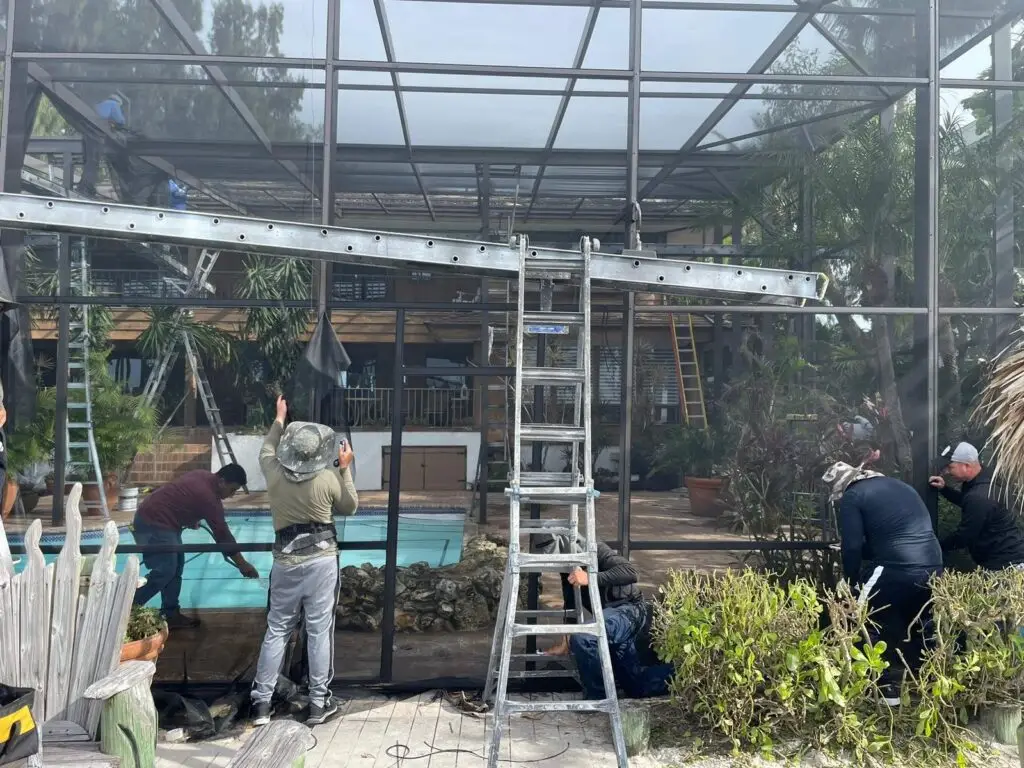
Most rescreening jobs in North Fort Myers run two to four days from start to finish, though summer thunderstorms between June and September can push that out a day or two. We check the forecast before locking a start date, since wet screen and spline do not seat properly and new panels should not go in during steady rain.
Access matters more here than people expect. Many North Fort Myers lots back up to canals or wooded areas, and pool cages in communities like Herons Glen or Del Vera Country Club often have a single gate route to the lanai. We ask about gate codes, locked side yards, and dogs before the crew arrives so the first day is not lost to logistics.
If you live in a manufactured home community or an HOA-governed neighborhood, check whether exterior work requires advance notice to management, even for rescreening that does not change the cage color. Most associations in this area do not require approval for screen replacement alone, but a quick phone call avoids a stop-work request mid-project.
Mistakes That Shorten a New Screen’s Life
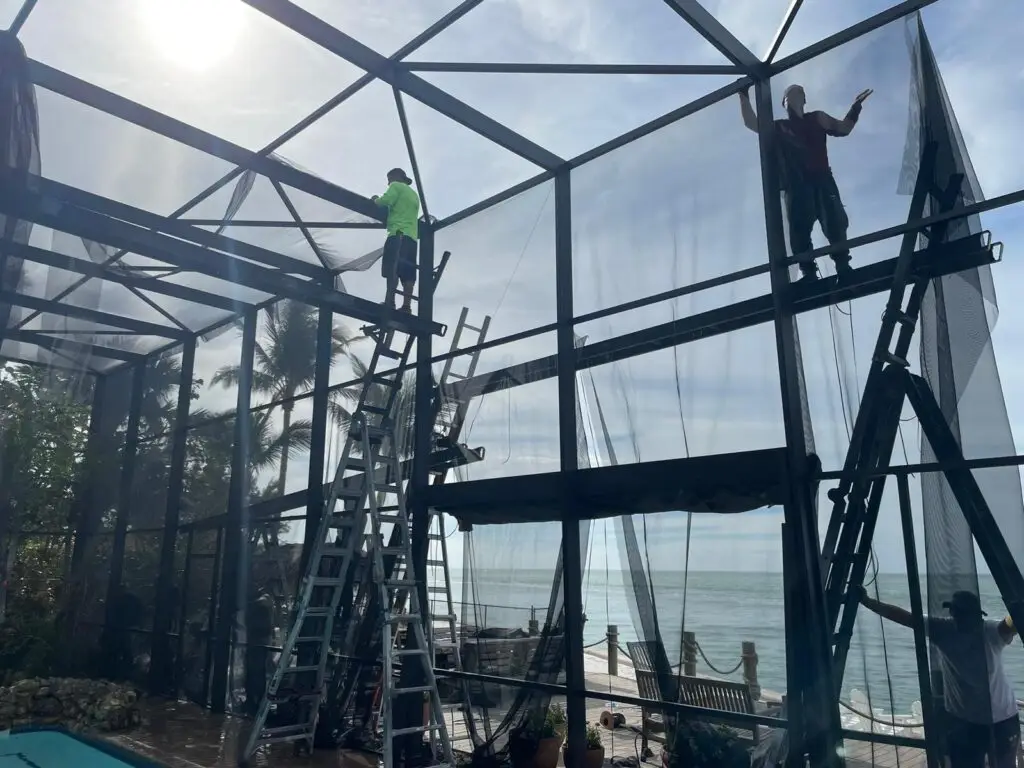
The most common shortcut we see is reusing old spline to save a step. Spline hardens and loses grip over time, and screen held in with worn spline will start pulling loose within a season, often at the same corners where it failed before. New spline, sized to match the groove, is part of every rescreen we do regardless of how the old spline looks.
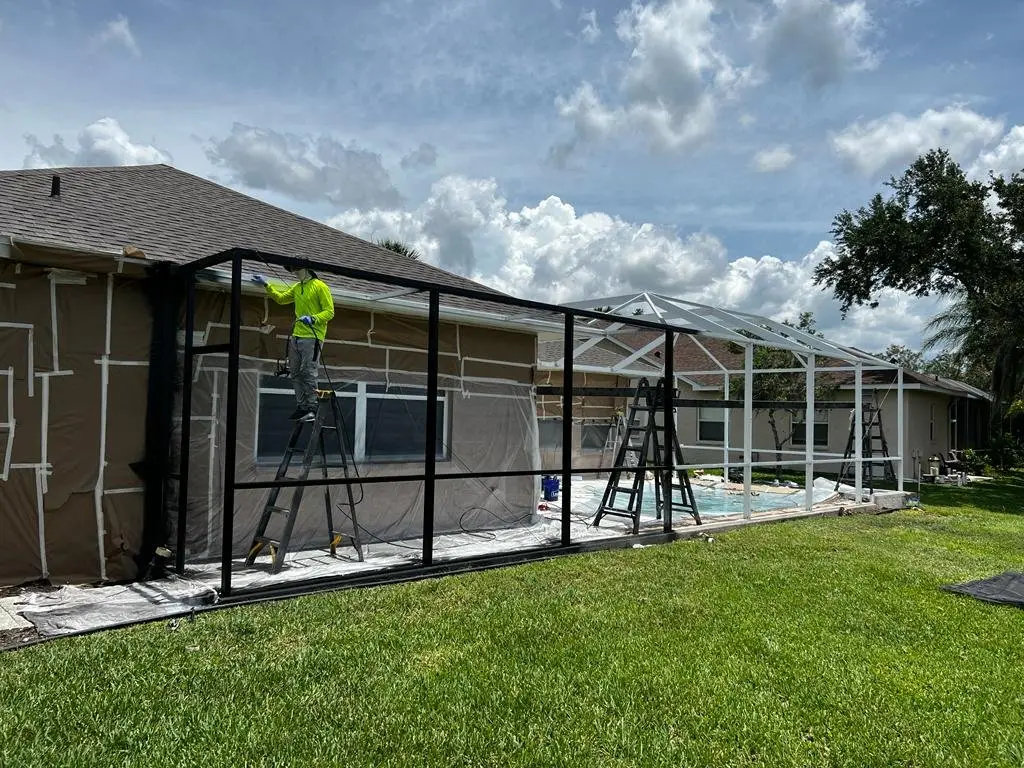
Frame condition gets overlooked just as often. If a panel’s aluminum frame has corroded or bowed, new screen stretched over it will tear again at that same stress point. We flag corroded frame sections during the walk-around and recommend repair or replacement before rescreening, since screen is only as good as what it is fastened to.
Screen density is the third mistake, usually in the other direction: homeowners near open water or golf courses sometimes choose a heavier no-see-um mesh without realizing it reduces airflow and visibility, or they keep standard mesh in a yard with heavy pollen and bug pressure. We talk through mesh options against your specific lot before ordering material.
- Reused spline fails faster than new spline, even if it looks intact
- Corroded or bent frame sections should be addressed before new screen goes on
- Heavier mesh (like no-see-um) cuts airflow and should match your actual pest and privacy needs
- Panels near sprinklers or landscaping beds wear faster and may need closer inspection
Process and Timeline
- We walk every panel and the frame to note spline condition, corrosion, and any bent or sagging sections
- We confirm screen type and density with you, including any HOA or community guidelines that may apply
- We remove old screen and spline panel by panel, checking the frame groove as we go
- We install new spline and stretch and trim new screen on each panel, keeping tension even across the panel
- We do a final walk-through with you to check fit, tension, and any loose panels before cleanup
- We provide a free written estimate before work begins, with no obligation to proceed
Most North Fort Myers rescreening projects take two to four days, depending on cage size and weather.
North Fort Myers Pool Cage Rescreening FAQ
How long does pool cage rescreening take for a typical North Fort Myers home?
Most single-panel or full-cage rescreens take one to three days, depending on the cage size and the number of damaged panels. Larger lanais over a pool and spa, or cages with curved roof sections, can run closer to the higher end of that range.
Can you match the screen density used in manufactured home communities here?
Yes. Many manufactured home and 55-plus communities in North Fort Myers specify a particular screen mesh, often a tighter weave for no-see-ums, and we install to match what the park or HOA already requires.
Do you repair bent or rusted frame sections before rescreening?
We inspect the frame first, since new screen stretched over a bent spline track or corroded fastener will fail early. Minor frame straightening and hardware replacement are done as part of the rescreening visit; more extensive frame damage is addressed separately before screen goes in.
Will rescreening help with the mildew staining common near the river?
New screen removes the stained material itself, but it does not change the conditions that caused the staining. Homes near the Caloosahatchee tend to hold more moisture and shade, so we often suggest a cleaning and recoat of the frame at the same time to slow regrowth.
Do I need HOA or park management approval before rescreening my cage?
Many North Fort Myers communities, including deed-restricted neighborhoods and manufactured home parks, require a form or color/mesh approval before work starts. We can provide the written estimate and specification sheet you need to submit for that approval.
What screen material holds up best to North Fort Myers sun and humidity?
Fiberglass screen is the standard choice for pool cages here and resists the humidity and UV exposure well over time. For homes closer to open water or with pets, we also discuss heavier gauge or pet-resistant screen options during the estimate.
Nearby Areas We Also Serve
Our crews also take on rescreening projects throughout the surrounding Lee County area. Fort Myers, Cape Coral, Bonita Springs, Estero, Lehigh Acres and Sanibel.
Statewide details, colors and the full process are on our main pool cage rescreening page.
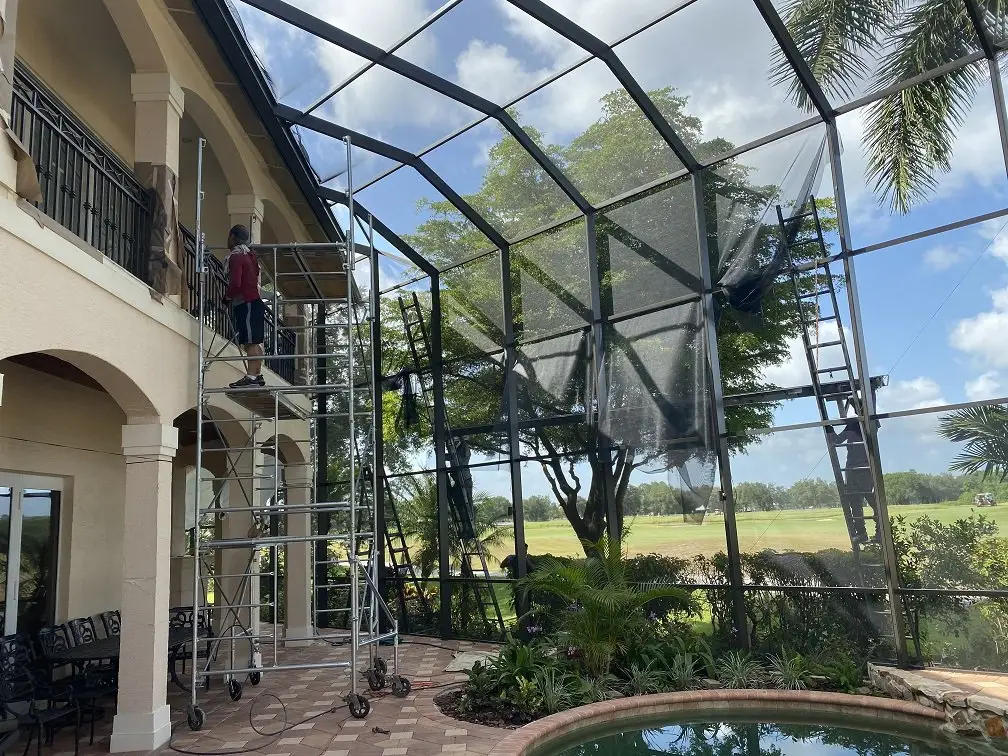
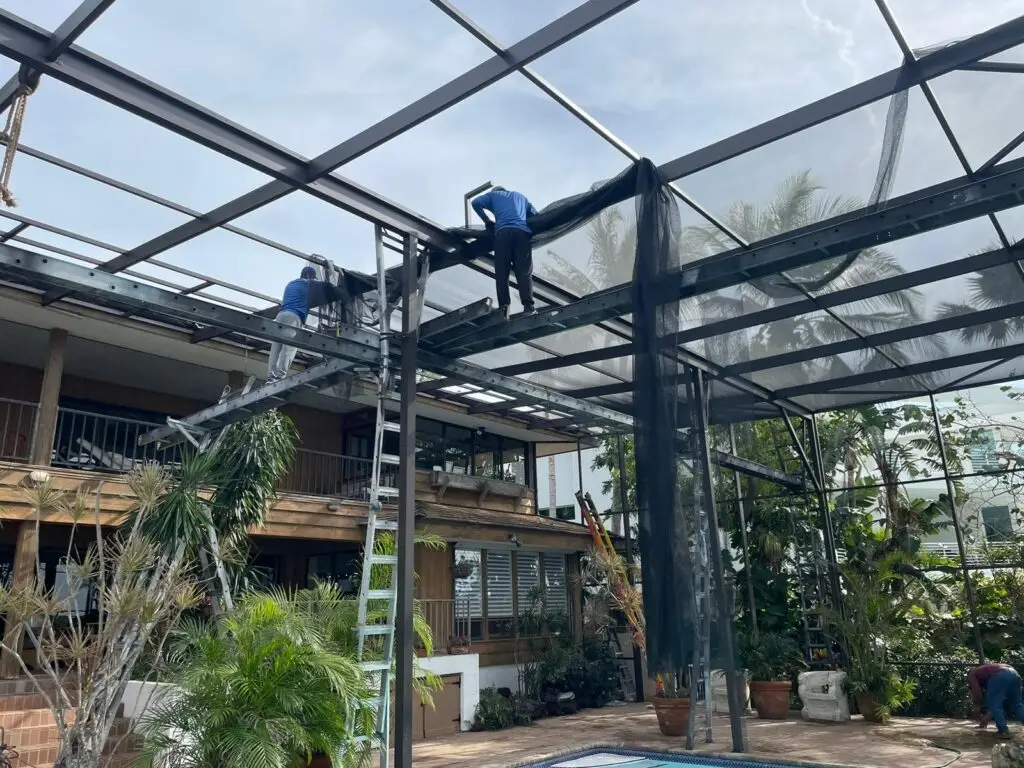
Recent Work
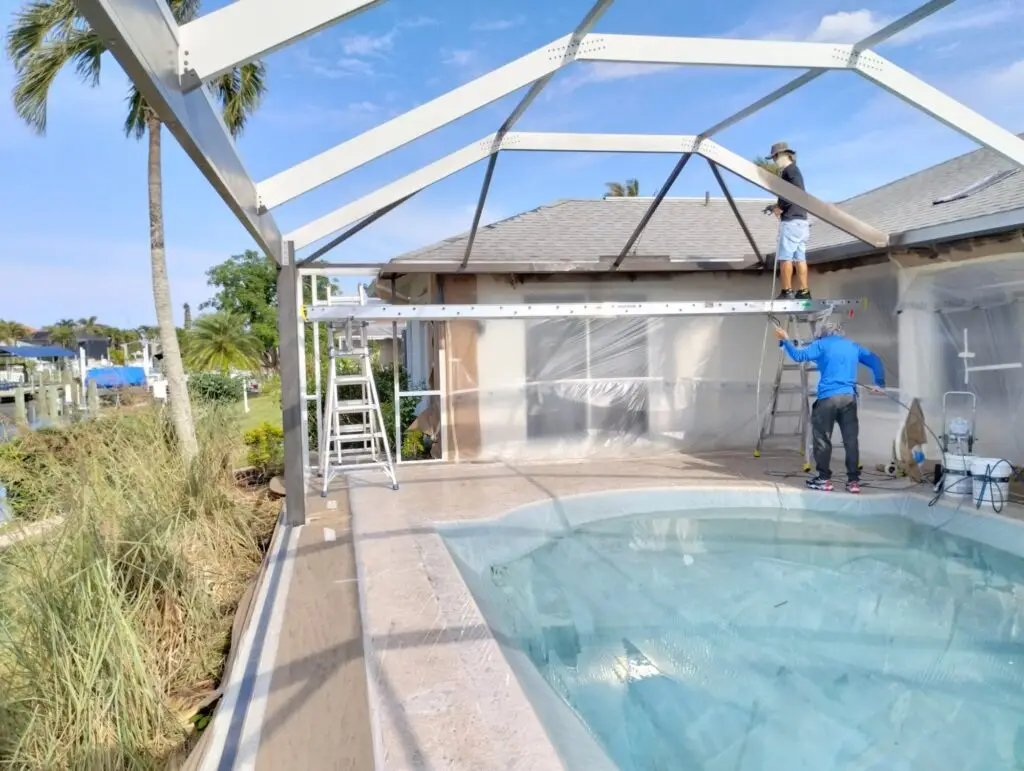
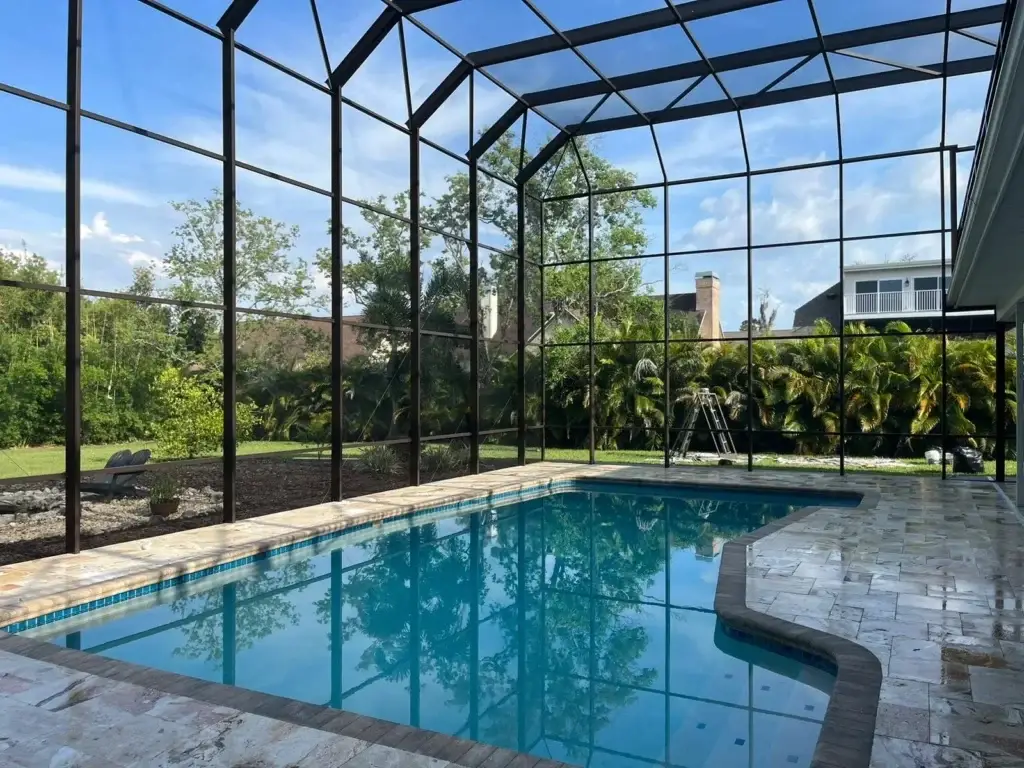
Request a North Fort Myers Estimate
Send a few photos of your pool cage along with the property address in North Fort Myers, and we will review the screen condition and frame before replying. You will receive a written estimate with no obligation; for questions in the meantime, call (844) 222-2115.
Last reviewed: October 30, 2026