
Pool Cage Rescreening in Palm Beach County
We rescreen pool cages for homeowners throughout Palm Beach County, replacing torn or sun-brittled screen panels and matching mesh to your enclosure's frame and climate exposure.
- Free Written Estimate
- Fast Scheduling
- Built for Florida Weather
- Licensed & Insured
- Free Written Estimates
Request Your Free Estimate
Request a free written rescreening estimate for your Palm Beach County pool cage.
- Free No-Obligation Estimate
- Fast Response Times
- No Pressure Consultation
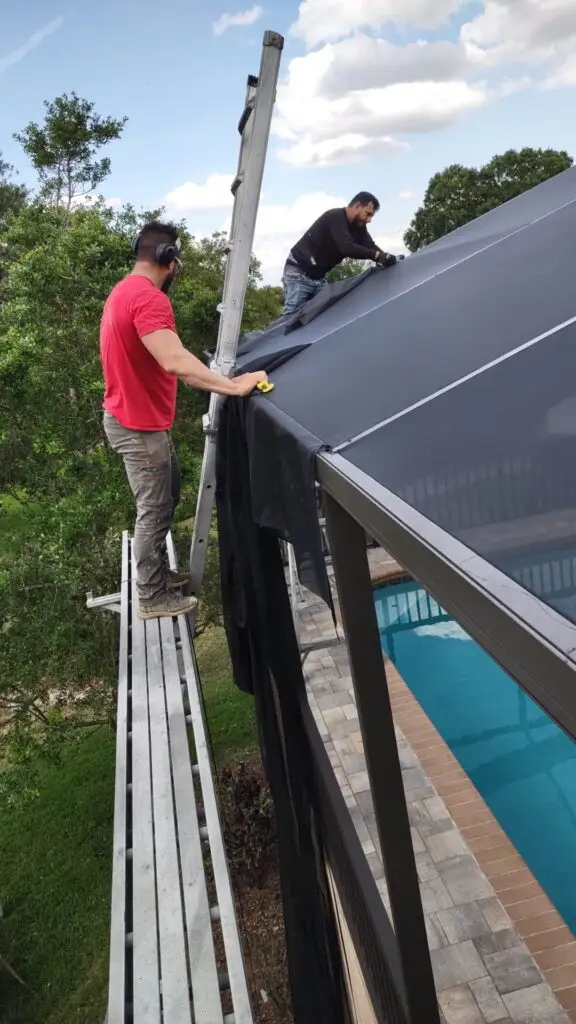
Palm Beach County runs roughly 45 miles along the Atlantic, from the barrier island neighborhoods near West Palm Beach down through Boynton Beach and Delray Beach to the Boca Raton line, then inland to Wellington and The Acreage. Screen panels age differently depending on where they sit: coastal cages take salt-laden wind, while western properties near the Everglades buffer deal with heavier summer storm cycles and longer UV exposure in open, less shaded yards.
With about 922,000 residents spread across this stretch of South Florida, the housing stock varies from older block homes in Lake Worth Beach and Greenacres to newer gated communities in Palm Beach Gardens and Jupiter. We have worked on cages across Palm Beach County and build our rescreening estimates around each enclosure’s age, mesh type, and how the frame has held up, not a one-size approach.
Screen Wear from Coast to Inland County
Salt air reaches cages well beyond the beachfront. Properties in West Palm Beach, Lake Worth Beach, and the Intracoastal side of Boynton Beach and Delray Beach see screen mesh turn brittle and discolored years before an inland cage shows the same wear, since airborne salt settles on the screen and slowly breaks down the fiberglass coating.
Further west, in Wellington, The Acreage, and the horse-country sections of Loxahatchee, sun exposure does most of the damage. Cages sit in open pasture settings with little tree cover, so UV breaks down mesh fibers evenly across the panel rather than starting at the frame edges the way salt corrosion does.
Boca Raton and Palm Beach Gardens fall in between: close enough to the coast for occasional salt drift, but with enough tree canopy and gated-community landscaping to slow UV damage. We adjust what we look for on an estimate based on which of these patterns a cage is showing.
How We Rescreen a Pool Cage
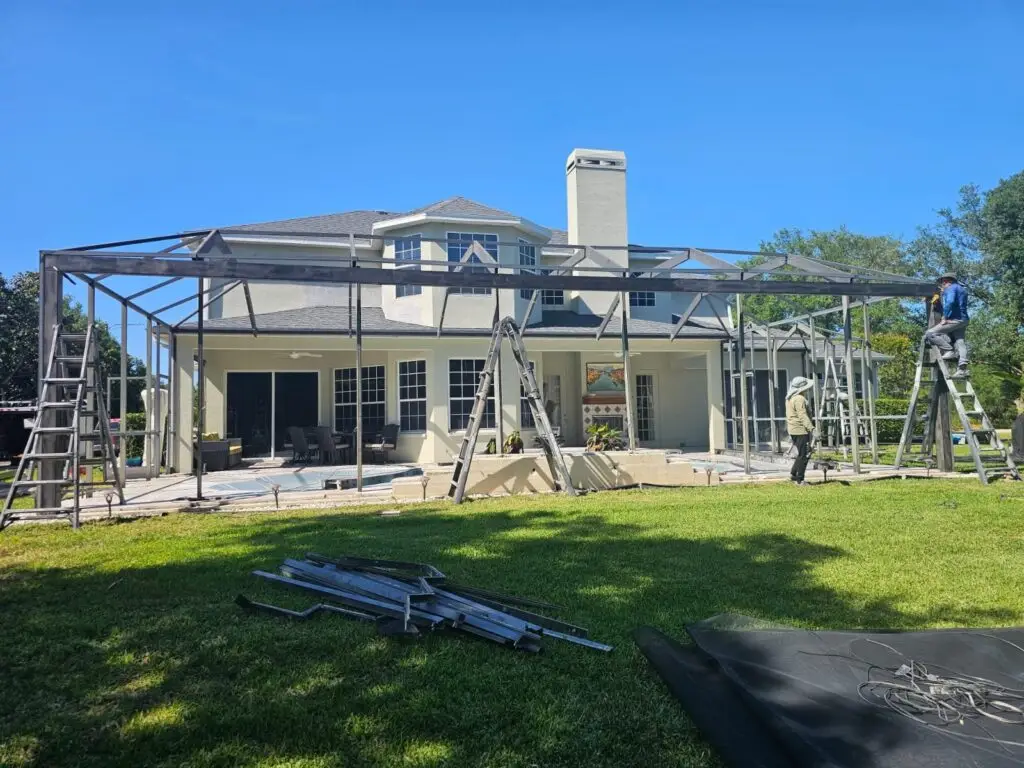
We start by walking the frame panel by panel, checking spline channels for cracking, corners for separation, and the aluminum itself for soft spots or rust bleed, since screen only holds as well as the frame underneath it. Any frame issues get flagged before we order material.
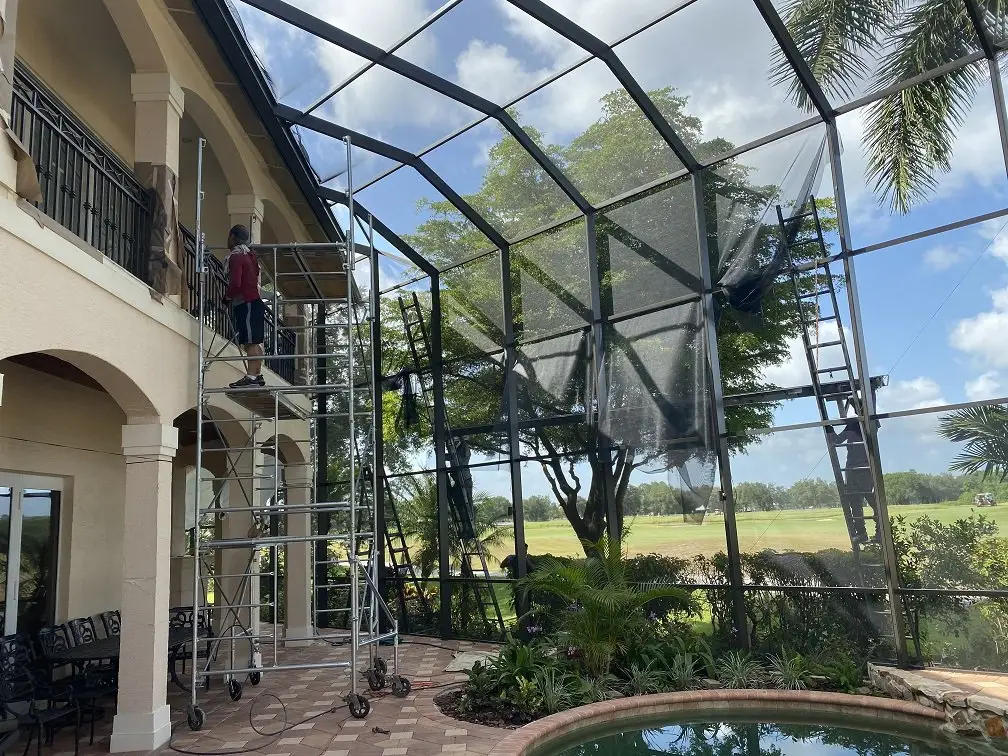
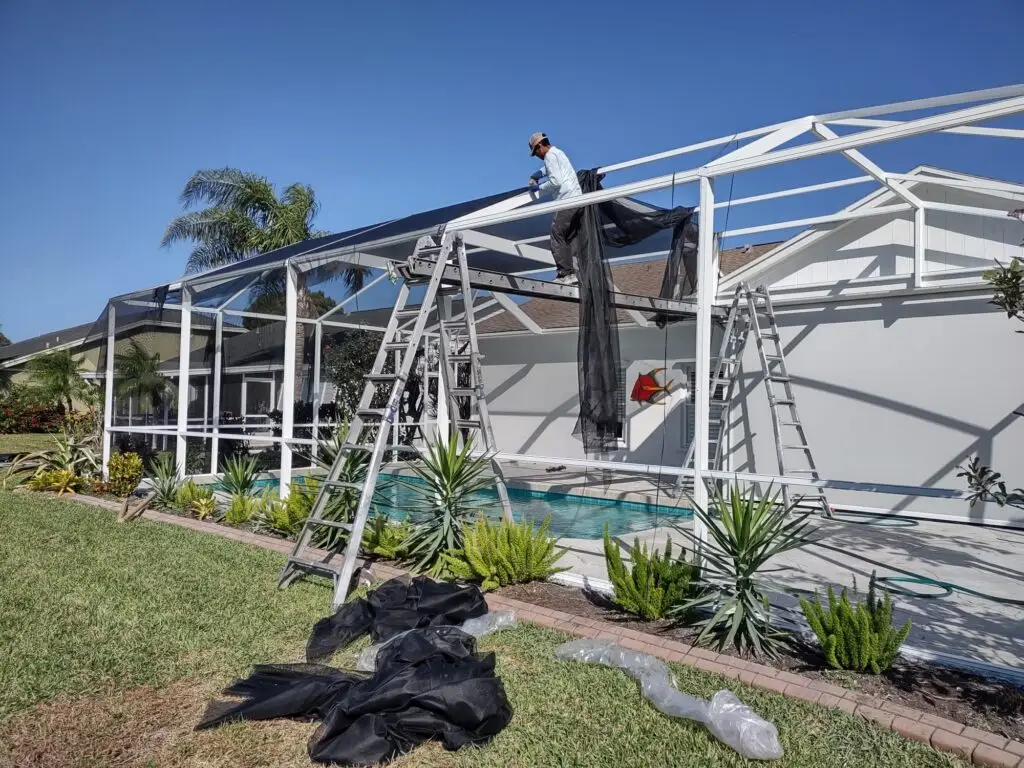
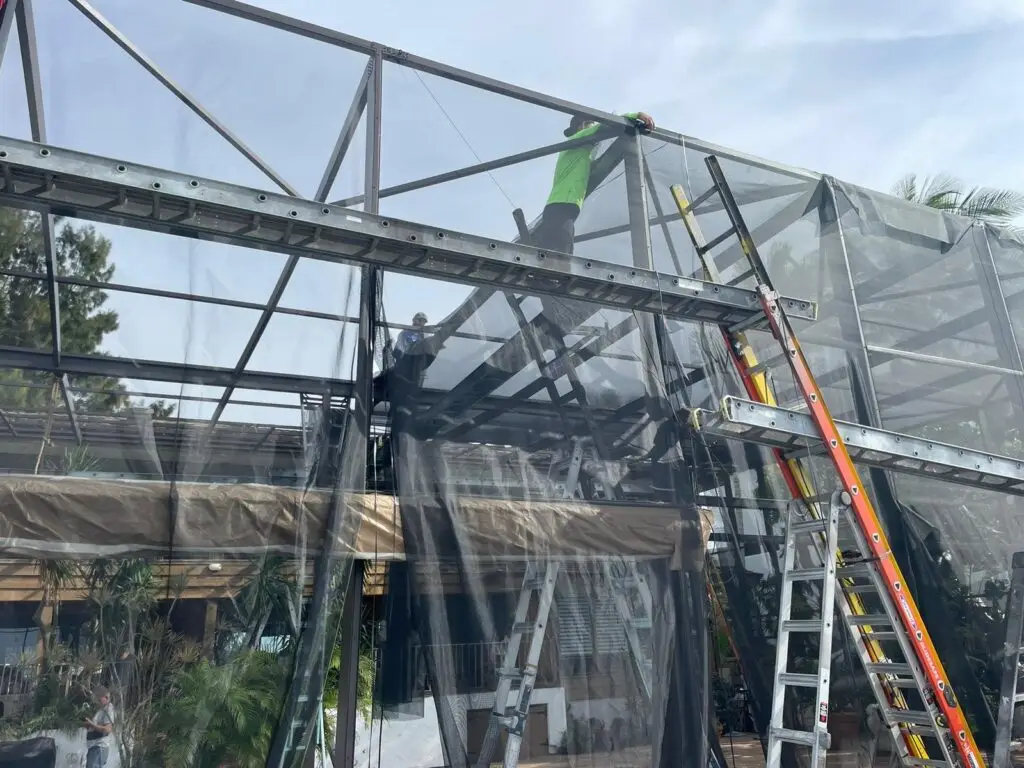
Old screen and spline come out completely rather than getting patched. We clean the channel, then fit new mesh cut to size, pulling it taut before rolling fresh spline into the groove to lock it in place. This keeps tension even so panels do not sag or ripple after a season of heat.
Mesh choice depends on the household: standard fiberglass for most cages, pet screen where dogs or cats push against lower panels, and clear or no-see-um mesh where homeowners want an unobstructed pool view or finer insect control. We go over these options during the free written estimate.
- Frame and spline channel inspection before removal
- Full removal of old screen and spline, not spot patching
- Mesh options: standard, pet-resistant, or clear view
- Even tensioning to prevent sagging panels
- Panel-by-panel check for frame corrosion or corner separation
Scheduling, Access and HOA Approvals
Rescreening schedules across Palm Beach County are built around drive time as much as labor. A crew working a cage in Boca Raton in the morning may finish the week in Jupiter or Palm Beach Gardens, so most jobs are quoted with a realistic start window rather than a fixed date, and confirmed a few days out once materials for that cage’s panel sizes are on the truck.
Gate width, side yard clearance, and pool equipment placement all affect how a crew stages panels and screws for a rescreen, so we note access during the estimate rather than the day of. In communities with narrow side yards, common in parts of Lake Worth Beach and older Boynton Beach neighborhoods, panels sometimes need to be carried through the house or over a side wall, which we plan for in advance.
Many communities in the county, from gated developments near Wellington to condo associations in West Palm Beach, restrict screen mesh color or require board sign-off before work begins. We can supply spec sheets on mesh type and frame color for submission, but the homeowner or association generally needs to request approval on their end before a crew is scheduled.
- Standard charcoal and black mesh fit most HOA guidelines; specialty mesh (clear, no-see-um, solar) may need separate approval
- Confirm gate and side yard width in advance so panel sizes can be cut correctly off-site
- Pool equipment, pavers, and landscaping near the cage perimeter should be noted during the estimate
- Associations in some communities require a copy of the contractor’s license and insurance before issuing approval
Mistakes That Shorten a New Rescreen
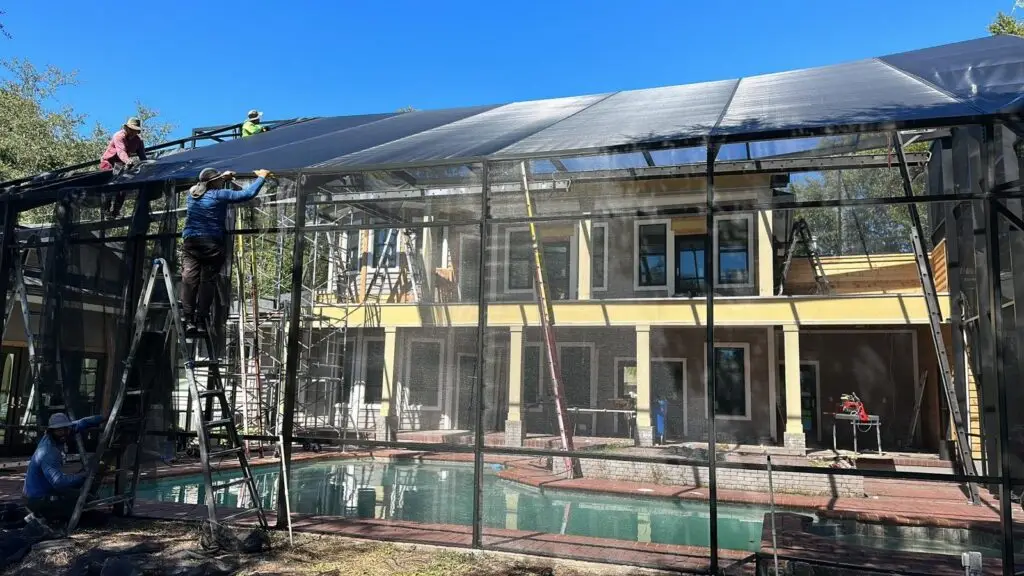
The most common issue we see on cages that were rescreened elsewhere is mesh installed without even tension, which leaves panels looking tight at first but sagging or rippling within a year as the screen relaxes into its weakest points. Correct tensioning means pulling the mesh evenly across the panel before the spline is rolled into the channel, not after.
A second mistake is rescreening over a frame that has a bent rail, a pulled corner, or a spline channel already cracked from UV exposure. New screen stretched over a compromised frame will tear at that point again, often within months, because the frame itself is no longer holding the panel square. We check for this during the walk-through and flag any section that needs repair before new mesh goes in.
Skipping corrosion is the costliest shortcut. Aluminum cages near the Intracoastal or in older sections of Delray Beach and Greenacres sometimes have oxidation or pitting at fasteners and panel joints. Screwing new mesh into a corroded screw point holds for a while, then fails as the metal continues to break down underneath.
- Even tension across the full panel, not just the edges, prevents early sagging
- Bent or sprung frame sections should be straightened or replaced before rescreening, not screened over
- Cracked or brittle spline channels need routing out and sometimes a spline channel insert
- Corroded screw points should be addressed, not just re-driven with a new screw
Process and Timeline
- Walk the full cage to check frame condition, spline channels, and any corrosion at fasteners or panel joints
- Confirm mesh type, color, and any HOA or community approval needed before ordering material
- Remove old screen panel by panel, bagging torn mesh and clearing the track and spline channel
- Repair or straighten any frame sections flagged during the walk-through before new mesh is installed
- Cut and install new mesh with even tension, roll spline into a clean channel, and trim edges
- Final walk with the homeowner to check panel tension, corners, and door operation
Most rescreening projects in Palm Beach County are completed in one to three days depending on cage size and the number of panels needing frame repair.
Communities We Serve in Palm Beach County
Pool Cage Rescreening throughout Palm Beach County, including West Palm Beach, Boca Raton, Boynton Beach, Delray Beach, Wellington, Jupiter, Palm Beach Gardens, Greenacres, Lake Worth Beach, The Acreage, Royal Palm Beach, Riviera Beach, Palm Springs, Belle Glade, North Palm Beach, Jupiter Farms, Lantana, Palm Beach, Lake Park, Westgate, Tequesta, Pahokee, South Bay, Highland Beach, Juno Beach, San Castle, Lake Clarke Shores, Watergate, Loxahatchee Groves, Hypoluxo, Seminole Manor, Cabana Colony, Pine Air, Haverhill, Atlantis, Mangonia Park, Lake Belvedere Estates, Royal Palm Estates, Ocean Ridge, South Palm Beach, Palm Beach Shores, Westlake, Gulf Stream, Briny Breezes, Manalapan, Jupiter Inlet Colony, Golf, Glen Ridge, Cloud Lake, Bryant, Loxahatchee.
Palm Beach County Pool Cage Rescreening FAQ
How long does it take to rescreen a pool cage in Palm Beach County?
Most residential enclosures take one to three days, depending on the number of panels, cage height, and whether the frame needs repair before new screen goes in. Larger lanais or cages with structural issues can run longer, which we outline in the written estimate.
Can you match my community's approved screen color or mesh type?
Yes. Many HOAs and condo associations in Palm Beach County specify approved screen colors or mesh densities, and we can work from those guidelines or from your community's architectural review documents.
Do you offer pet-resistant or no-see-up screen options?
We install heavier pet-resistant screen for homeowners with dogs or cats that scratch at panels, and tighter no-see-um mesh for properties near canals or wooded lots where small insects are a problem. Both options can be mixed with standard screen on the same cage if only certain panels need it.
Will salt air near the coast affect how long new screen lasts?
Properties closer to the Intracoastal or ocean in places like Boca Raton or West Palm Beach see faster corrosion on fasteners and spline tracks than inland communities such as Wellington or The Acreage. We account for this during prep and recommend hardware suited to the specific location.
Do I need to be home during the rescreening work?
No, as long as we have access to the pool cage area and a gate or side entry if the backyard is fenced. Most homeowners leave for the day or work from elsewhere in the house while the crew completes the panels.
What is the difference between rescreening a few panels and a full rescreen?
Panel repair replaces torn or sagging sections while leaving intact screen in place, which works when damage is isolated from a storm or a pet. A full rescreen removes all panels and spline at once, which is usually the better option when the mesh is uniformly brittle or faded from age and UV exposure.
More Pool Cage Services in Palm Beach County
Beyond rescreening, we also handle cage painting for homeowners in Palm Beach County looking to refresh faded or chalking aluminum frames. Pool Cage Painting.
Statewide details, colors and the full process are on our main pool cage rescreening page.
Recent Work
Request a Palm Beach County Estimate
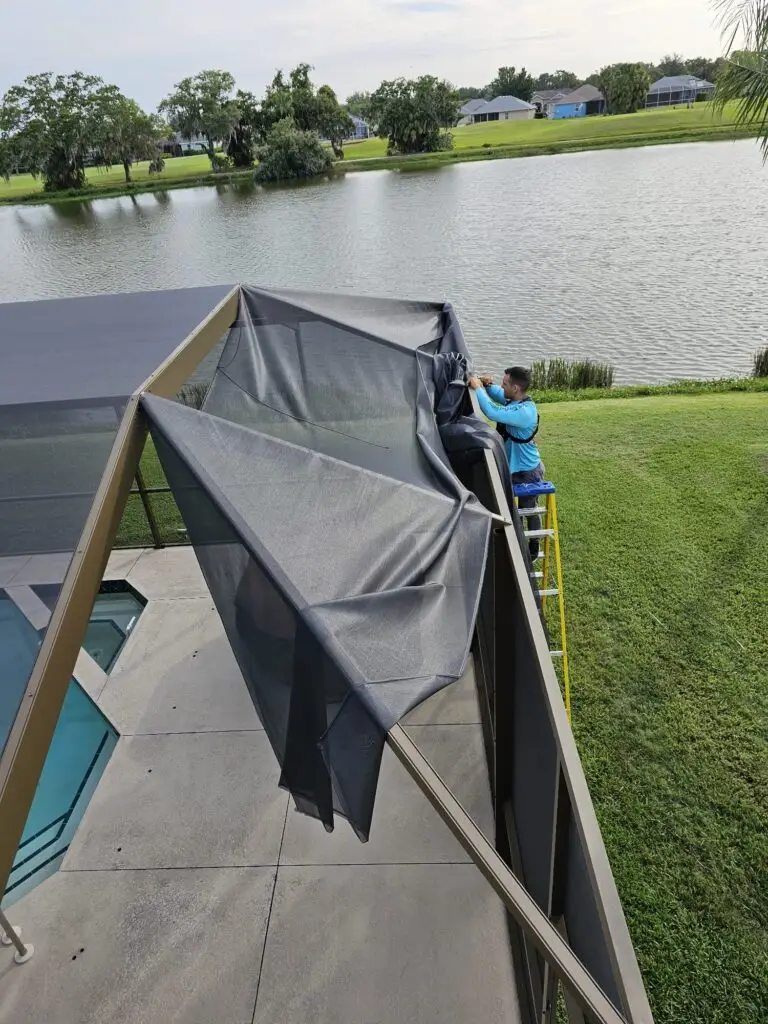
Send a few photos of the pool cage along with the property address anywhere in Palm Beach County, and we will reply with a written estimate outlining the scope and screen options. For questions before then, call (844) 222-2115 or use the form on this page.
Last reviewed: October 27, 2026