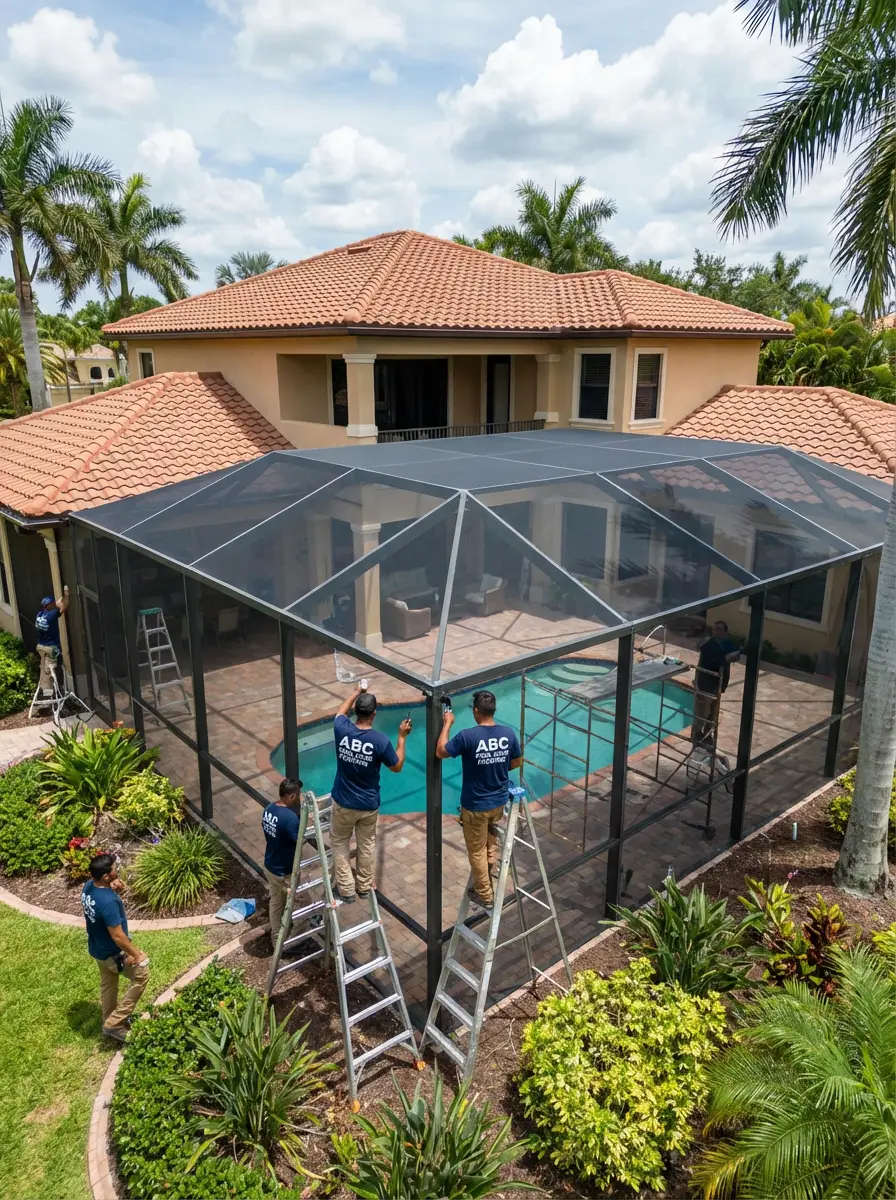
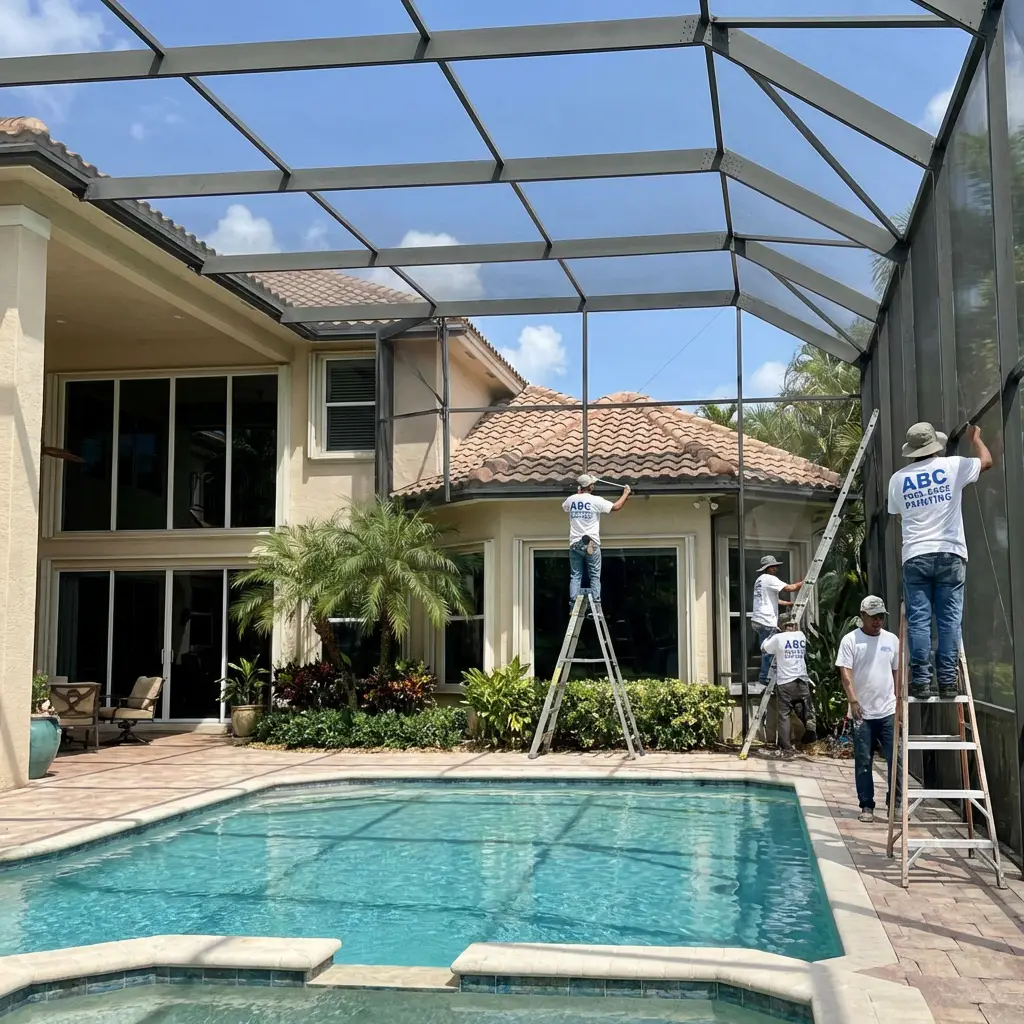
Most homeowners call about a pool cage for one of three reasons: it looks bad, something broke, or a storm went through. Those are different problems with different fixes, and the word “restoration” gets used loosely enough that it is worth separating them. This guide walks through the questions we ask on a photo review so you can answer them yourself before you request an estimate.
Start With the Structure, Not the Finish
Stand at each corner and sight along the main beams and uprights. Straight members, tight anchors at the deck and a roof that does not sag between beams mean the structure is sound, whatever the finish looks like. A buckled beam, an upright that has lifted off its anchor, or a roof section that has dropped are structural problems that no amount of paint will fix; they need repair or, in the worst cases, a replacement enclosure with a permit and engineering.
When Painting Is the Whole Answer
If the structure is sound and the complaints are cosmetic, painting is the job. The signs: white powder on your hand when you touch the frame (chalk), a finish that has faded unevenly on the sunny side, and rust streaks running down from screws. Painting addresses all three when it is done properly, because the process removes the chalk, replaces the rusting screws with stainless steel and applies a coating made for aluminum. Our pool cage painting page explains the preparation in detail.
When You Need Restoration
Restoration is painting plus the structural and hardware work that has to come first. It is the right project when you also have loose or corroded cable braces, cracked corner brackets, bent bars from a storm, anchors that need replacing, and screen that has failed along with the finish. Restoration puts all of that into one sequence: inspect, repair, replace hardware, prepare, coat, then screen. See pool cage restoration for the full scope and the city pages, such as Sarasota and Cape Coral, for local conditions.
When Screen Is the Only Problem
A frame that still holds its finish with a few torn or sagging panels needs rescreening, not painting. Fiberglass screen has a shorter life than a good coating, so a cage will often need screen twice before it needs paint. The rescreening page covers panel repair, roof-only rescreens and full rescreens.
The Storm Case
After a hurricane the sequence changes. First the enclosure is closed with whatever panels fit so the lanai is protected. Then, once everyone in the area is secured, the frame is assessed properly. Many cages in Southwest Florida were closed after Ian and never finished; a restoration is where that work finally gets completed, with the rushed hardware replaced and the finish redone over a correctly prepared frame.
A Quick Self-Check
- Beams and uprights straight, anchors tight, roof not sagging: structure is fine.
- Chalk, fading, rust streaks: painting.
- Plus loose cables, cracked brackets, bent bars, failed anchors, dead screen: restoration.
- Only screen torn or faded: rescreening.
- Buckled main members or a frame that has moved on its anchors: structural repair or replacement first.
Send photos and we will confirm which case you are in before you spend anything. The estimate separates painting, restoration and screen work so you can see exactly what each part costs.