
DIY Patio Cover or Call a Pro in Bradenton?
Before you buy materials for a DIY patio cover, understand how aluminum pool cages, screen panels, and Florida wind codes affect the work.
Get a Free Estimate Today With ABC Pool Cage Painting!
Not sure where DIY ends and professional work begins? Request a free written estimate and get a straight answer.
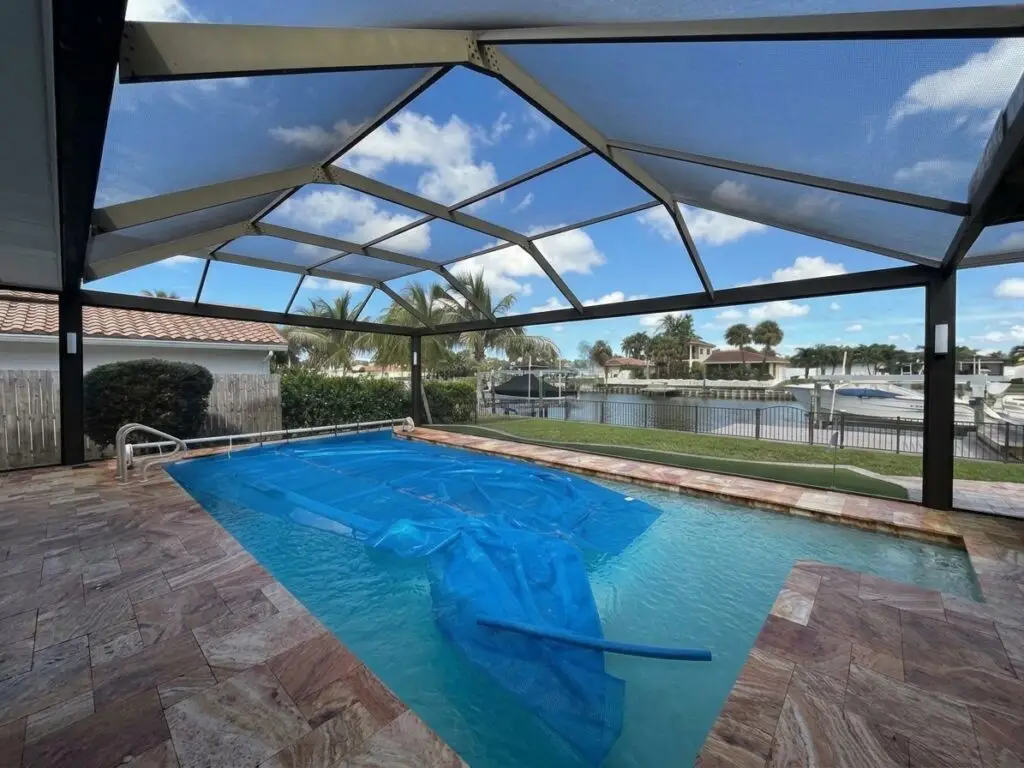
A DIY patio cover can work for a simple, freestanding wood or vinyl shade structure, but it is a different project from modifying or rescreening an existing aluminum pool cage, patio enclosure, or screen room. Pool cages are engineered structures tied to local wind-load codes, so altering the frame yourself can affect permits, insurance, and the warranty on any existing work.
Whether DIY makes sense depends on what you are actually building. Adding a shade sail or a small pergola next to the lanai is a reasonable weekend project. Rescreening panels, repainting aluminum framing, or changing the roof structure of a screened-in porch is not, because it involves ladder work at height, matching existing screw patterns, and knowing how salt air and UV exposure have already weakened the metal.
What Determines If DIY Is Realistic
The type of structure matters most. A standalone aluminum pergola set away from the house is a much simpler project than any work tied into an existing pool cage, screened patio enclosure, or lanai frame, where panels, fasteners, and footings are already engineered to meet Manatee County wind-load requirements.
Height and attachment point change the picture too. Anything connecting to the home’s roofline, fascia, or an existing screen enclosure frame in Bradenton typically requires a building permit, since it affects structural load paths and roof drainage. Many homeowners find this out only after a permit office rejects a self-filed application.
HOA and deed-restricted communities around Bradenton often have specific rules on cage color, screen mesh type, and roofline silhouette. Skipping that review can mean a fix-it notice after the work is done, which costs more time than checking first.
- Freestanding wood or vinyl shade structure: lower risk, fewer approvals
- Anything tied into the pool cage frame: usually needs a permit
- HOA design review: common in Bradenton subdivisions
- Wind-load rating: affects fastener type and spacing
What the Work Actually Involves
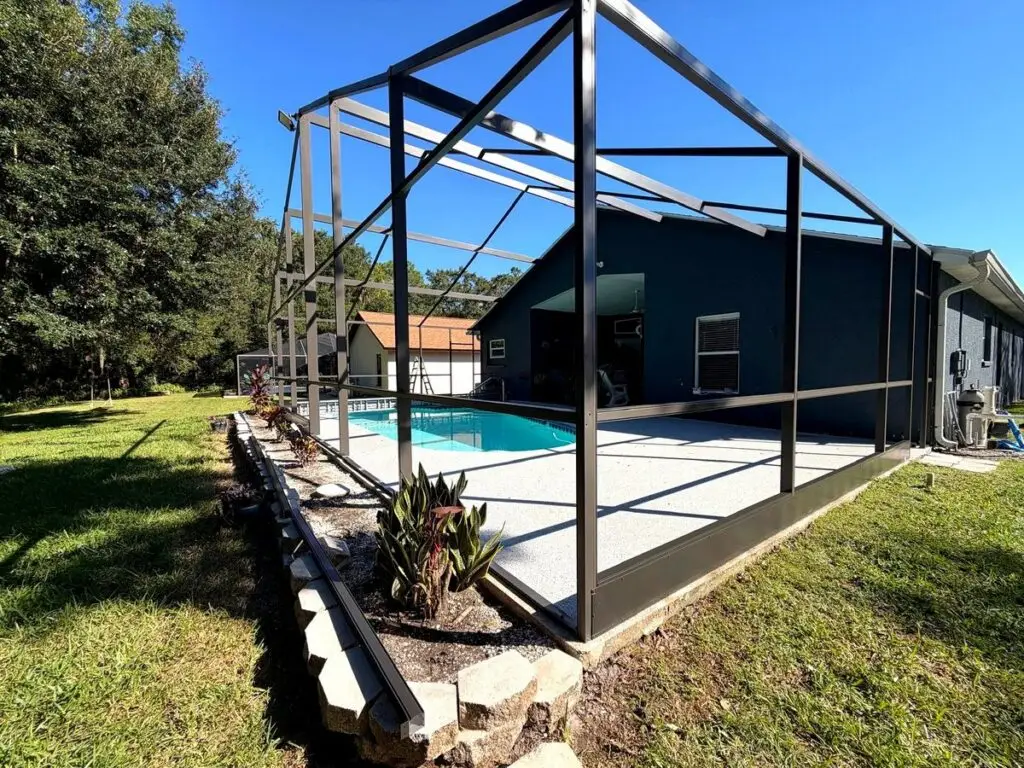
Before adding any cover, screen panel, or pergola section, the existing aluminum frame needs a real inspection, not a glance. That means checking fastener points for corrosion, looking for oxidation on the paint finish, and confirming the frame itself is still square and free of stress cracks before anything new is attached to it.
Material compatibility is easy to get wrong. Mixing incompatible metals at a fastener point, for example steel screws into aluminum, sets up galvanic corrosion that shows up months later as rust streaks and weakened joints. The right hardware and sealant depend on what the existing cage or enclosure is made of.
Most DIY guides skip the prep entirely: pressure washing to remove salt residue common near Tampa Bay and Sarasota, sanding oxidized paint to a stable surface, and spot-priming bare metal. Skipping these steps is also what voids many paint or screen warranties, since the new material never bonds correctly to a compromised surface.
Common DIY Mistakes to Avoid
The most common error is fastening with the wrong hardware. Standard steel screws react with aluminum and leave rust streaks within a season of Bradenton humidity and salt air. Panels and pergola brackets need stainless steel or aluminum-compatible fasteners, and sealants rated for exterior aluminum rather than generic caulk.
Many homeowners paint over chalky oxidation or surface rust without sanding or priming first, which looks fine for a few months and then peels. Others add screen panels or a pergola section without checking the frame’s wind rating, which matters in coastal Manatee County where enclosures are engineered for specific load requirements.
A less obvious mistake is treating rescreening as cosmetic. The screen panels help brace the frame against wind and movement, so improper tensioning or mismatched spline can affect how the whole structure holds up, not just how it looks.
When to Call a Pool Cage Professional

Some conditions call for a professional rather than another weekend of DIY. Visible rust at joints, bent or bowed framing members, and screens torn or sagging across most of the enclosure usually point to a problem larger than a patch job. Peeling paint on structural aluminum, not just trim, is another sign the coating has failed and needs proper surface prep.
Any project requiring a permit, which applies to most full rescreens and structural repairs in Bradenton and surrounding Manatee County, should go through a licensed contractor who handles inspections. If the plan is to repaint, rescreen, or restore an entire pool cage or screened in porch rather than add a small accessory, the scope and liability are different from a weekend project.
- Rust or corrosion at frame joints or fasteners
- Bent, warped, or separated framing sections
- Torn or loose screens across most of the enclosure
- Peeling or chalking paint on structural aluminum
- Any work requiring a building permit
- Full repaint, rescreen, or restoration rather than a small addition
How the work is done, step by step
- Inspect the full frame for rust, corrosion, loose fasteners, and wind-rating compliance
- Pressure wash and sand to remove chalky oxidation and prepare the aluminum surface
- Apply primer suited for aluminum, followed by exterior-grade topcoat in the chosen color
- Remove and replace damaged or torn screen panels with properly tensioned spline
- Check and tighten structural connections, brackets, and any pergola or enclosure hardware
- Final walkthrough to confirm paint coverage, screen fit, and overall structural soundness
Most full pool cage painting and rescreening projects in Bradenton take two to five days depending on size, weather, and whether HOA approval is required beforehand.
Frequently asked questions
Can I build a patio cover myself if I already have an aluminum pool cage?
Adding a cover or roof structure to an existing pool cage changes how wind and weight loads move through the frame, so the attachment points and footers usually need to be engineered for that load. Most homeowners in Bradenton find it safer and faster to have the tie-in evaluated by someone familiar with local wind codes before any panels go up.
Do I need a permit to add a cover or pergola to my screened-in patio in Bradenton?
In Manatee County and the City of Bradenton, any new structure attached to an existing enclosure, including an aluminum pergola or solid roof section, typically requires a building permit and an engineered drawing. If your property is in an HOA or deed-restricted community, check the architectural guidelines as well, since those rules are separate from the county permit process.
Will a DIY cover void the warranty on my pool enclosure's paint or screens?
It can, depending on how the work is done. Drilling into freshly painted frames, altering factory attachment points, or introducing dissimilar metals near the structure can affect coverage, so it is worth checking the terms of your existing paint or screen work before modifying the cage.
What materials hold up best in Florida's heat, humidity, and salt air?
Powder-coated or properly primed and topcoated aluminum resists the UV exposure and moisture typical of the Gulf Coast far better than untreated or bare metal. For screening, Phifer or similar fiberglass mesh tends to outlast lower-grade screen in coastal areas like Bradenton, Venice, and Sarasota where salt air speeds up wear.
How do I know if my pool cage needs repainting instead of a new cover?
If the frame is structurally sound but the paint is chalking, fading, or showing surface rust at welds and fasteners, repainting restores the look and adds a protective barrier without the cost or permitting of a new structure. A cage with bent panels, pulled screws, or corrosion through the metal usually needs more than paint.
Is it cheaper to DIY a patio enclosure or hire someone for rescreening and repainting?
Materials for a DIY screen room or repaint can look inexpensive upfront, but mistakes with screen tension, paint adhesion, or fastener corrosion often mean redoing the work within a year or two. A written estimate from a company that does this work daily gives you a clear comparison before you decide.
Nearby Areas We Also Serve
ABC Pool Cage Painting serves homeowners throughout the Bradenton area and nearby Gulf Coast communities. Bradenton, Tampa, Sarasota, Naples, Fort Myers and Cape Coral.
Statewide details, colors and the full process are on our main pool cage painting page.
Recent Work
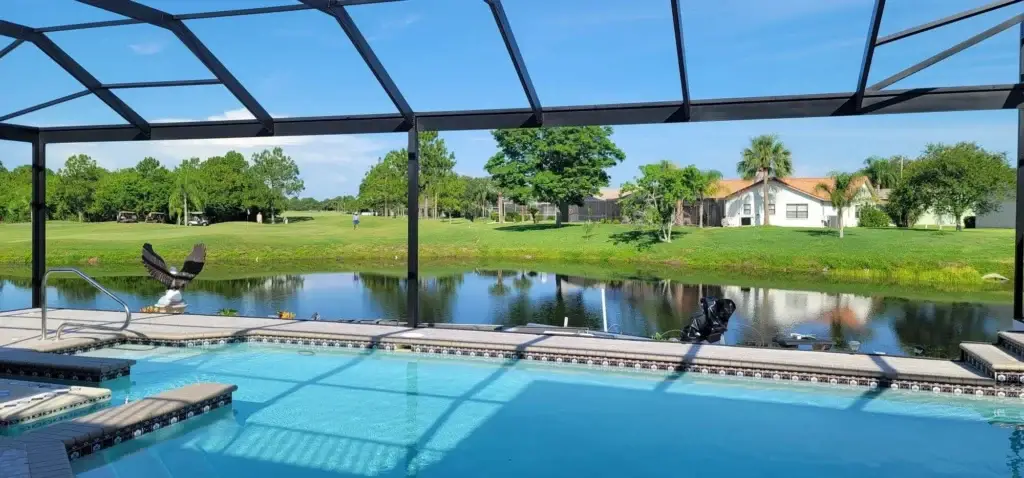
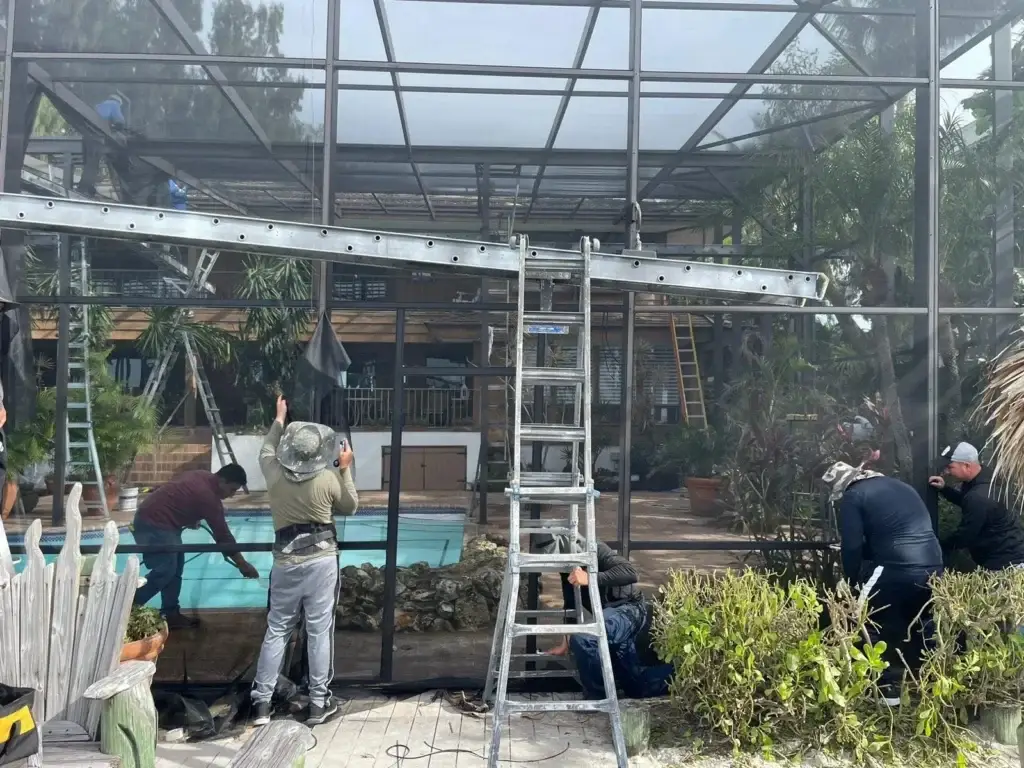
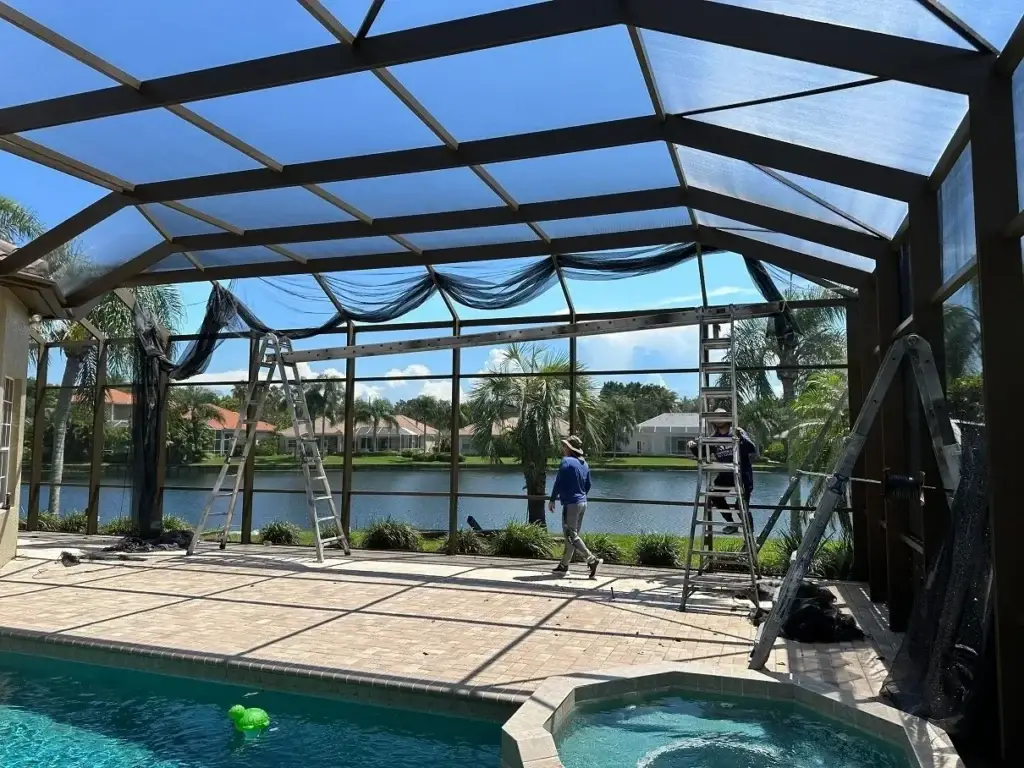

Get a written estimate for your pool cage
Send a few photos of your pool cage or patio enclosure along with your address, and you will receive a written estimate back with no cost or obligation. Call (844) 222-2115 or use the form on this page to get started.
Last reviewed: October 18, 2026