
DIY Screened in Patio: What Bradenton Owners Should Know
A look at which parts of a screened in patio project homeowners can reasonably handle and which ones call for an experienced aluminum specialist.
Get a Free Estimate Today With ABC Pool Cage Painting!
Not sure what your project needs? Request a free written estimate and get a clear answer before you buy materials.
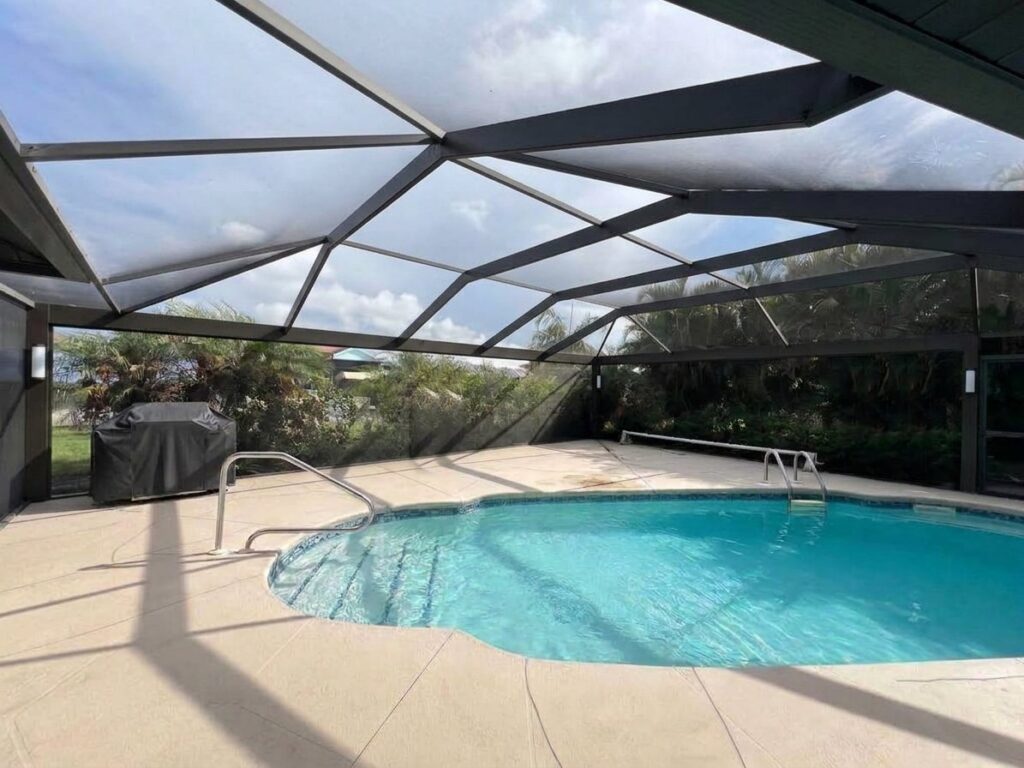
A fully DIY screened in patio is possible for small, simple projects, such as replacing a torn screen panel or re-tensioning a single frame, but building or substantially rescreening an enclosure yourself is harder than it looks and often runs into permit, structural and warranty issues partway through.
The right answer depends on the scope. Patching a screen porch or screen room is a reasonable weekend task for a handy homeowner. Framing a new patio enclosure, tying into an existing pool cage, or meeting Manatee County wind-load and permit requirements is a different project entirely, and mistakes here are expensive to undo.
What Determines If DIY Makes Sense
Scope is the first variable. A single torn screen panel on a screened in porch is a different job than rescreening an entire pool cage, which may have forty or more panels at varying heights and angles. Standalone screen rooms attached to a patio are also simpler to work on than a pool enclosure tied structurally into the home’s roofline, where panel removal can affect drainage or fascia attachment.
Bradenton sits in many deed-restricted communities, and HOAs often have rules about screen color, mesh type, and whether a patio enclosure or aluminum pergola needs board approval before work begins. Manatee County may also require a permit for structural repairs to a pool cage, though routine re-screening of existing panels typically does not. Checking with the HOA and county before buying materials avoids redoing work.
Frame condition matters as much as the screen itself. Aluminum that has pitting, chalking paint, or loose rivets needs repair or repainting before new screen goes in, since stretching mesh over a weakened frame wastes material and labor. If the structure is sound and only the mesh has failed from sun or storm exposure, re-screening alone is a reasonable weekend project for someone comfortable with hand tools.
What the Work Actually Involves

Re-screening starts with removing the old screen and the spline, the rubber cord that locks mesh into the frame’s channel. Old spline is often brittle from UV exposure and breaks during removal, so most jobs need full spline replacement, not reuse. Each panel is then measured, mesh cut with margin for stretching, rolled into the channel with a spline tool, and trimmed flush with a utility knife.
Mesh weight depends on exposure. Standard fiberglass screen suits shaded screen rooms, while pool enclosures facing open sun or frequent storms often use heavier aluminum or solar screen to resist stretching and glare. Fasteners and frame corners should be checked for corrosion during this process, since salt air common near Bradenton, Tampa, and Sarasota accelerates rust at screws and panel joints even when the mesh looks fine.
Homeowners commonly underestimate two things: the time needed to re-tension dozens of panels evenly, and paint matching if the aluminum frame was previously coated. A frame painted years ago will not match new aluminum stock exactly, and spot-painting after screen work often shows lap lines unless the full panel or run is recoated. A spline roller, screen tool, and a few hours per panel are typical for a careful job.
Common DIY Mistakes to Avoid
The most common error is buying screen mesh by price instead of by exposure. Standard fiberglass mesh degrades faster under Bradenton’s UV load and salt air than homeowners expect, and a heavier gauge or pet-resistant weave often holds up longer on a pool enclosure that faces open sun most of the day.
Over-tightening the spline is another frequent problem. Pulling it too hard stretches the mesh past its rating and leaves panels bowed or wavy within a season. Rust and oxidation are often ignored too — painting over corroded aluminum or chalky finish without treating it first means the new coating fails early.
Loose footers, bent frame members, and local HOA rules get overlooked as well. Many Bradenton communities specify approved screen colors or enclosure styles, and skipping that check can mean redoing visible work.
- Using the wrong screen gauge for sun and salt exposure
- Over-tightening spline, causing bowed or wavy panels
- Skipping rust and oxidation treatment before paint
- Ignoring loose footers or bent frame members
- Not confirming HOA screen color or enclosure rules first
When to Call a Pool Cage Professional
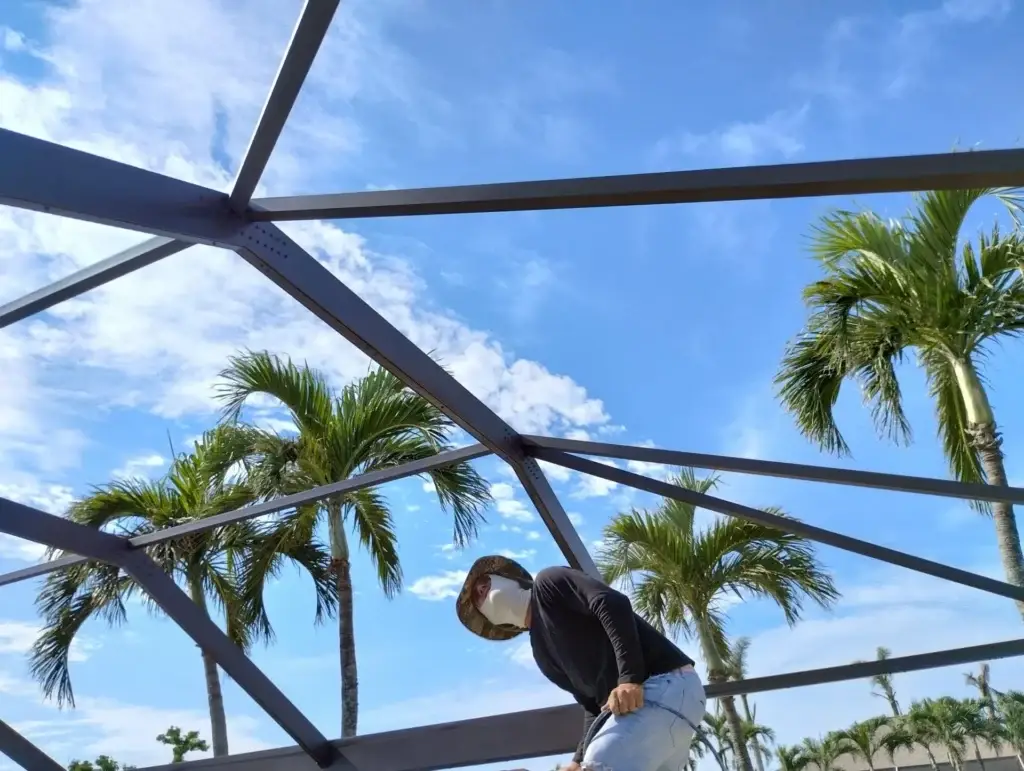
Some conditions move a project out of DIY territory. Structural frame damage, rust forming at footers or panel joints, and bent or corroded fasteners affect how the enclosure holds up under wind, not just how it looks. These issues call for an assessment before any rescreening or painting begins.
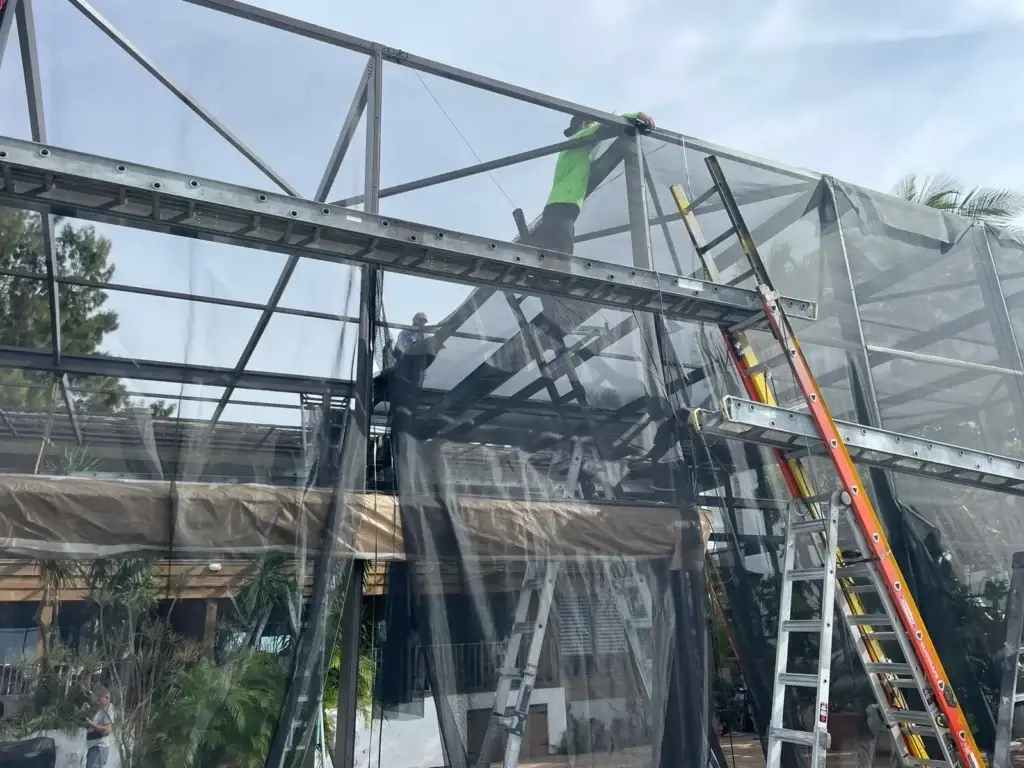
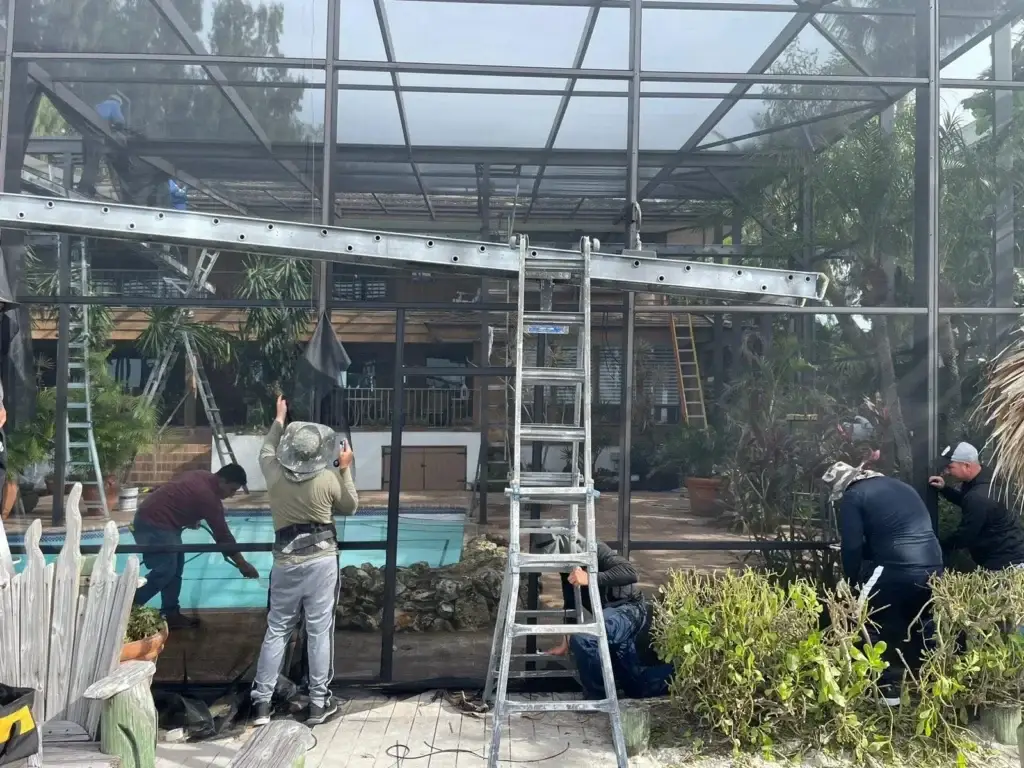
Large-scale rescreening of a full pool enclosure, repainting an entire cage, or repairing storm damage are labor-intensive jobs that are hard to do evenly from a ladder without the right equipment. Uneven paint or improperly reset panels can also affect the enclosure’s wind-load compliance, which matters for insurance and resale.
If there is any doubt about structural integrity, water intrusion at the footers, or how a repair interacts with county permitting, it is worth having a professional look at the enclosure before work continues.
How the Work Is Done, Step by Step
- Inspect the frame, footers, and panels for rust, corrosion, or structural movement
- Address any bent members or loose anchoring before screen or paint work begins
- Remove old screen and spline, then clean and treat the frame as needed
- Install new screen mesh matched to sun and salt exposure, or apply primer and coating
- Reset spline and trim, checking panels for even tension and no bowing
- Final walkthrough to confirm fit, finish, and compliance with any HOA standards
A full rescreen or repaint on a typical Bradenton pool cage usually takes one to three days, depending on size and condition.
Frequently asked questions
Can I rescreen my own pool cage in Florida?
A homeowner can replace a single damaged panel with basic tools, a spline roller and patience, but working safely at the height of a full pool cage, keeping panels square, and matching tension across many panels is where most DIY jobs go wrong. For a full screen enclosure or a two-story lanai, most people in Bradenton find it faster and safer to get a written estimate from a licensed crew.
What screen mesh is best for Bradenton's sun and salt air?
Standard fiberglass insect screen holds up fine inland, but homes closer to the water or exposed to salt air often do better with a heavier mesh like No-See-Um or a solar/pet-resistant screen rated for UV exposure. The right choice also depends on how much shade and wind the cage gets, which is something we confirm on site before quoting.
Do I need a permit to rescreen or repair a patio enclosure?
In most of Manatee County, simply replacing screen panels in an existing frame does not require a permit, but structural repairs, rebuilding sections of the frame, or adding a roof panel often do. If your property is in an HOA or deed-restricted community, check their architectural guidelines as well, since some require approval even for like-for-like rescreening.
How do I know if my pool cage frame needs repair instead of just new screen?
Loose or bowed panels, rust streaks at the fasteners, corners that have pulled away from the footer, or a frame that flexes when you push on it are signs the aluminum itself needs attention, not just the screen. New screen stretched over a weak frame will sag or tear again within a season or two, so we check the frame first during the estimate.
Is it cheaper to DIY a screened in patio or hire a professional?
Materials for a small screened in porch project are inexpensive, so a single-panel repair can save money if done once and done right. On larger pool enclosures, mistakes with tension, fasteners, or mesh choice usually mean redoing the work, which erases most of the upfront savings, so it helps to compare a free written estimate against the cost of your own materials and time.
How long does a DIY screen replacement typically take?
A single panel typically takes an hour or two for someone doing it for the first time, including cutting spline channel and trimming excess screen. A full pool cage with dozens of panels can stretch into several weekends for a homeowner, while a trained crew usually completes the same enclosure in one to three days depending on size and frame condition.
Nearby Areas We Also Serve
ABC Pool Cage Painting serves homeowners throughout the Gulf Coast region, from established neighborhoods to newer communities along the water. Bradenton, Tampa, Sarasota, Naples, Fort Myers and Cape Coral.
Statewide details, colors and the full process are on our main pool cage painting page.
Recent Work
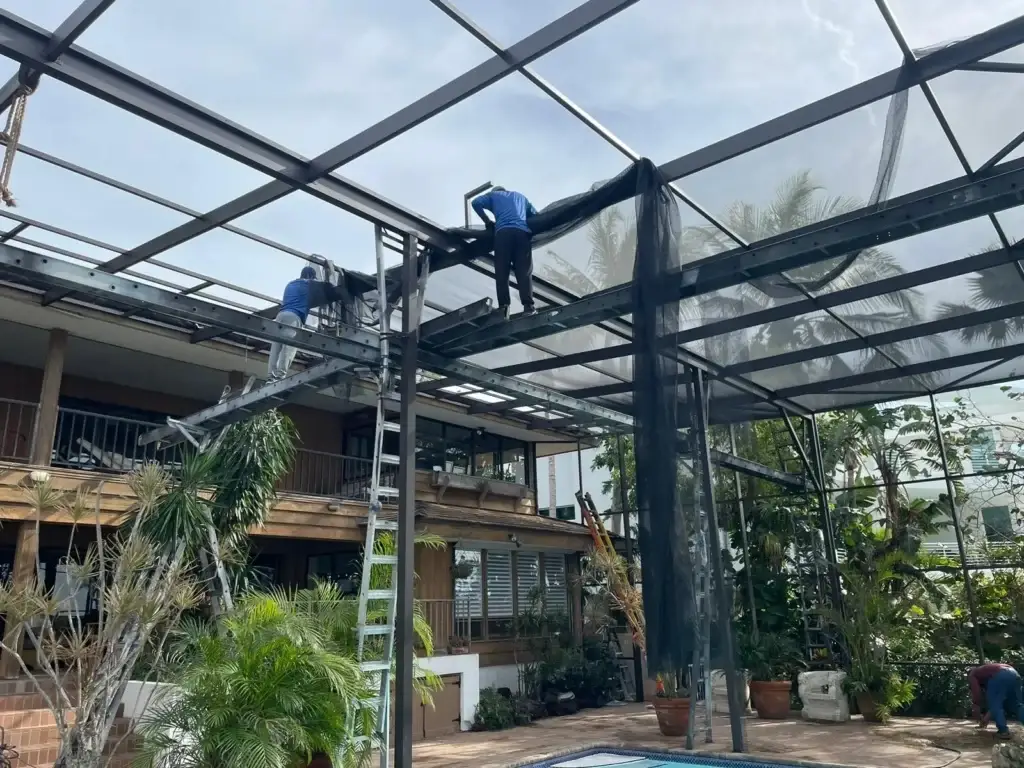
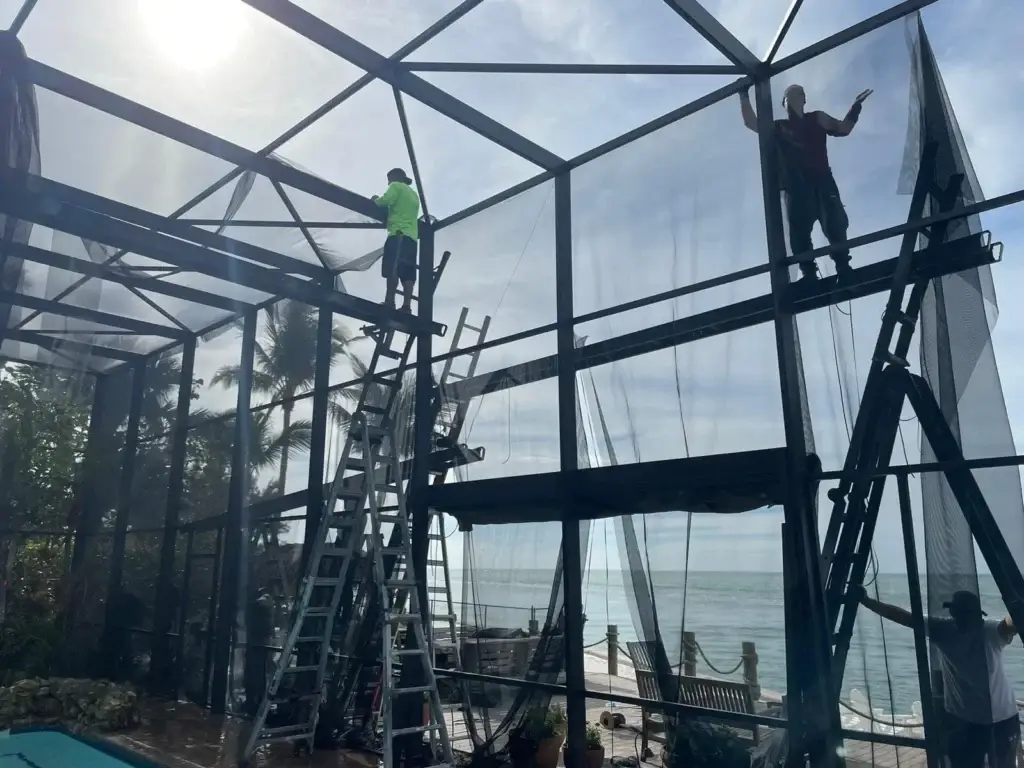
Get a written estimate for your pool cage
Send a few photos of your pool cage or patio enclosure along with your property address, and you will receive a written estimate at no cost. To talk through details first or schedule a site visit, call (844) 222-2115.
Last reviewed: October 19, 2026