
Do It Yourself Patio Enclosure Kits? What to Know
A look at what patio enclosure kits can and cannot do for Florida homes, and where aluminum pool cages raise the stakes.
- Free Written Estimate
- Fast Scheduling
- Built for Florida Weather
- Licensed & Insured
- Free Written Estimates
Request Your Free Estimate
Not sure if your project is a kit job or a crew job? Request a free written estimate and compare.
- Free No-Obligation Estimate
- Fast Response Times
- No Pressure Consultation
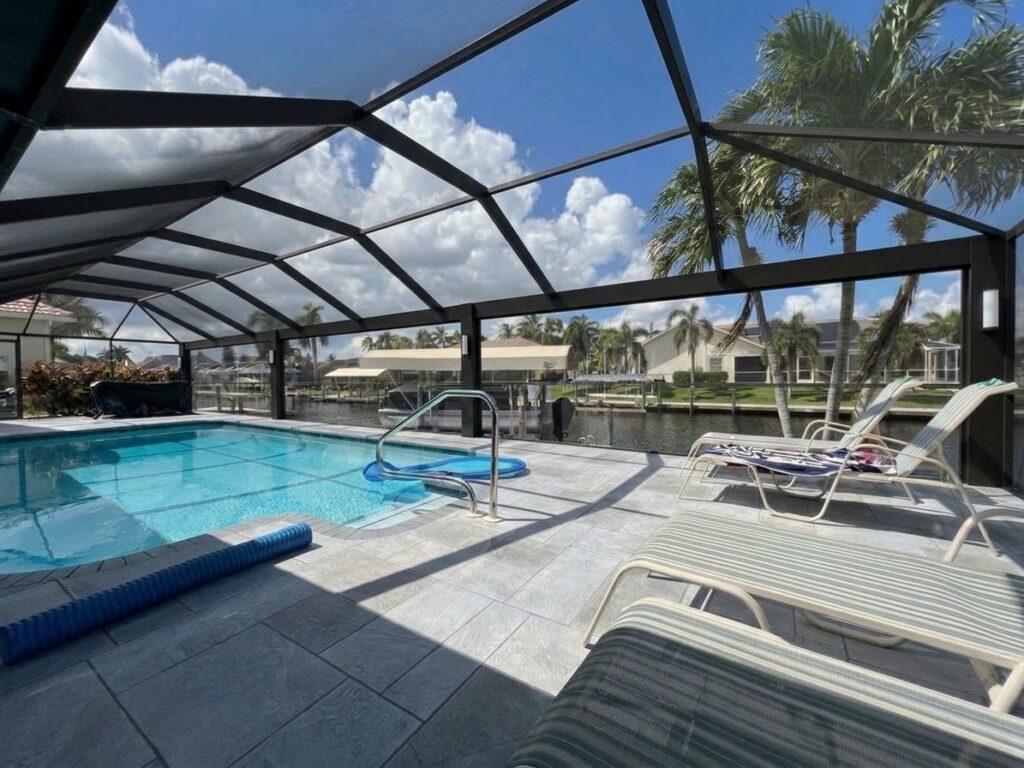
DIY patio enclosure kits can work for small, simple, ground-level screen rooms built to a standard rectangle. They are harder to justify for pool cages, which are taller, carry more wind load, and often include curved or multi-panel roof sections that are not sold as off-the-shelf kits.
Whether a kit makes sense depends on the structure’s size and shape, your local wind and permit requirements, whether the frame already exists or needs to be built from scratch, and how comfortable you are working at height on ladders or scaffolding near a pool. In Central and Southwest Florida, salt air, afternoon storms, and HOA rules add factors a generic kit instruction sheet will not cover.
What Decides If a Kit Works
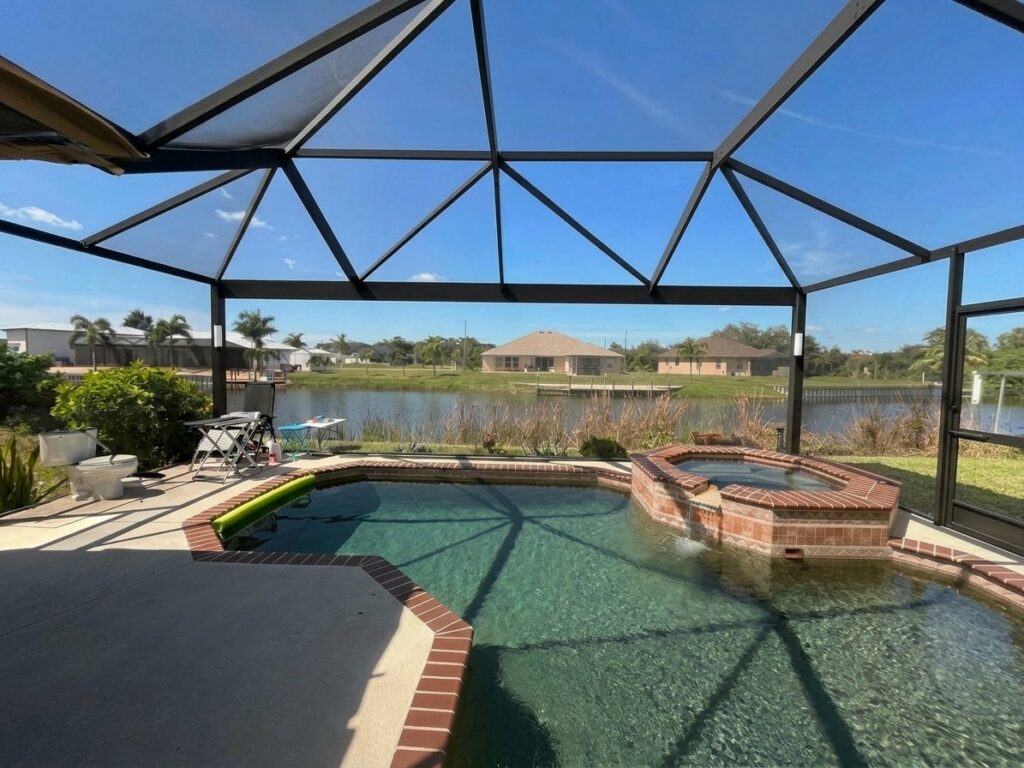
Size and roof shape matter more than most kit marketing admits. A flat-roofed patio screen addition against an existing wall is a different project than a pool screen enclosure with a peaked or domed roofline spanning the width of a lanai. Curved eave sections, multi-panel roofs and tall vertical panels are typically custom-fabricated aluminum, not stock kit parts.
Florida’s wind zone requirements vary by county, and any structure attached to your home, including a screen patio or pool cage, generally falls under local building code for wind load and anchoring. Permit requirements differ between jurisdictions, and inspectors check fastener spacing, footer or ledger attachment, and screen material rating. A kit sized for a milder wind zone elsewhere may not meet requirements here.
Many Spring Hill properties sit in communities with HOA design guidelines covering enclosure height, screen color, and framing finish. Approval is usually required before ordering materials or starting work, and some associations specify matching existing pool enclosures or roof pitch. Checking HOA rules first avoids a kit purchase that gets rejected at the approval stage.
- Flat-roof patio screens vs. domed or peaked pool cages
- County wind zone and permit rules for attached structures
- HOA review of height, color, and framing style before purchase
What the Installation Actually Involves
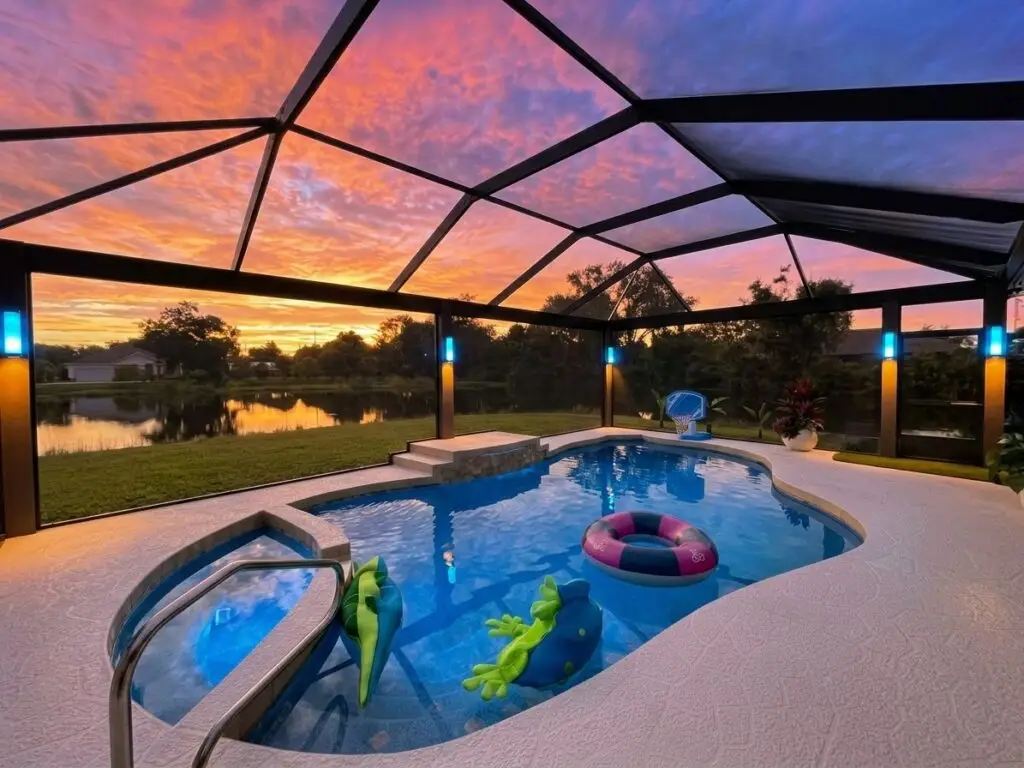
Installation starts with measuring the opening and confirming it is square, since aluminum framing does not flex to fit an out-of-square slab or knee wall. Framing is then anchored into existing concrete, a block knee wall, or the home’s fascia, with fastener spacing set to meet wind load requirements rather than evenly spaced for appearance alone.
Screen material is stretched and secured into the spline channel, or a patio screen door is hung and adjusted so it closes without binding against humidity swings common in Florida. Every fastener point through the roof or wall needs sealant to prevent water intrusion, since a missed seal shows up later as a leak at the ceiling line or knee wall.
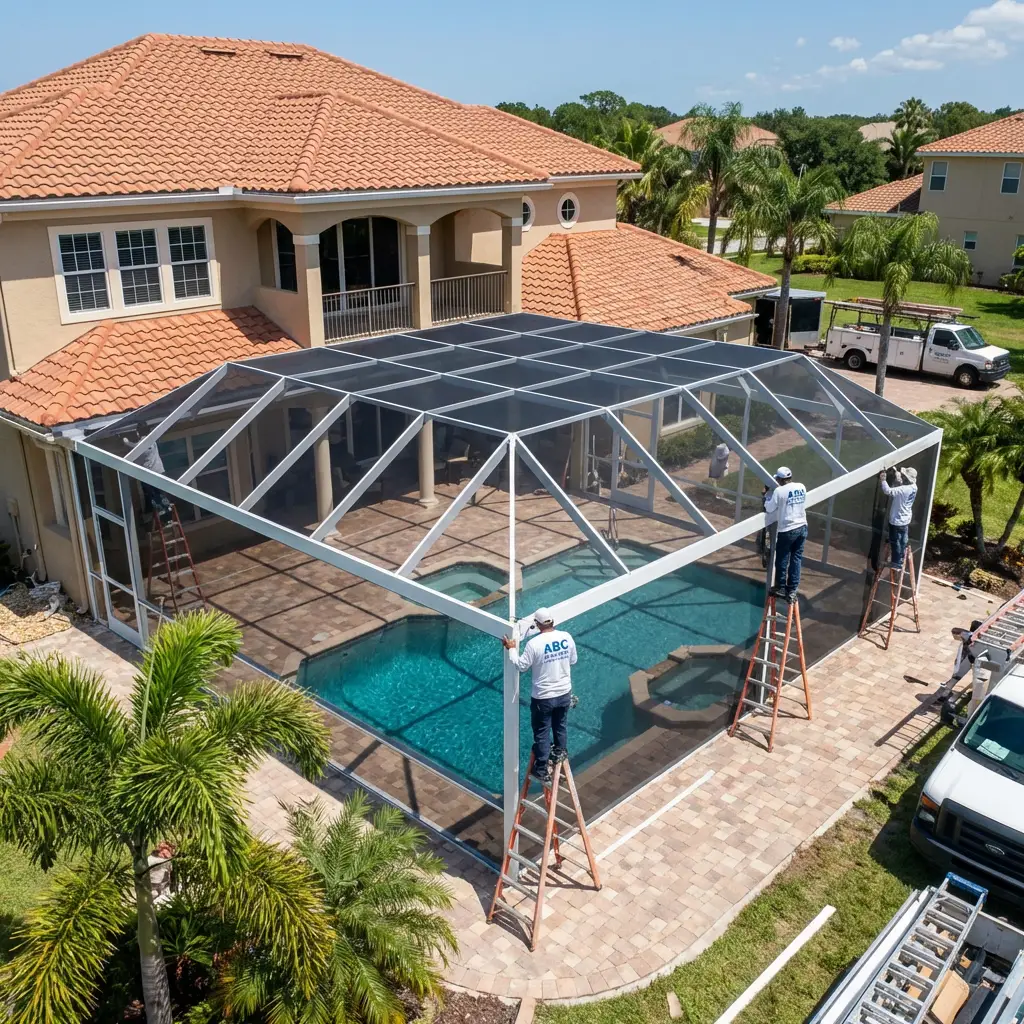
Pool cages add real height compared to a ground-level screen porch, often twelve feet or more at the roof peak. That height usually rules out ladder work and requires scaffolding or a lift to safely reach roof panels and gutter lines, which changes both the equipment needed and the time required to complete the job.
Common Mistakes With DIY Kits
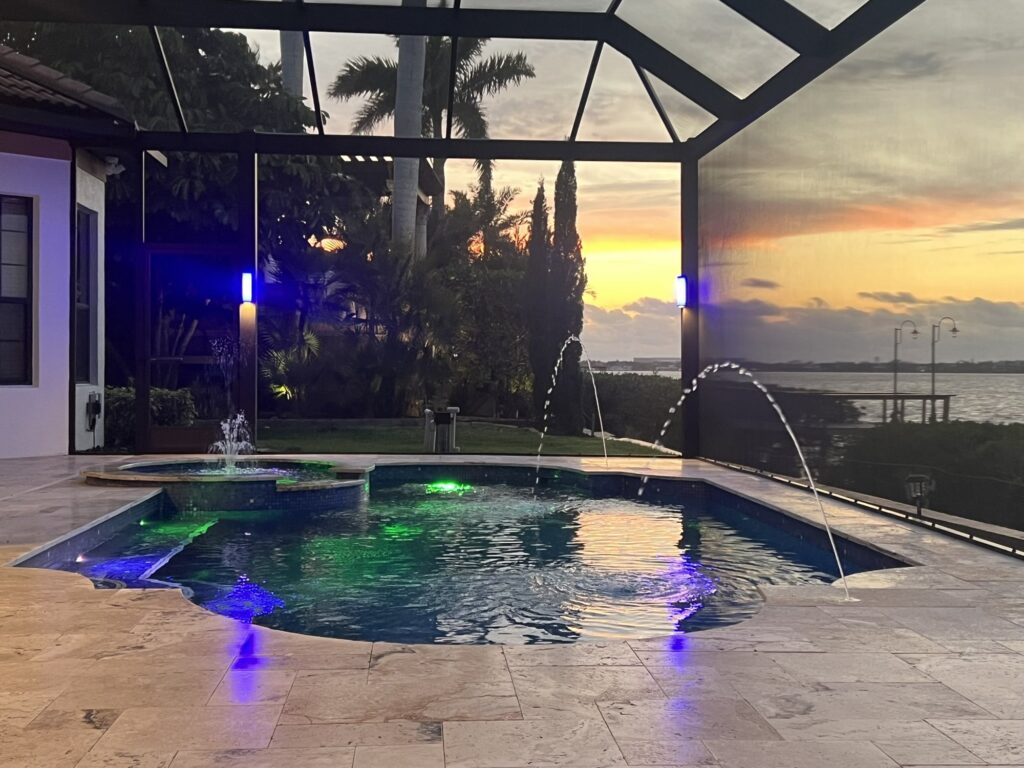
The most frequent problem is buying extrusions sized for a standard patio screen enclosure and discovering the opening is out of square or taller than the kit allows. A second is skipping the permit or HOA approval step, since most Spring Hill communities require sign-off before a screen porch or pool enclosure goes up, and unapproved work can mean removal later.
Flashing where the frame meets the house is another weak point. Kits rarely include house-specific flashing details, and a gap there lets water track behind stucco or siding during Florida’s summer storms. Screen tension is also harder to get right than it looks, since humidity and heat cause screen and spline to behave differently than the instructions assume.
Hardware quality matters more near the Gulf. Budget screws and clips sold with entry-level kits corrode faster in salt-laden air common from Spring Hill down through Tampa, Sarasota, Bradenton, and Venice, which shortens the life of an otherwise sound frame.
- Mismatched or undersized aluminum extrusions for the actual opening
- Permit or HOA approval skipped before work begins
- Missing or incorrect flashing at the house connection
- Screen tension done incorrectly in heat and humidity
- Standard hardware that corrodes quickly in coastal salt air
When to Call a Professional Instead
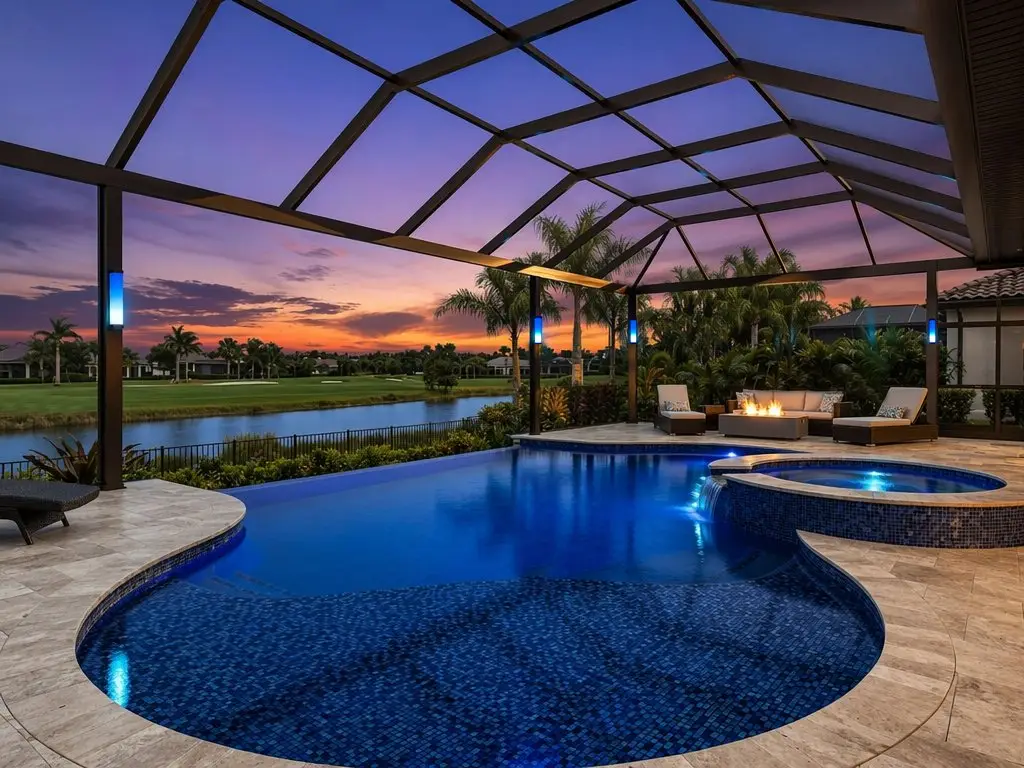
Some projects are outside what a kit is designed for. Anything taller than a single story, a curved or hip roof pool enclosure, or re-screening a large existing lanai all involve structural and layout decisions that off-the-shelf parts do not account for. These jobs also tend to need a permit with engineering sign-off, which most kits are not sold to satisfy.
Storm damage repair is another case where a professional eye helps, since bent framing or compromised anchoring can be hard to assess without experience. Before buying materials, a free written estimate can clarify whether the scope fits a kit or needs custom fabrication, which saves time and avoids paying twice for materials that do not work.
How the work is done, step by step
- Site visit to measure the opening, check for square, and assess roof shape and height
- Review of HOA guidelines and permit requirements specific to the property
- Selection of aluminum framing, screen type, and hardware suited to coastal exposure
- Fabrication or adjustment of framing to match the actual structure, not a standard size
- Installation with attention to flashing at the house connection to prevent leaks
- Final screen tensioning and inspection of all fasteners and corners
Project timelines vary widely depending on size and scope, so exact scheduling is confirmed during the free written estimate.
Frequently asked questions
Are patio enclosure kits strong enough for Florida wind and storms?
Kit-built enclosures can meet local wind requirements only if the frame gauge, fastener spacing and footer anchoring match the engineering specs for your wind zone. In Spring Hill and other coastal and near-coastal areas, inspectors will check this against the Florida Building Code, so skipping the engineered details is the most common reason a DIY structure fails inspection.
Can I buy a kit specifically for a pool cage, or only for a patio screen room?
Both are sold as kits, but a pool cage kit is engineered taller, often self-supporting, and rated for the additional wind load of an open roof structure over a pool, while a patio screen room kit is typically lower, attached to the house on one side, and rated differently. Using a patio screen enclosure kit where a pool enclosure is required usually will not pass permitting.
Do I need a permit to install a DIY patio enclosure in Florida?
Yes. Hernando County and most surrounding jurisdictions require a building permit for any new screen enclosure, pool cage, or patio screen room, along with sealed engineering drawings showing wind load calculations. Many HOA communities in the Spring Hill area also require separate design approval before the permit is submitted.
What aluminum gauge or screen type holds up best near the coast?
Heavier gauge aluminum framing resists flexing and corrosion longer than thin residential-grade stock, and powder-coated or factory-painted finishes hold up better against salt air than mill finish aluminum. For screening, fiberglass mesh is the common standard, while pet-resistant or clear vinyl screen is worth considering for cages that take direct storm exposure or heavy pet traffic.
How long does a DIY patio screen enclosure typically take to install?
Timelines vary widely based on the size of the structure, whether footers need to be poured, and how quickly the permit and any HOA approval come through, so there is no fixed schedule that applies to every project. Weather delays are also common in Florida, particularly during the rainy season.
Is it cheaper to build a screen enclosure myself or hire a crew?
A kit can lower material cost, but it shifts the engineering review, permitting, footer work, and screen installation onto the homeowner, and mistakes in any of those steps can mean a failed inspection or a structure that needs rework. A licensed crew carries the cost of that labor and liability, which is why a direct dollar comparison depends on the specific project rather than a general rule.
Nearby Areas We Also Serve
ABC Pool Cage Painting sends crews to Spring Hill and the surrounding Gulf Coast communities from its regional service area. Bradenton, Tampa, Sarasota, Naples, Fort Myers and Cape Coral.
Statewide details, colors and the full process are on our main pool cage painting page.
Recent Work
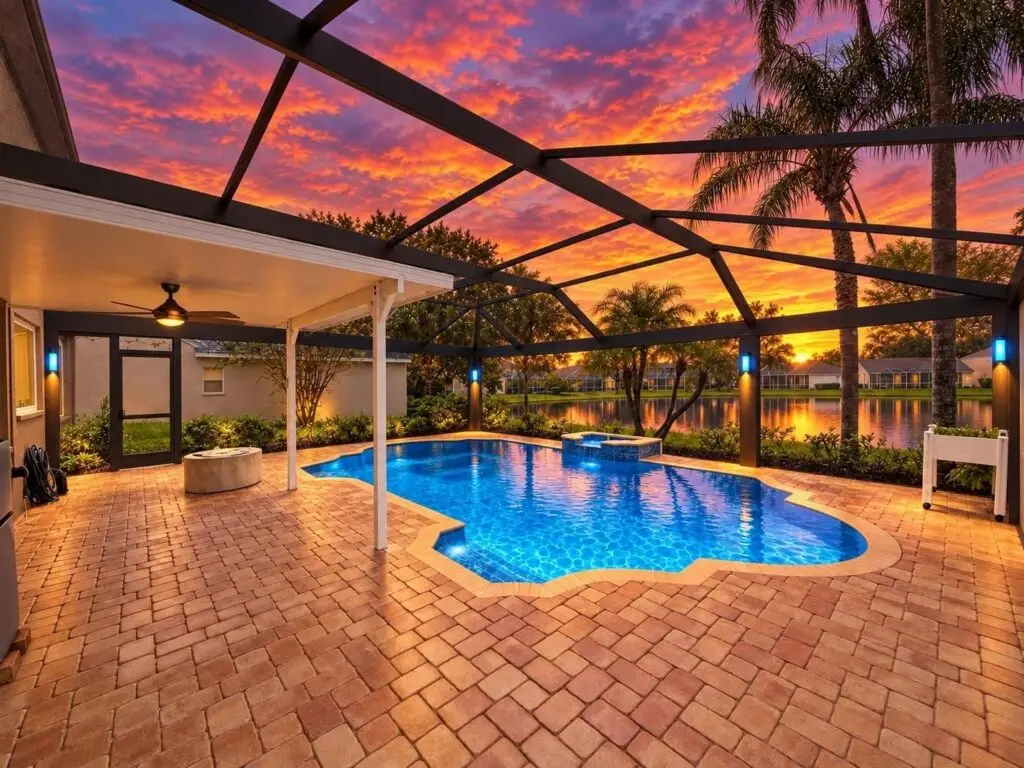
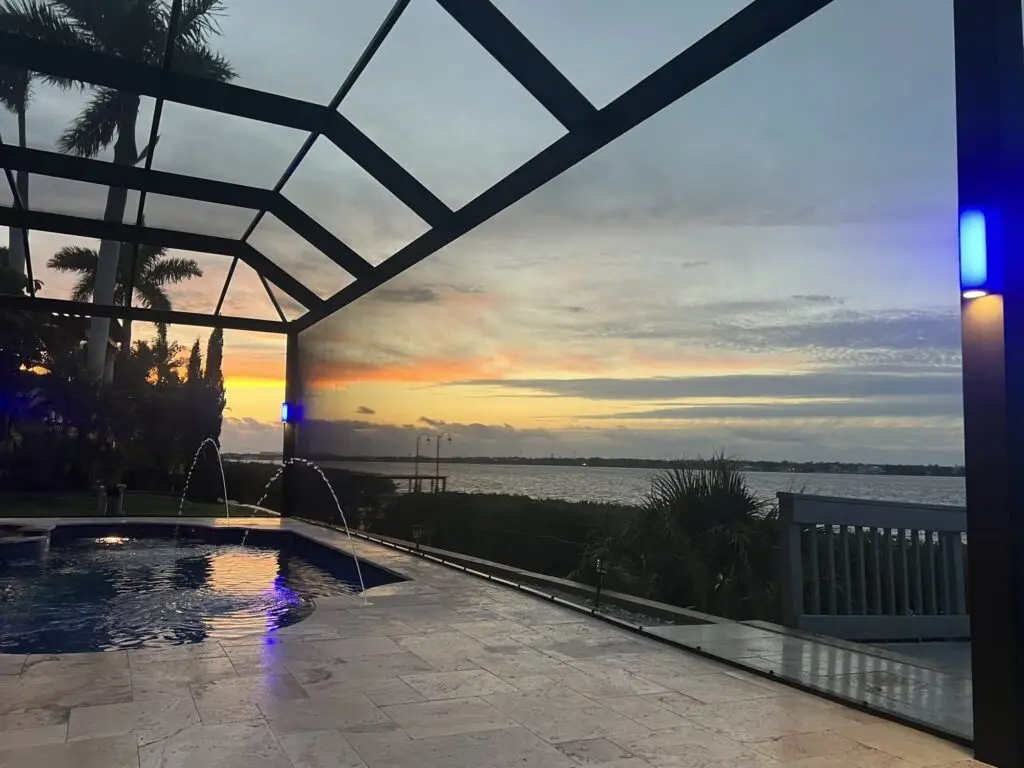
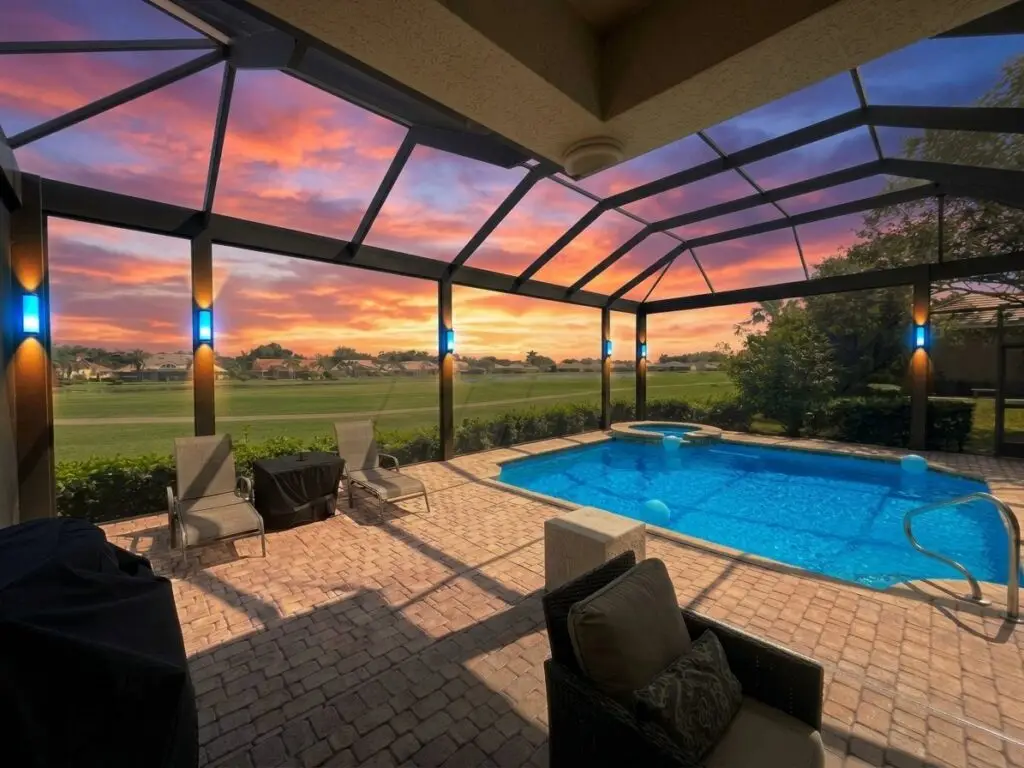
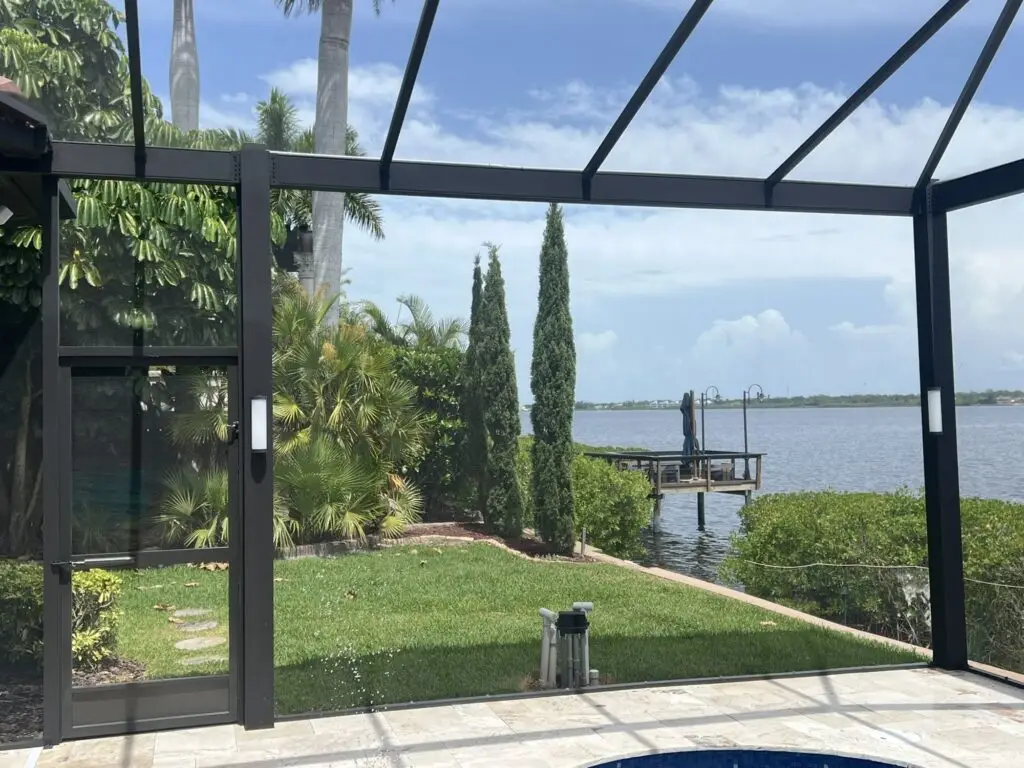
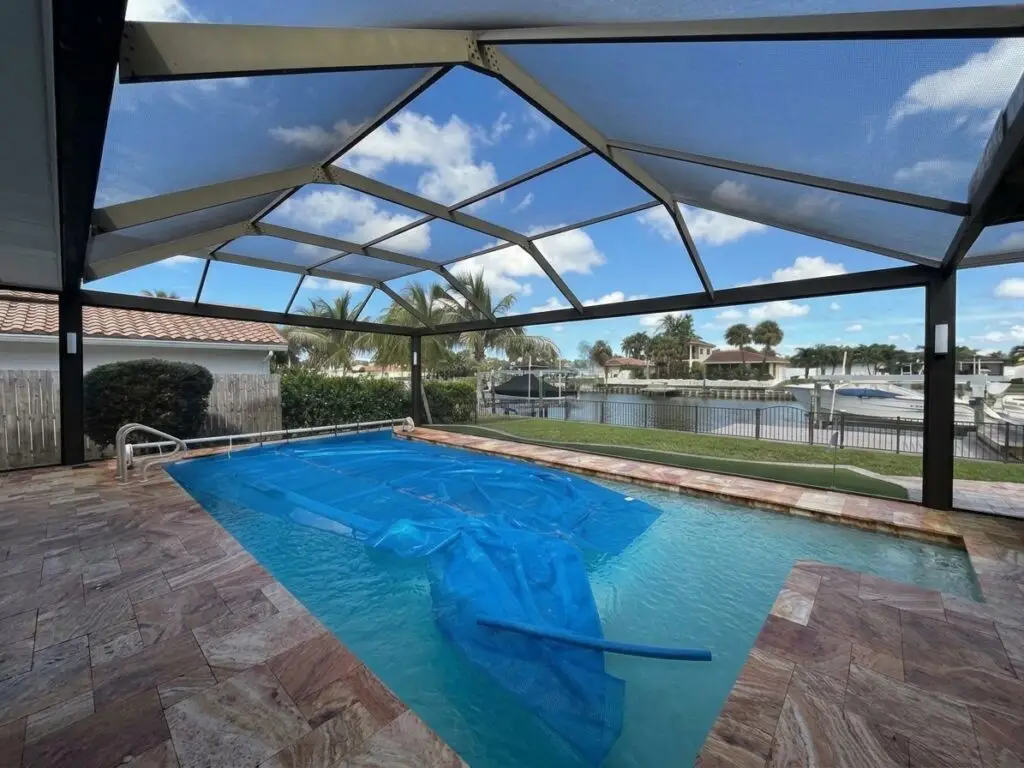
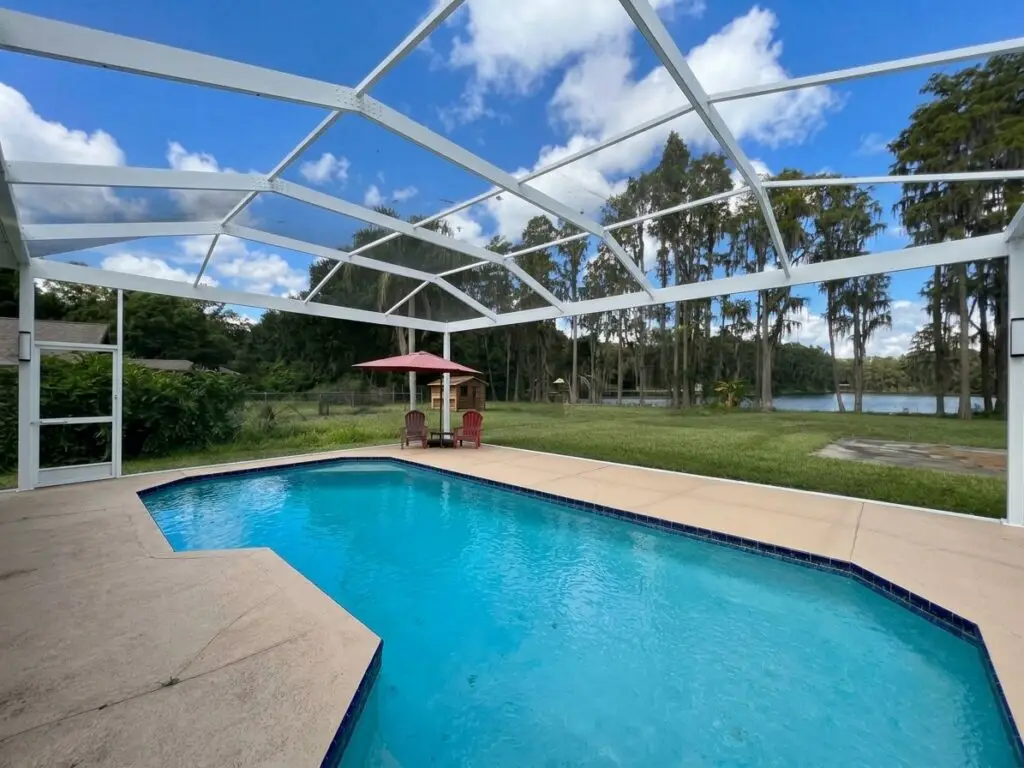
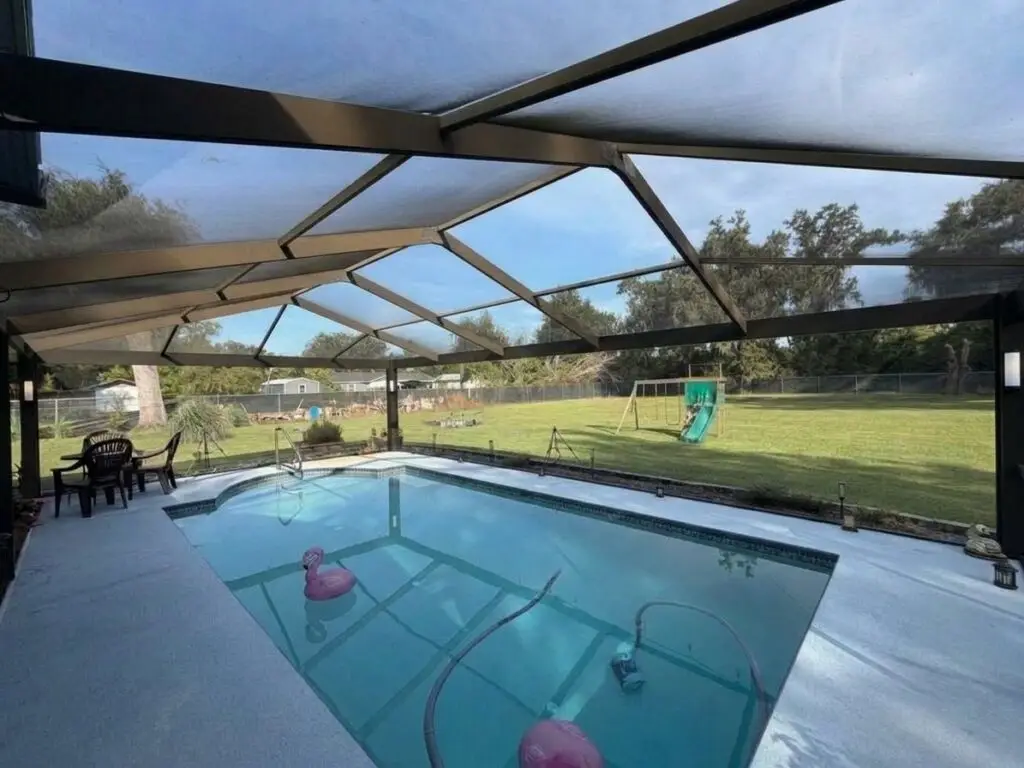
Get a written estimate for your pool cage
Send a few photos of your pool cage or screen enclosure along with the property address, and we will reply with a written estimate at no cost. For questions before then, call (844) 222-2115.
Last reviewed: October 30, 2026