
Hot Tub Enclosure Ideas for Florida Pool Cages
See how homeowners in Spring Hill and nearby communities are enclosing hot tubs within existing pool cages or adding a dedicated screen structure.
- Free Written Estimate
- Fast Scheduling
- Built for Florida Weather
- Licensed & Insured
- Free Written Estimates
Request Your Free Estimate
Request a free written estimate to discuss hot tub enclosure options for your pool cage.
- Free No-Obligation Estimate
- Fast Response Times
- No Pressure Consultation
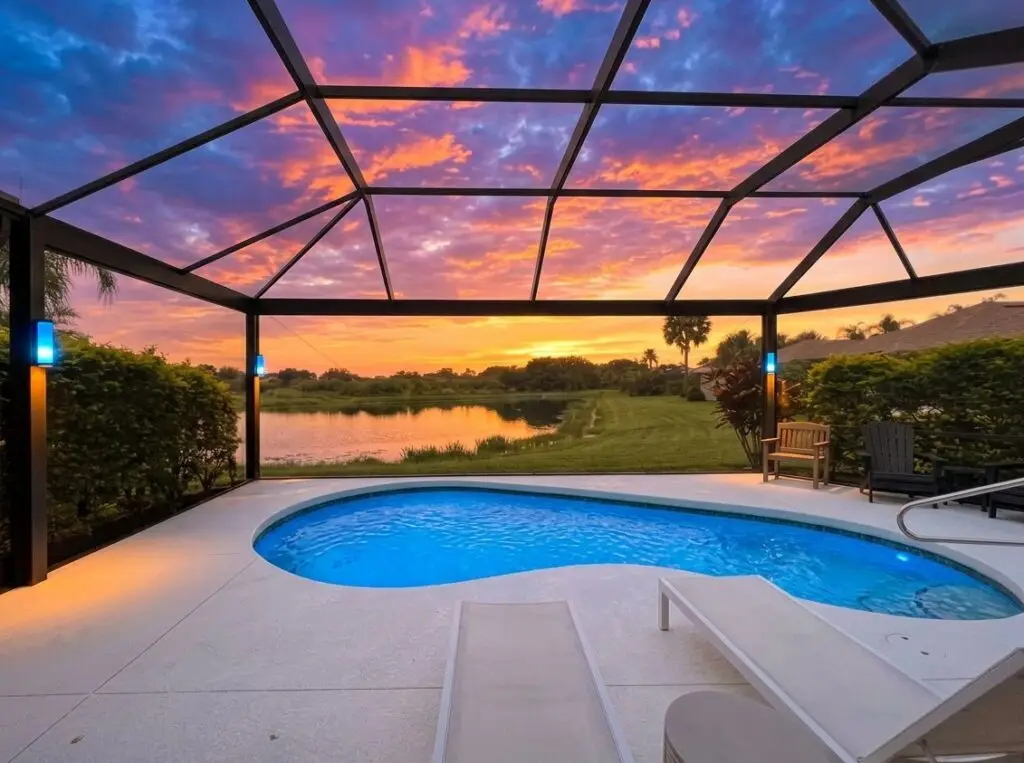
Most Florida homeowners enclose a hot tub by either placing it inside an existing pool cage or building a separate screened structure around it. The right choice depends on where the tub sits relative to the current enclosure, the load the aluminum frame can carry, and whether local wind and code requirements allow for modifications.
What works for one yard may not work for another because cage height, panel spacing, and footing conditions vary by home. A tub set on a paver patio within a tall screen enclosure has different needs than one on an elevated deck or against the house. Humidity, salt air, and HOA rules also shape which materials and screen densities make sense.
What Shapes Your Enclosure Options
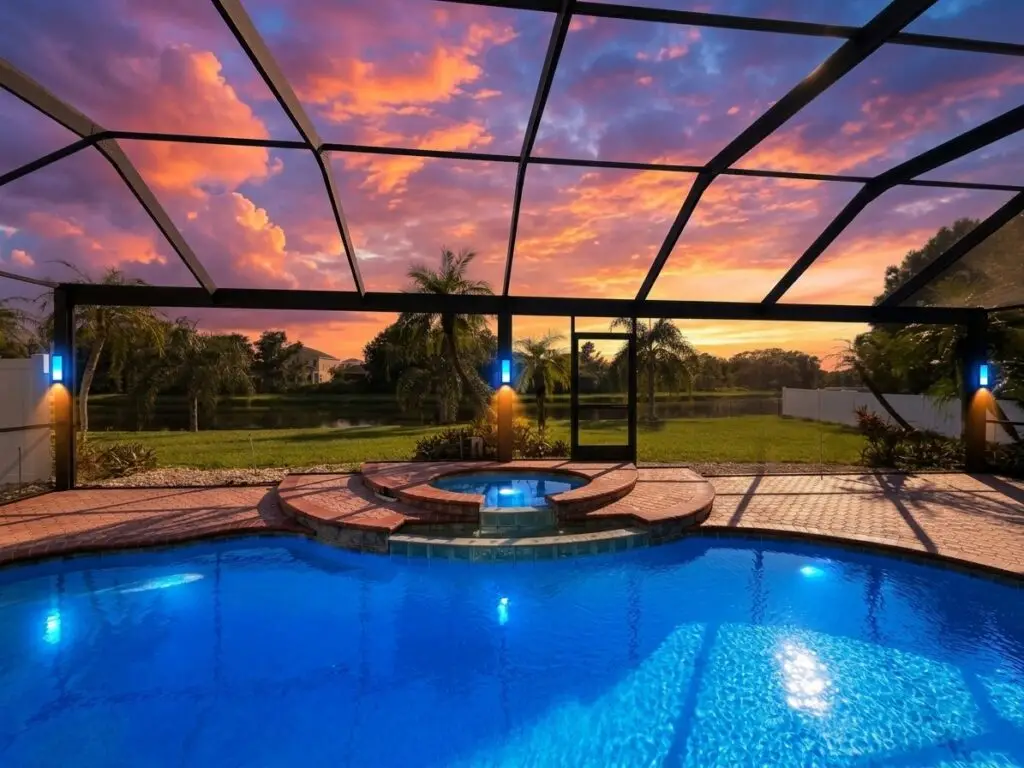
The height and footprint of your existing cage set the starting point. A tub placed under an 8-foot flat roof section may need the panel raised or reframed, since most hot tubs with cabinetry sit 32 to 38 inches tall and require clearance for the cover to open fully without hitting the screen frame.
Where the tub sits matters as much as the cage itself. A tub on a paver pad near the cage perimeter is simpler to enclose than one set into a deck extension or positioned several feet beyond the current footprint, since extending aluminum framing means new footers, posts, and roof panels tied into the existing structure.
Florida’s wind load requirements affect what framing gauge and bracing pattern a contractor can use, particularly in coastal zones from Tampa down through Sarasota and Naples. Many Spring Hill communities also carry HOA rules on screen color, mesh type, or enclosure height, so it’s worth checking your deed restrictions before finalizing a layout.
Screen, Framing, and Layout Choices
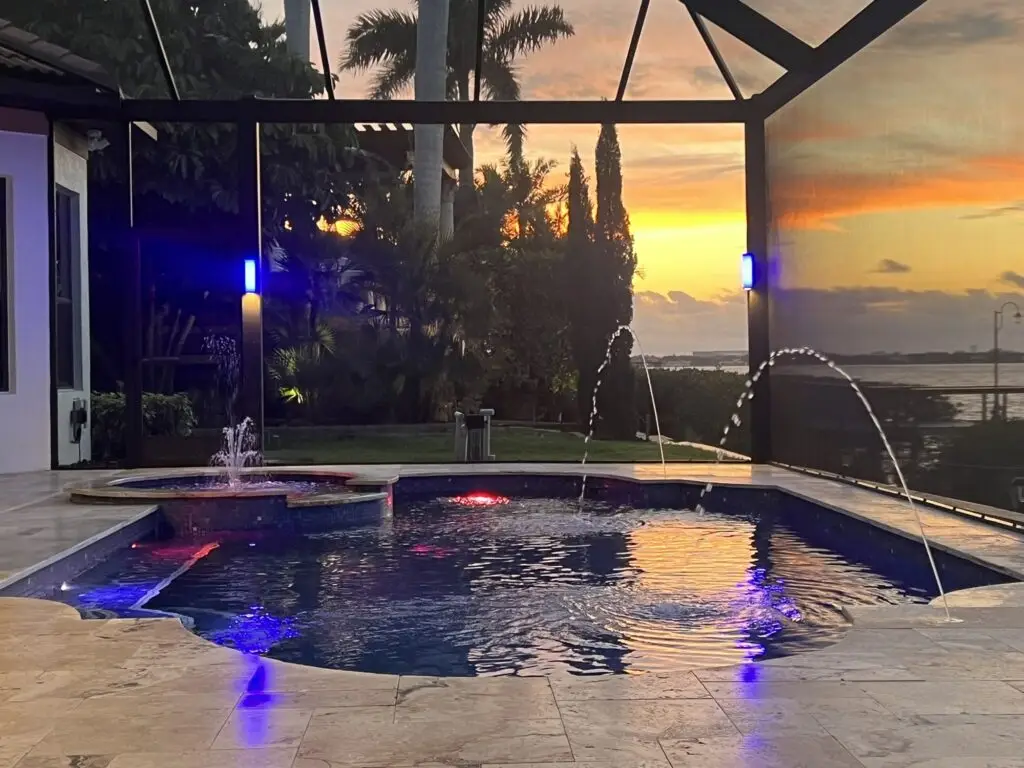
Extending a pool screen enclosure to cover the tub is usually the most cost-effective route when the tub sits adjacent to the cage. This keeps the roofline and support posts continuous, avoids a second structure, and lets one contractor handle the screen, framing, and any patio screen door relocation in a single project.
If the tub is separate from the pool area, a standalone screen room or screen porch style structure may fit better, especially on a side patio or detached deck. This approach is common for homeowners from Valrico to Fort Myers who want a hot tub space independent of the main pool cage’s traffic and sightlines.
Screen selection depends on how the space gets used. Standard fiberglass mesh suits most tubs, while pet-resistant screen holds up better if dogs use the same patio, and storm-rated or heavier-gauge screen is worth considering in areas prone to wind-driven debris. Placing a patio screen door near the tub, rather than routing through the main pool entry, keeps foot traffic and wet feet away from indoor doorways.
- Standard fiberglass mesh: general use, lowest cost
- Pet-resistant screen: heavier weave, resists scratching
- Storm or heavy-gauge screen: better wind debris resistance
- Dedicated patio screen door: separates tub traffic from pool entry
Common Mistakes When Planning Layout
A frequent error is measuring for the tub itself but forgetting the clearance needed to lift a cover, access the equipment pad, or step around the skirt during maintenance. Once framing or extra screen panels go in, that margin is fixed, so it is worth mocking up the space with the actual tub dimensions plus service room before any aluminum is ordered.
Steam from a hot tub raises humidity inside a screen enclosure quickly, and if the cage lacks slope or a path for condensation to drain off the roof panels, water pools on the frame and screen track over time. Screen density matters too: a standard pool screen cuts glare and bugs but offers little visual privacy, which matters more around a tub than around a pool.
Skipping approval is the costliest mistake. Many Spring Hill communities and HOAs require sign-off before a cage is extended or reconfigured, and some changes also need a county permit. Proceeding without it can mean removing work already completed, so confirming requirements before ordering materials saves both time and money.
When to Bring in a Professional
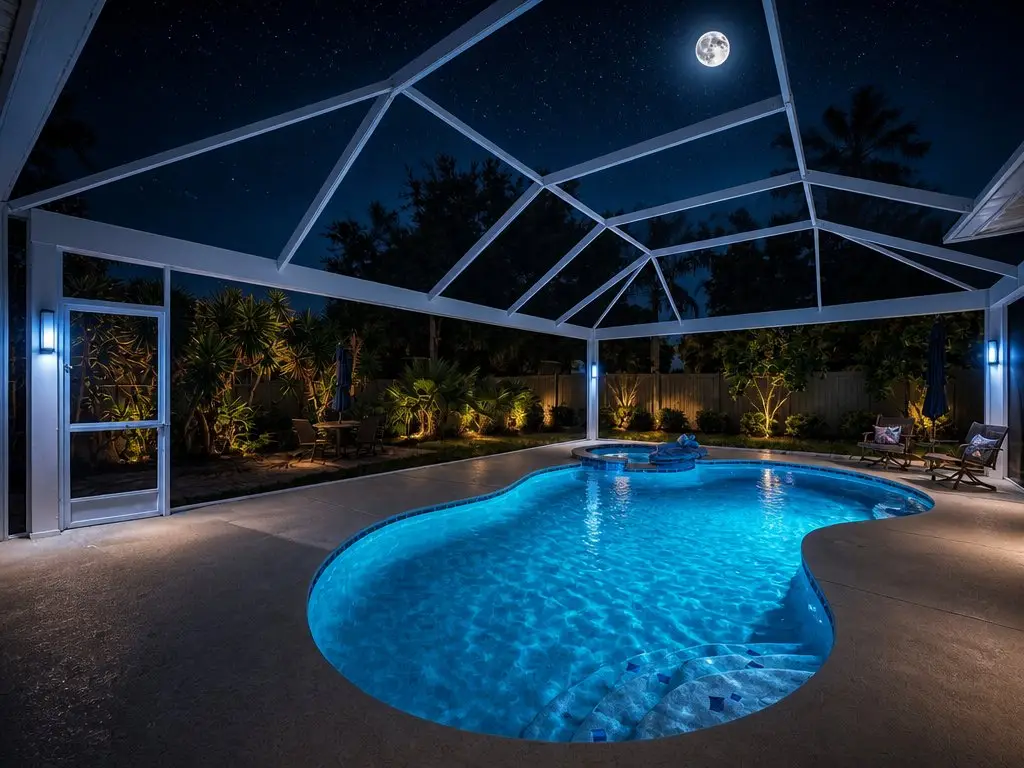
Minor upkeep, such as patching a small screen tear near the tub or touching up scuffed paint on a horizontal rail, is reasonable for a handy homeowner with basic tools. These are cosmetic fixes that do not affect the cage’s structure and carry little risk if done carelessly.
Anything that changes the frame itself is a different matter. Adding a new roof section, tying new framing into the existing structure, or adjusting the cage to meet wind load requirements for Hernando County calls for a licensed aluminum and screen specialist who can calculate loads correctly and document the work for permitting.
If the project involves running electrical for tub equipment or plumbing lines near the enclosure, that work should be coordinated between the screen contractor and licensed electricians or plumbers so penetrations through the cage frame or roof are sealed and placed correctly the first time.
How the work is done, step by step
- Site visit to measure the existing cage, the tub’s footprint, and clearance for covers and equipment access
- Review of HOA guidelines and county permit requirements for the planned layout
- Engineering check on framing and wind load if the cage is being extended or reconfigured
- Installation or extension of aluminum framing, followed by screen selection based on privacy and airflow needs
- Attention to roof slope and drainage points so condensation and rain shed away from the tub area
- Final walkthrough to confirm clearances, screen tension, and finish before the enclosure is signed off
Most layout changes of this scope take one to three weeks from approved design to completed installation, depending on permitting and framing complexity.
Frequently asked questions
Can I add a hot tub inside my existing pool cage without modifying the structure?
Often yes, provided the existing footers, panels, and roof framing were sized to carry the additional load and local wind rating. A technician can inspect the structure during a free estimate visit and tell you whether reinforcement is needed before a hot tub is installed.
What type of screen holds up best around a hot tub in Florida's humidity?
Standard fiberglass screen handles routine humidity and splashing well, but a heavier gauge or pet-resistant mesh is often recommended near a hot tub because the combination of moisture, chemicals, and frequent use accelerates wear. No-see-um mesh is sometimes chosen too, though it restricts airflow more than standard screen.
Do I need a permit to enclose a hot tub within a screen enclosure?
In most Hernando County jurisdictions, adding a hot tub under an existing screen enclosure requires an electrical or plumbing permit, and any structural changes to the cage require a separate building permit. HOA approval is often required as well, so it is worth checking your community's rules before scheduling work.
How much extra height or framing does a hot tub area typically need?
Most hot tubs fit under standard pool cage clearance without added height, but raised spas or swim-up configurations sometimes require taller panels or an extended beam section. A site visit is the most reliable way to confirm clearance for your specific unit.
Will steam from a hot tub damage aluminum screening or framing over time?
Steam itself does not corrode aluminum, but the moisture it carries can accelerate oxidation on unpainted or chalking frames, especially in salt-air areas near the Gulf. Keeping framing painted and sealed reduces this risk and makes cleaning easier.
Can an existing patio screen door be relocated to access a new hot tub space?
Yes, a patio screen door can usually be removed and reset into a new opening, or replaced with a new screen door if the existing one does not match the updated layout. This is a common patio screen door replacement request when homeowners reconfigure their pool cage around a hot tub or spa area.
Nearby Areas We Also Serve
Crews based in the area travel throughout Spring Hill and the surrounding Gulf Coast communities for estimates and scheduled work. Bradenton, Tampa, Sarasota, Naples, Fort Myers and Cape Coral.
Statewide details, colors and the full process are on our main pool cage painting page.
Recent Work
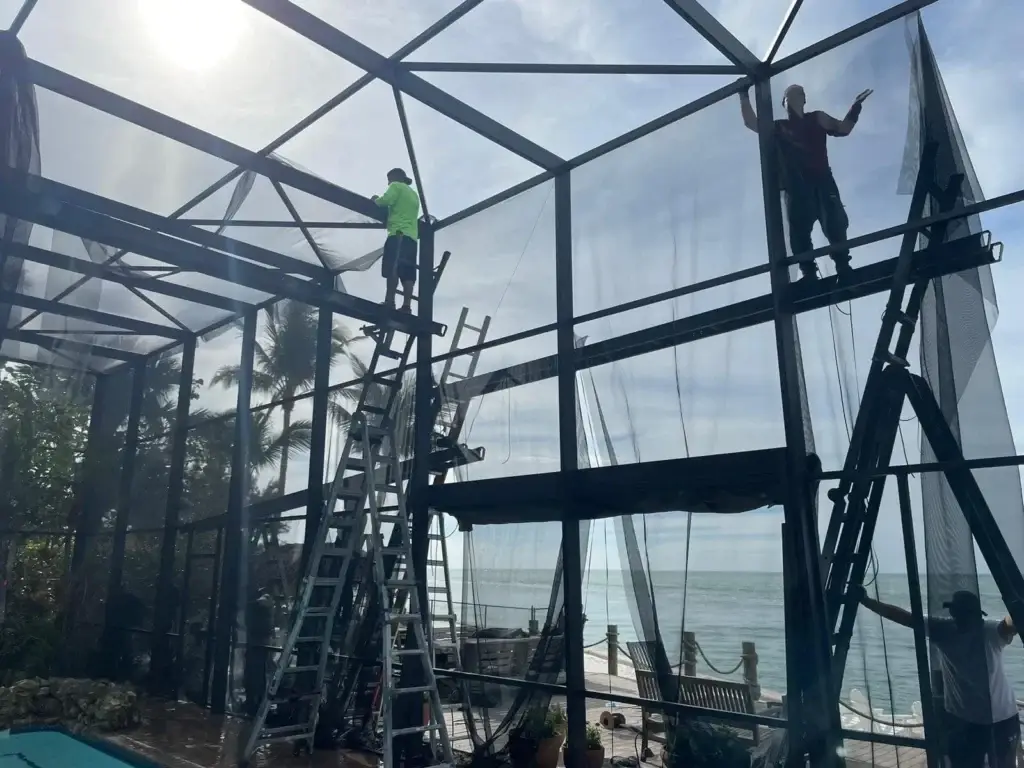

Get a written estimate for your pool cage
Send a few photos of your pool cage along with your property address, and you will receive a written estimate at no cost. For questions before then, call (844) 222-2115.
Last reviewed: October 29, 2026