
Pool Cage Rescreening in Alva, FL
We replace torn and sun-brittled screen panels on Alva pool cages with mesh suited to riverfront sun and insect pressure, from single-panel patches to full rescreens.
- Free Written Estimate
- Fast Scheduling
- Built for Florida Weather
- Licensed & Insured
- Free Written Estimates
Request Your Free Estimate
Tell us about your Alva pool cage and we will schedule a free on-site estimate.
- Free No-Obligation Estimate
- Fast Response Times
- No Pressure Consultation
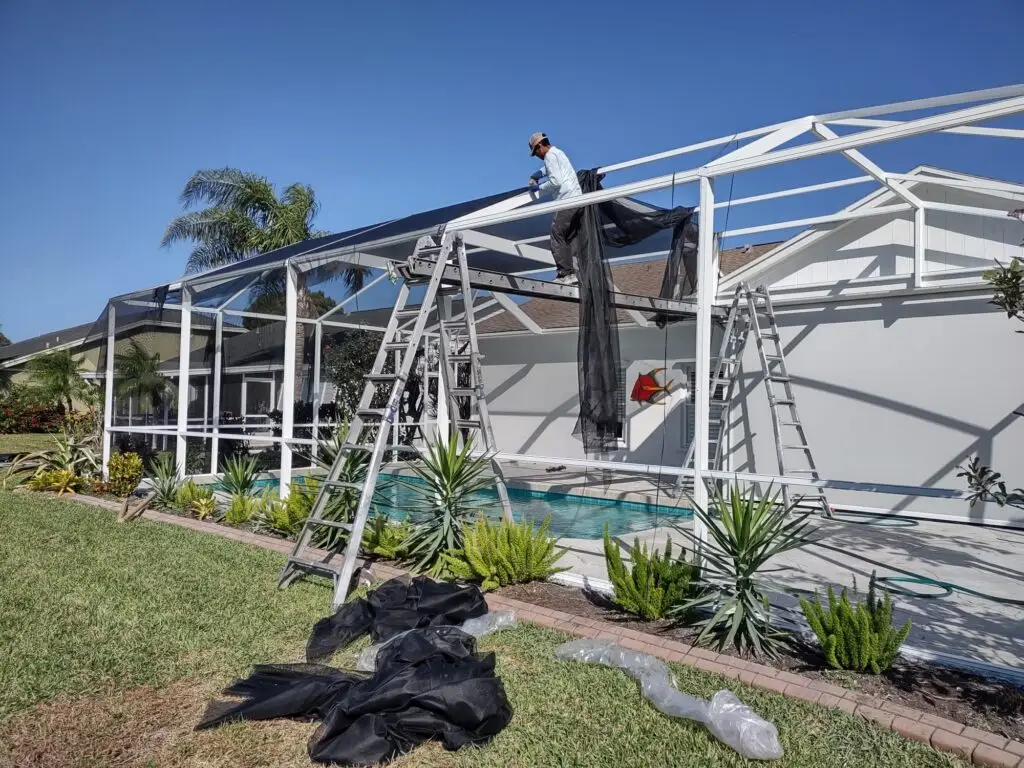
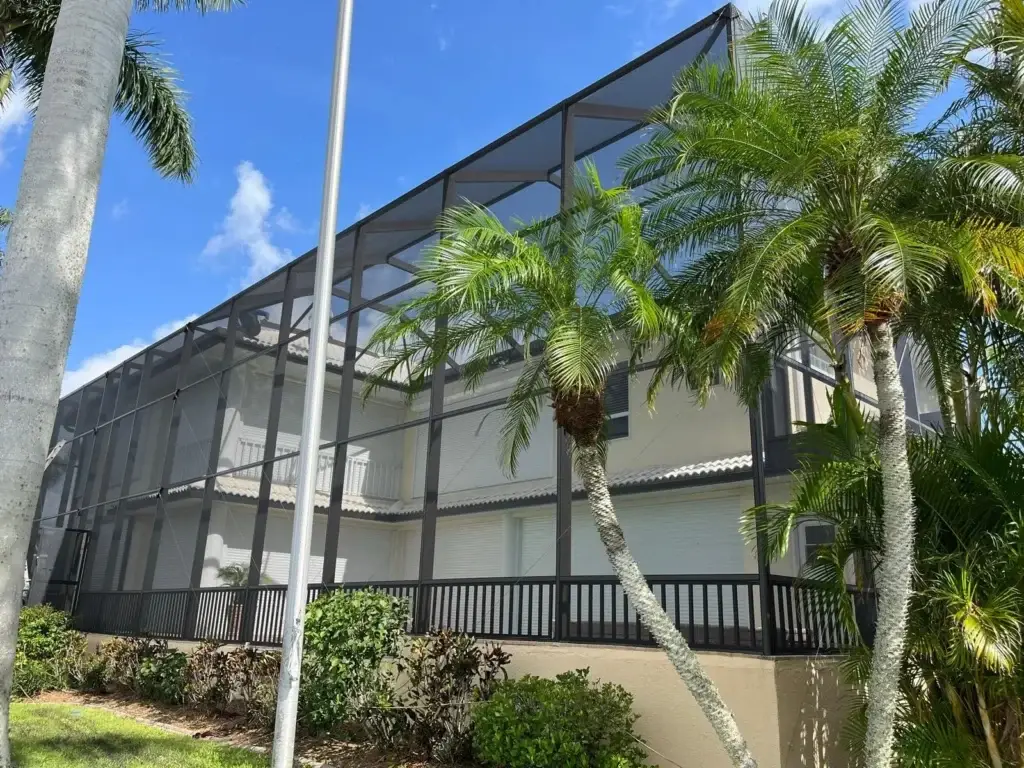
Alva sits along the Caloosahatchee River in unincorporated Lee County, a mostly rural stretch of ranchland, river-view lots and newer acreage communities east of North Fort Myers. Many homes here have pool cages that sit close to open pasture or canal frontage, where sun exposure is constant and screens take years of direct UV with little shade from mature canopy. That exposure shows up first as brittle, discolored screen in the top panels and around the roof peak.
Because Alva is spread out, with properties ranging from older mobile-home-era enclosures to new construction near the Caloosahatchee Regional Park area, there is no single screen spec that fits every job. We look at panel size, frame condition and whether insect pressure from nearby pasture or wooded lots justifies a tighter no-see-um weave before writing an estimate. We have worked on cages across Alva and quote each one on what the frame and screen actually need.
Sun and Insect Pressure Near the Caloosahatchee
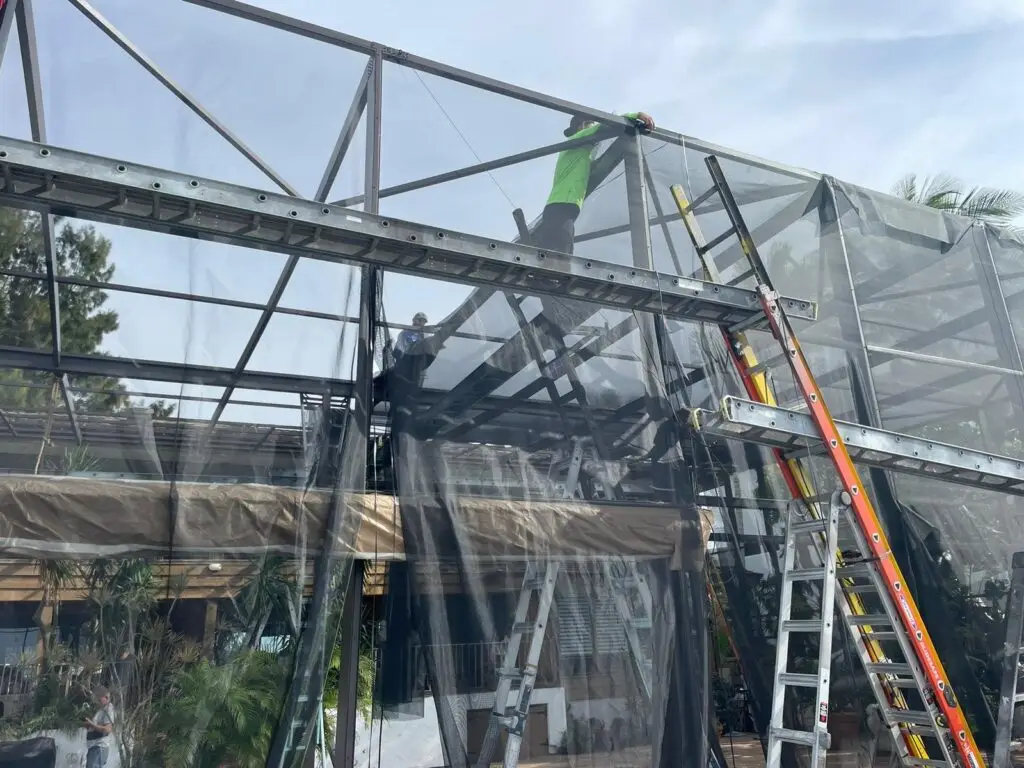
Alva’s open acreage lots and river-view properties often place pool cages with little tree cover, so screens face long afternoons of direct sun. Standard fiberglass screen softens and turns brittle under that kind of exposure faster than it would on a shaded in-town lot in Fort Myers or Lehigh Acres.
Homes near pasture, canal banks or wooded parcels also deal with more no-see-ums, love bugs and field insects than denser neighborhoods closer to Cape Coral or Bonita Springs. Many Alva homeowners ask about tighter weave, no-see-um mesh for lanai doors and lower panels, even if the upper roof panels stay standard screen to save on cost.
Panels facing west toward open water or cleared land tend to fail first, usually along the spline groove where UV and heat work the vinyl loose before the mesh itself tears. On an estimate, we check those panels first since they often need attention well before the rest of the cage.
How We Rescreen a Cage, Panel by Panel
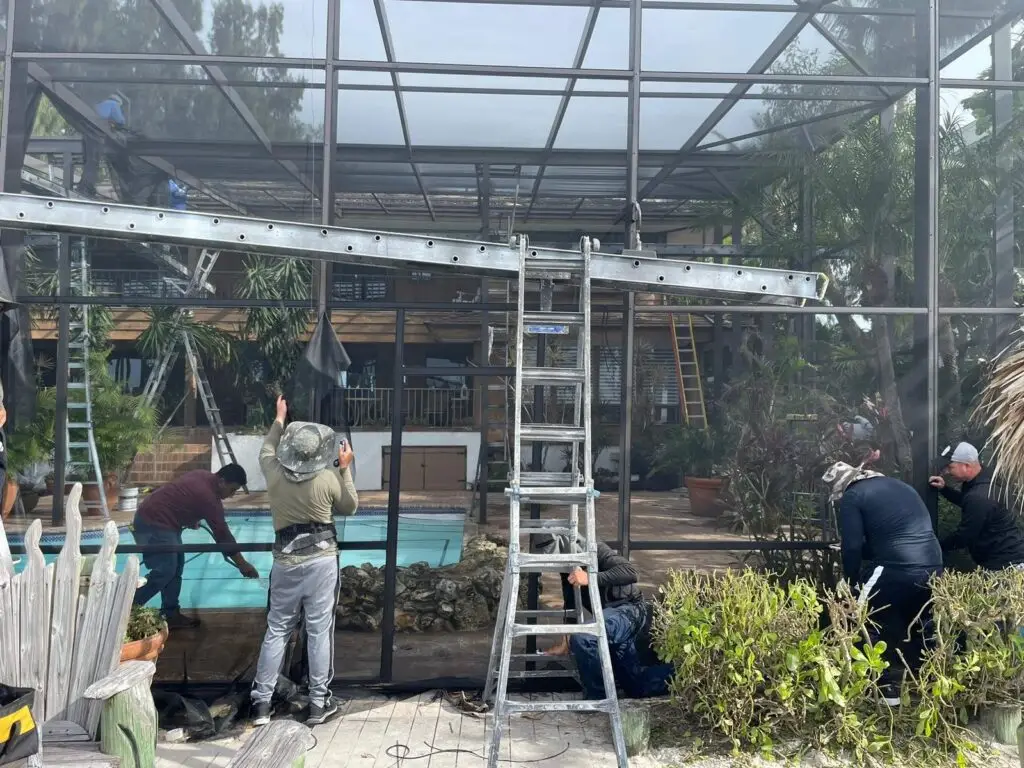
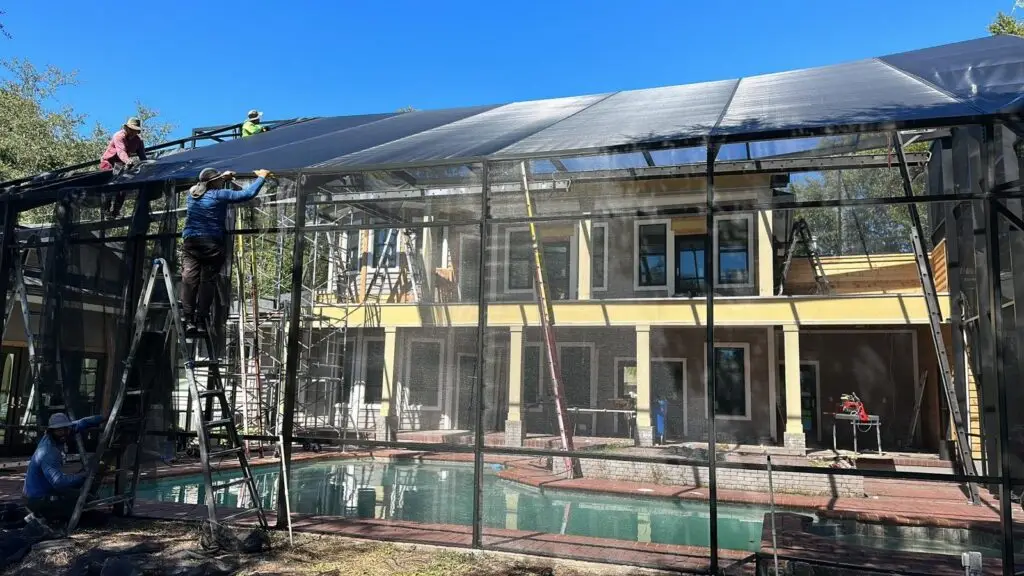
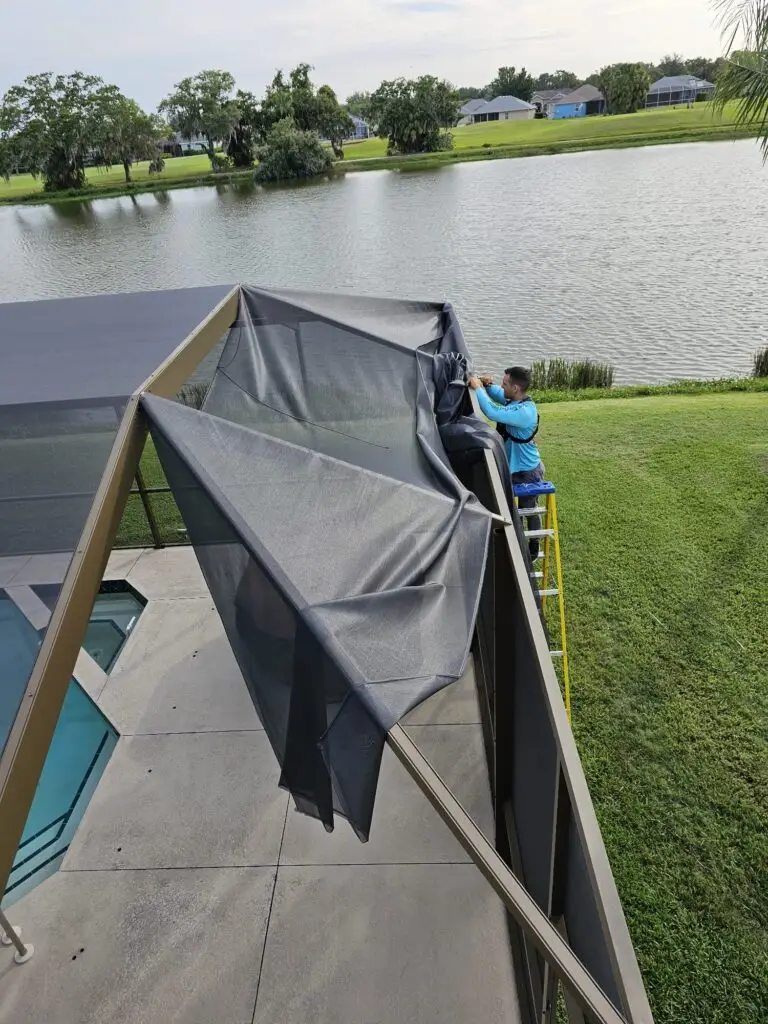
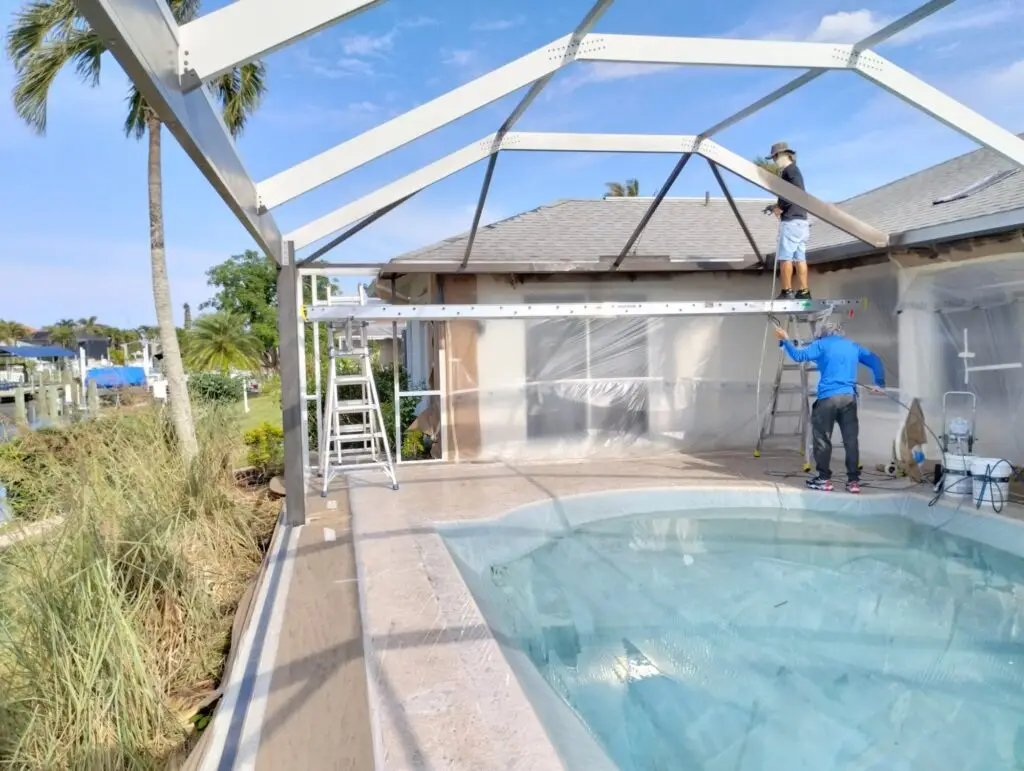
We start by pulling the old spline from each frame channel and removing the spent screen, checking the aluminum groove for corrosion or bent edges before fitting new material. Salt-tinged humidity off the river can pit older frames, so any channel that won’t hold a tight spline gets flagged before we move forward.
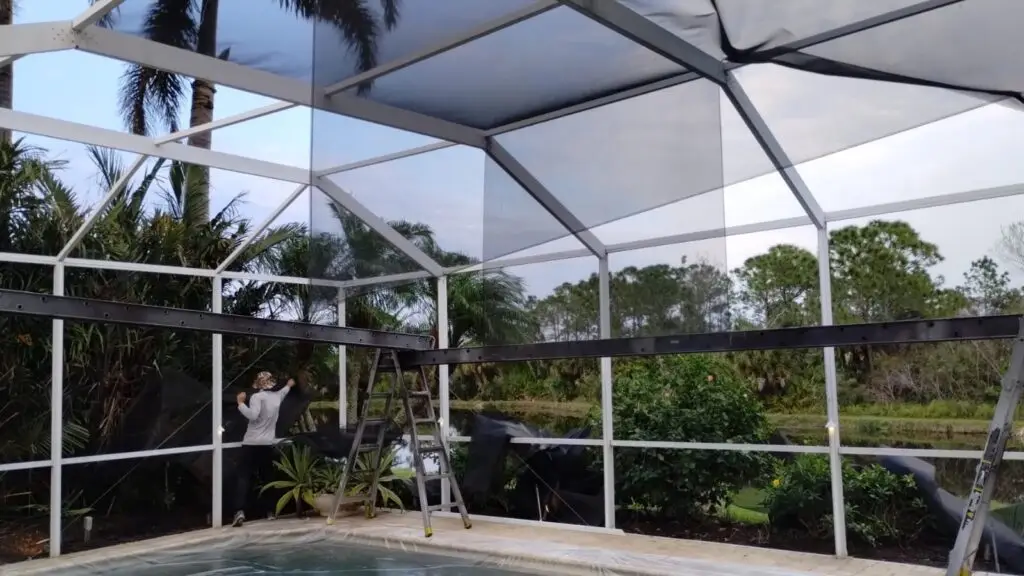
New screen is cut oversized, laid into the channel, and rolled in with fresh spline sized to the groove width, which varies slightly across older and newer cage frames. We work panel by panel rather than stripping the whole cage at once, so the structure stays enclosed and the pool stays reasonably protected through the job.
Once tensioned, excess screen is trimmed flush and corners are checked for pulled spline or loose fit, a common callback point if rushed. Doors, pet panels and lower kick panels are tensioned separately since they take more daily stress than roof panels and loosen faster over time.
- Spline and groove inspection before any new screen goes in
- Panel-by-panel replacement to limit open-cage time
- Mesh options including standard, pet, and no-see-um weave
- Door and high-traffic panel tensioning handled separately
- Trim and corner check after tensioning for a flush fit
Scheduling Around Acreage Lots and Weather
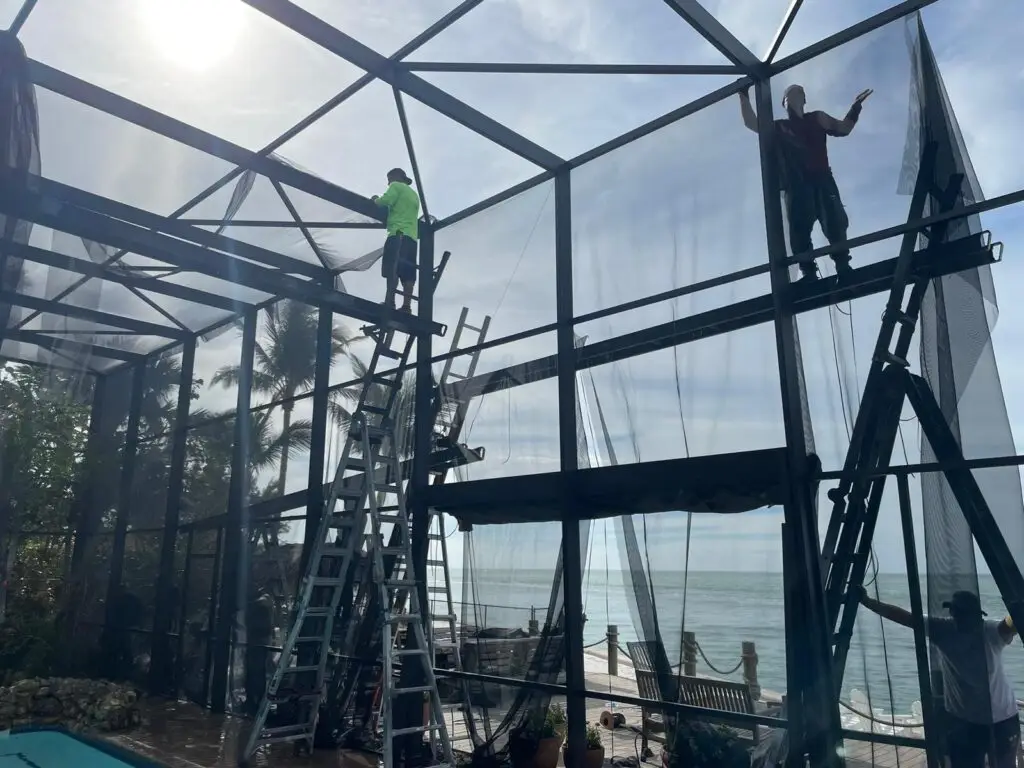
Many Alva properties sit on acreage along River Hall, County Line Road, or the older homesteads nearer the Caloosahatchee, with long driveways and cages set well back from the street. We plan each visit around that access, confirming gate codes, dog containment, and where equipment can stage without crossing landscaping or septic fields that many rural lots depend on.
Florida’s rescreening work is weather-dependent in a specific way: spline sets best when the screen and frame are dry, so afternoon thunderstorms common from June through September can push a job back a day. We build that into the schedule rather than rushing a panel install between downpours, which tends to loosen the spline within a season.
- Confirming driveway and gate access before the crew arrives
- Checking for pets or livestock near the work area
- Scheduling around summer storm patterns when possible
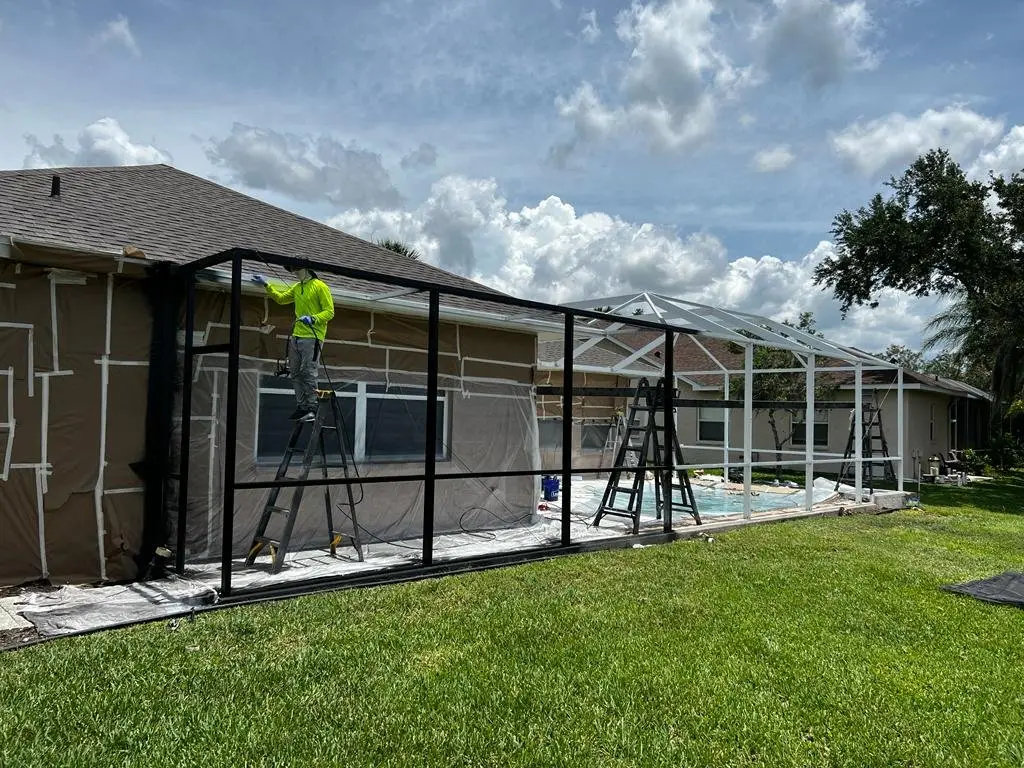
- Protecting pool decks and landscaping with drop cloths during panel removal
Why a Full Rescreen Beats Patch Repairs
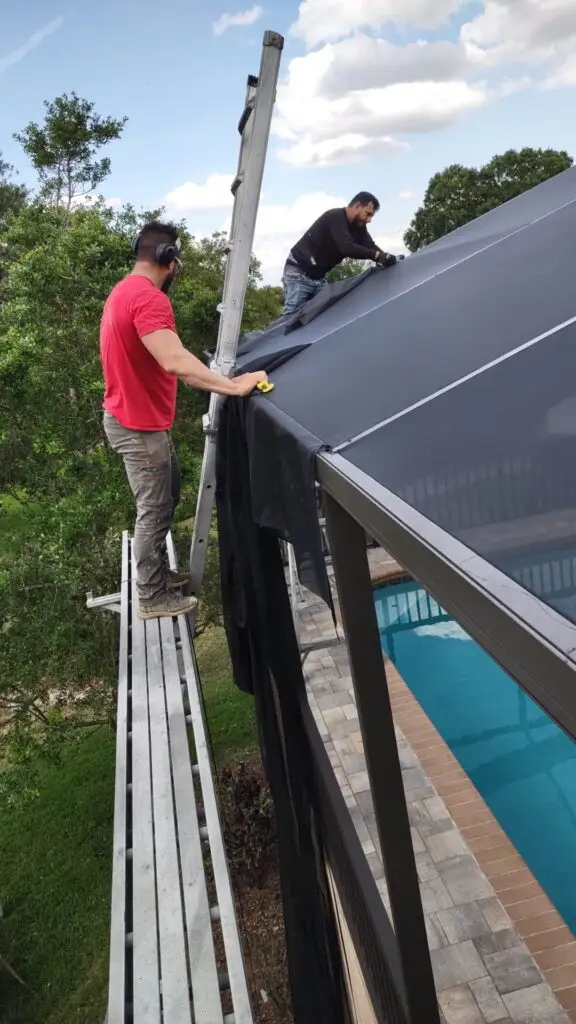
A homeowner often calls about one torn panel near a pool step or a corner lifted by wind. But if the cage was screened in one phase years ago, the rest of the mesh has absorbed the same UV exposure and is close to the same failure point, even where it still looks intact. Patching that single panel fixes the symptom, not the underlying age of the material.
We check screen brittleness across several panels before recommending anything. If the mesh snaps or crumbles at the edges when flexed, that is a sign the whole cage is due, not just the torn section. In that case, a full rescreen costs less in repeat callbacks than patching panel by panel over two or three years.
Process and Timeline
- Confirm property access, gate codes, and staging area during scheduling
- Inspect all panels and frame channels to flag brittle or already-failing mesh
- Remove old spline and screen material panel by panel
- Clean and inspect the aluminum groove for corrosion before installing new screen
- Install new mesh and spline, trimming and tensioning each panel
- Walk the cage with the homeowner to review the finished work
Most Alva rescreening projects take one to three days depending on cage size and how many panels need full replacement.
Alva Pool Cage Rescreening FAQ
How do I know if my Alva pool cage needs a full rescreen or just a few panels patched?
If the damage is a handful of isolated tears or pulled spline on screens that still hold their color and firmness, patching individual panels is usually enough. When most panels are brittle, chalky, or torn in multiple spots, or the mesh is more than one shade lighter than it used to be, a full rescreen makes more sense so the whole enclosure ages evenly from the same point forward. We point out which panels are borderline during the walkthrough so that decision is based on what we actually find on your cage, not a guess.
Does living near pasture or wooded land in Alva mean I need heavier screen mesh?
Properties backing up to pasture, groves, or wooded lots in Alva often deal with more airborne debris, pollen, and branch contact than homes in denser subdivisions, so a heavier gauge screen can hold up better over time. It is not required, but for cages near open land or tree lines we usually recommend stepping up from standard mesh so routine debris does not shorten the screen's life. We can show you a sample of the heavier option next to standard mesh so you can feel the difference before deciding.
How long does rescreening take on a larger Alva acreage lot?
Most standard pool cages are rescreened in one day, but larger enclosures common on Alva's bigger lots, including extended lanais or cages with multiple access doors, can take two to three days depending on panel count and height. Weather is also a factor, since screen work pauses during rain or high wind and resumes once conditions clear. We give you a realistic day range on the estimate itself once we have measured your specific enclosure.
Can you rescreen a cage without damaging existing landscaping or a pool deck?
Yes, screen removal and installation is done from inside the cage and along the frame, so plant beds, mature oaks, and pool decking around the enclosure are not disturbed during the work. We lay down protective covering on the deck and pool surface near the work area as a standard precaution, and ladders or lifts are positioned to avoid landscaping underneath the cage's edges. If you have a specific planting bed or paver pattern you want kept clear, let us know on the estimate so we can plan around it.
Do you offer no-see-um mesh, and is it worth it for Alva properties?
Yes, no-see-um mesh is available as an upgrade from standard screen and is a common request for Alva properties near canals, wooded lots, or low-lying areas where biting insects are more persistent. It blocks smaller insects than standard screen but reduces airflow slightly and can show more pollen buildup, so it is a tradeoff worth discussing based on where your cage sits. We can point out both mesh types side by side during the estimate so you can compare airflow and visibility before choosing.
Will rescreening fix a cage frame that has started to sag or pull loose?
Rescreening alone will not correct a frame that is sagging, bowed, or pulling away from its footers, since that is a structural issue separate from the screen itself. In those cases we address the frame, fasteners, or footer attachment first, then install new screen once the structure is sound, so the new mesh is not stretched over a frame that will keep moving. We flag any frame concerns during the initial walkthrough so you know what is involved before work begins.
Nearby Areas We Also Serve
Crews working in Alva also regularly serve nearby Lee County communities, so scheduling can often be coordinated with jobs already planned in the surrounding area. Fort Myers, Cape Coral, Bonita Springs, Estero, Lehigh Acres and North Fort Myers.
Statewide details, colors and the full process are on our main pool cage rescreening page.
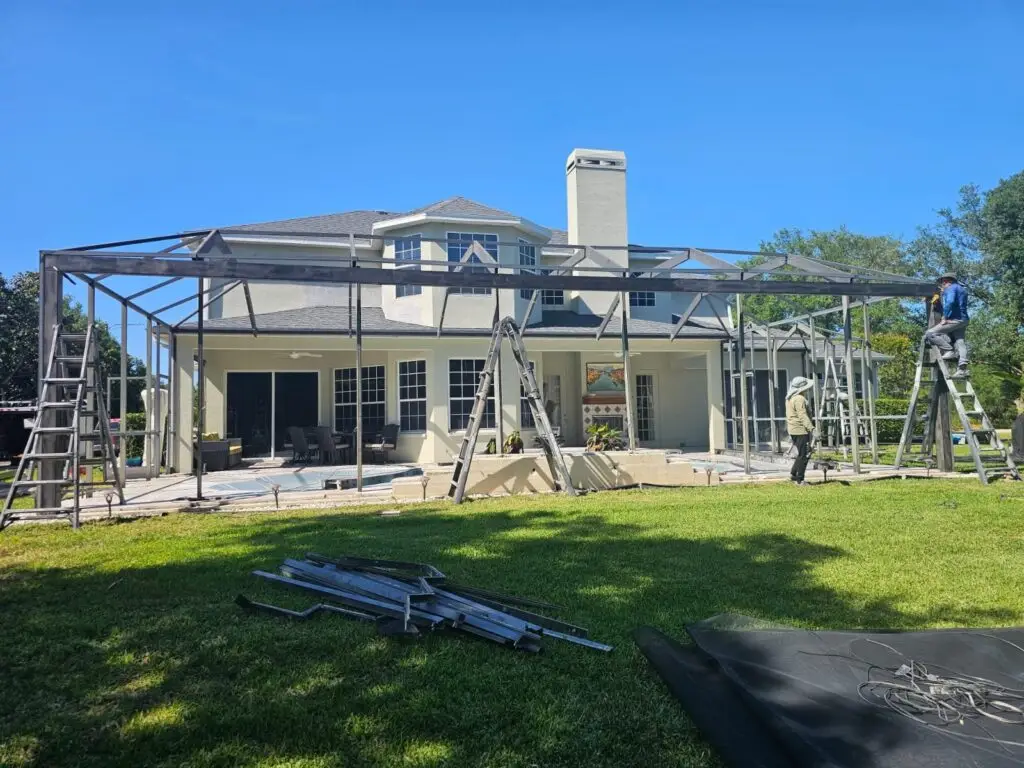
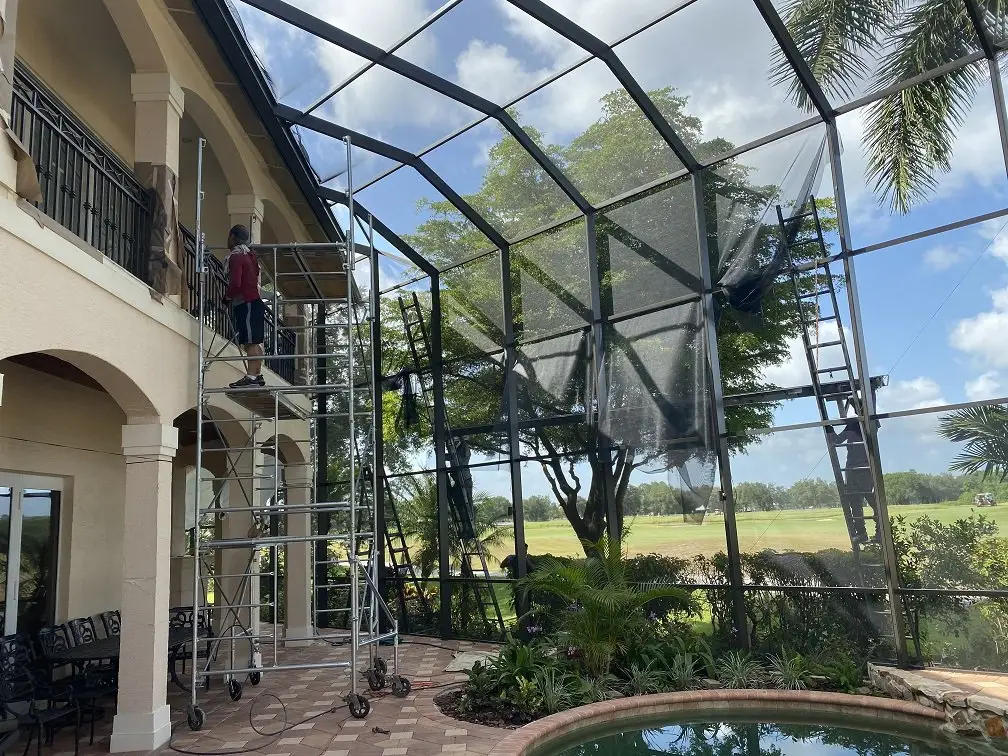
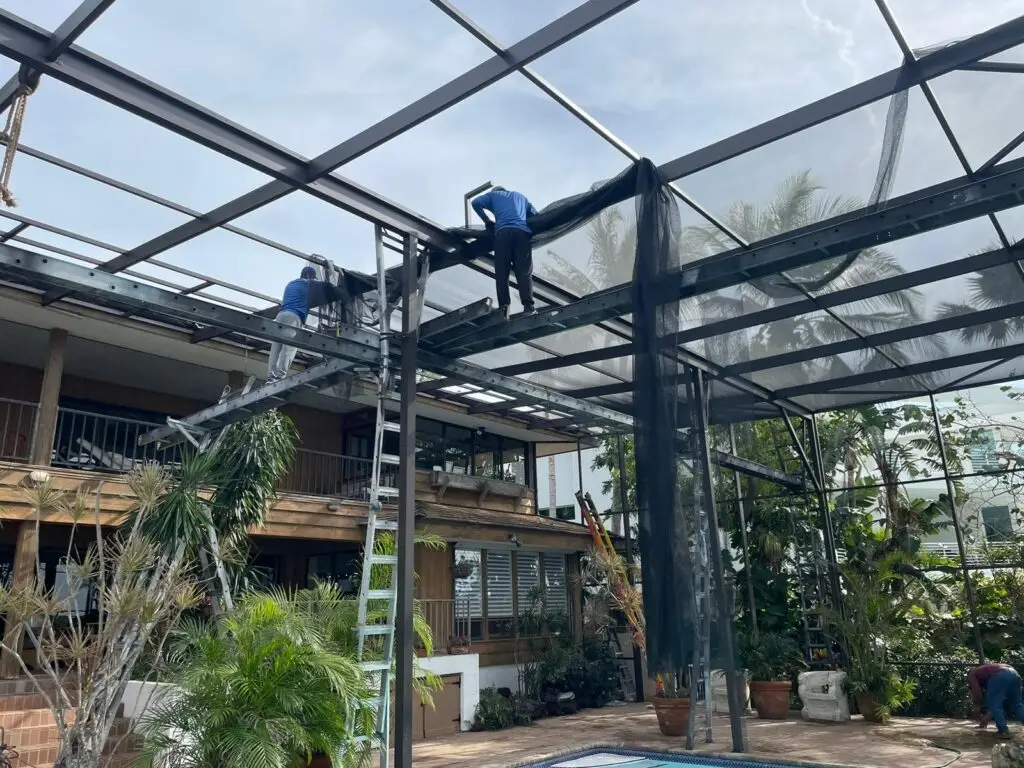
Recent Work
Request an Alva Estimate
Send a few photos of your pool cage along with your Alva address through the form below or a quick call to (844) 222-2115, and we will follow up with a written estimate based on what we see. There is no cost or obligation to request one.
Last reviewed: November 2, 2026