
Pool Cage Rescreening in Miami-Dade County, FL
ABC Pool Cage Painting rescreens damaged and sagging pool enclosures for homeowners throughout Miami-Dade County, from Hialeah to Homestead.
- Free Written Estimate
- Fast Scheduling
- Built for Florida Weather
- Licensed & Insured
- Free Written Estimates
Request Your Free Estimate
Request a free written rescreening estimate for your pool cage.
- Free No-Obligation Estimate
- Fast Response Times
- No Pressure Consultation
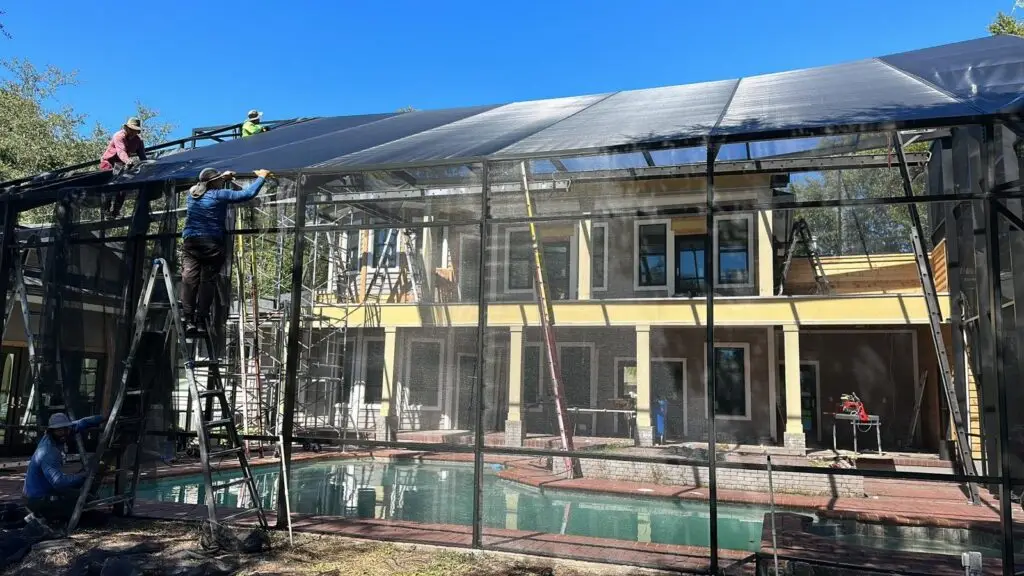
Miami-Dade County stretches from the Miami Beach shoreline to the farmland edges of Homestead, covering roughly 2,333,000 residents across communities like Doral, Kendall, and North Miami. Screen enclosures here face year-round UV exposure, salt-laden air near the coast, and the kind of wind-driven summer storms that loosen spline and stretch screen fabric faster than in most of the country.
A cage in Fontainebleau or The Hammocks may look intact from the pool deck while individual panels have already pulled loose at the spline track. ABC Pool Cage Painting rescreens panels, rebuilds torn sections, and matches screen density to how a household actually uses its lanai, scheduling crews in routes across the county rather than keeping a local office in any one city.
Sun, Salt, and Storm Exposure by Area
A cage in Miami Beach or North Miami sits closer to salt spray carried inland off Biscayne Bay and the Atlantic. That salt settles on screen mesh and aluminum fasteners, and over time it accelerates corrosion at the spline track and pits screws long before the fabric itself gives out. Rescreening in these areas often means checking hardware condition as closely as the screen.
Further inland, in Kendall, The Hammocks, and Homestead, salt is less of a factor but UV load and heat are constant. Screens here tend to go brittle and lose tension from sun exposure rather than corrosion, and panels facing west or south across an open yard typically wear faster than shaded ones.
Doral and Fontainebleau fall somewhere in between, with enough distance from the coast to reduce salt damage but still enough summer storm activity to stress screen edges and spline during wind-driven rain. Across the county, we look at orientation and proximity to water before recommending a mesh type or rescreen schedule.
How We Rescreen a Pool Cage
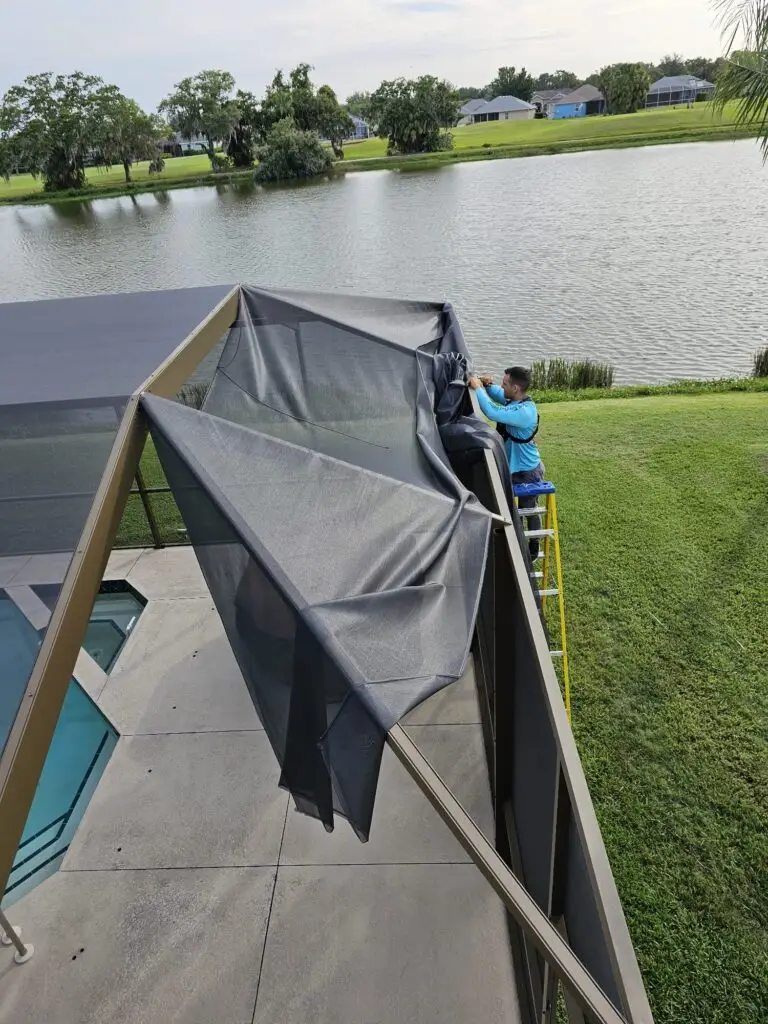
Rescreening starts with a panel-by-panel inspection, checking each frame for bent members, loose fasteners, or corrosion before any screen comes out. Old spline is removed along with the damaged fabric, and the track is cleaned so the new spline seats properly. Frames that are bowed or badly corroded get flagged separately, since screen will not hold tension on a compromised panel.
Once the frames are confirmed sound, we cut new screen to size for each opening, allowing enough overlap to pull it taut without stressing the track. Mesh choice depends on what the homeowner wants from the enclosure, standard fiberglass for general use, pet-resistant mesh for cages with dogs, or clear vinyl in lower panels where an unobstructed water view matters.
New spline is rolled into the track to lock the screen in place, then trimmed clean along each edge. We check tension across the full panel before moving to the next one, since uneven pulling is one of the more common reasons rescreened panels sag within the first year.
- Inspect frames and spline track for damage before removal
- Strip old screen and clean the spline channel
- Cut and fit new mesh panel by panel
- Roll new spline to set tension evenly
- Trim and inspect each completed panel
Scheduling, Access, and HOA Approval
Most rescreening jobs in Miami-Dade are scheduled around pool and gate access rather than the work itself, which rarely takes more than a day or two per cage. Crews routing through Doral, Kendall, and The Hammocks on a given week plan stops so homeowners know roughly when to expect arrival, since many of these communities have single-entry gates or guard logs that need advance notice.
Condo associations and gated subdivisions across the county often specify mesh color, pattern, or even a minimum screen grade in their governing documents. In parts of Doral and Kendall, boards may require a sample or product sheet before approving the job, which is why we ask homeowners early whether their community has written screen specifications on file.
Pets and pool covers are the other common scheduling factor. We confirm before the crew arrives whether pool access needs to stay restricted during the day and whether furniture or planters near the panels need to be moved first.
- Provide gate codes or HOA contact info ahead of the scheduled date
- Check community documents for approved mesh color or pattern
- Clear pool furniture and plants from the work area beforehand
- Ask about guard-gated access rules if the community requires visitor logs
Why Panels Fail Early and What Gets Missed
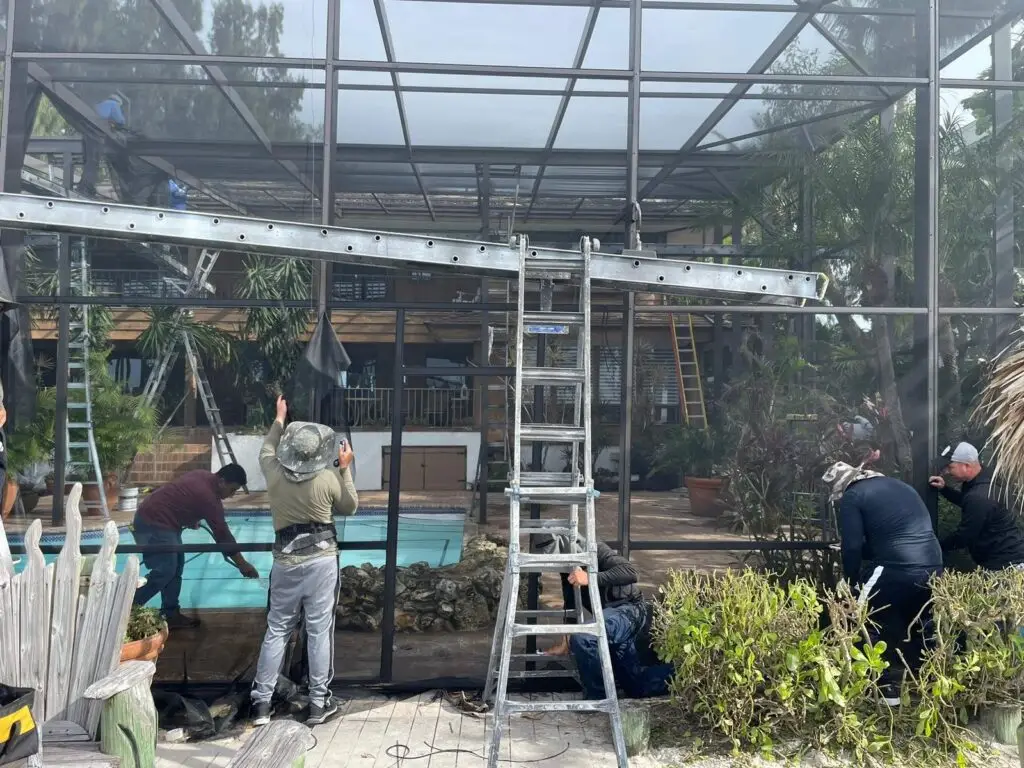
The most common reason a fresh rescreen job doesn’t last is that the frame problems underneath were never addressed. Corroded screws, bent spline channels, or a frame member that’s already pulling away from the footer will stress new screen the same way it stressed the old screen, often within a year or two.
Mesh mismatch is another frequent issue, particularly on cages that have been patched over time. Mixing fiberglass and aluminum or polyester screen on the same structure creates uneven tension and visibly different panels, and it can also affect how well the screen holds up to the county’s wind-driven rain.
A rushed estimate that skips the frame inspection is usually the first sign of a job that won’t hold. We check fastener condition and frame alignment on every panel before quoting new screen, not after problems show up.
- Corroded or stripped screws that won’t hold a spline properly
- Bent or misaligned frame members from storm wind or age
- Mixed mesh types or gauges from earlier patch jobs
- Spline channels worn out from repeated rescreening over the years
Process and Timeline
- Schedule a free written estimate and walk the cage panel by panel with the homeowner.
- Note frame corrosion, loose fasteners, or bent members that need repair before rescreening.
- Confirm mesh type, color, and any HOA or condo association specifications on file.
- Remove old screen and spline, then clean and inspect each frame channel.
- Install new screen and spline panel by panel, checking tension and fit as we go.
- Walk the finished cage with the homeowner to confirm access points and pool area are clear.
Most rescreening projects in Miami-Dade County are completed in one to three days depending on cage size and the number of panels needing frame repair.
Communities We Serve in Miami-Dade County
Pool Cage Rescreening throughout Miami-Dade County, including Miami, Hialeah, Miami Gardens, Miami Beach, Homestead, Kendall, Doral, North Miami, Fontainebleau, The Hammocks, Westchester, Kendale Lakes, Tamiami, Coral Gables, Cutler Bay, North Miami Beach, Aventura, South Miami Heights, Richmond West, West Little River, Golden Glades, Miami Lakes, Leisure City, Ives Estates, Palmetto Bay, The Crossings, Coral Terrace, Hialeah Gardens, Sunny Isles Beach, Glenvar Heights, Ojus, Sweetwater, Pinecrest, Pinewood, Country Walk, Brownsville, Three Lakes, Opa-locka, Gladeview, Key Biscayne, Miami Springs, Naranja, Palmetto Estates, Florida City, Olympia Heights, South Miami, Miami Shores, Goulds, Westwood Lakes, West Perrine, Westview, Richmond Heights, North Bay Village, West Miami, Bay Harbor Islands, Surfside, Biscayne Park, Bal Harbour, Virginia Gardens, El Portal, Medley, Golden Beach, Fisher Island, Indian Creek, Ochopee, Redland.
Miami-Dade County Pool Cage Rescreening FAQ
How long does pool cage rescreening take for an average lanai in Miami-Dade County?
Most single-family lanais take one to two days once the crew is on site, depending on panel count and whether frame repairs are needed. Larger pool cages or screened entries with multiple doors in communities like The Hammocks or Kendall can run closer to three days.
What screen mesh options work best for keeping out no-see-ums near the coast?
A smaller-mesh no-see-um screen is the standard upgrade for properties near Miami Beach or other coastal pockets of the county, since standard pool screen leaves gaps wide enough for the insects to pass through. It does reduce airflow and visibility slightly, which is worth weighing against your typical use of the pool area.
Can you match my HOA's approved screen color or specification in communities like Doral?
Yes, most gated communities and HOAs in Doral and similar developments specify an approved screen color or mesh type, and we can work from that document or the community's architectural guidelines. If you do not have a copy, we can usually help you identify what is required before ordering material.
Do you replace only the torn panels or rescreen the whole cage at once?
Both approaches are common. Spot-replacing a few torn panels is reasonable if the rest of the screen is still in good condition, but if the mesh is uniformly brittle or discolored from age and sun exposure, rescreening the full cage at once gives a more even result and avoids repeat trips.
Will my pool stay usable and covered during the rescreening work?
The pool itself typically stays usable throughout the job since work happens on the frame and screen panels around it, not in the water. There will be short stretches where panels are open while old screen is removed and new material is fitted, so we schedule around expected weather to limit how long any section sits uncovered.
How does salt air near Miami Beach or Hialeah affect how often screens need replacing?
Salt-laden air accelerates both screen brittleness and corrosion at the fasteners and frame joints, so cages within a few miles of the coast generally need rescreening sooner than those further inland. Regular rinsing of the screen and frame helps slow this, but it does not eliminate the effect.
More Pool Cage Services in Miami-Dade County
Beyond rescreening, the same crews handle pool cage painting for homeowners throughout Miami-Dade County. Pool Cage Painting.
Nearby Areas We Also Serve
Crews routing through Miami-Dade County also cover the surrounding communities and unincorporated areas nearby. Palm Beach County.
Statewide details, colors and the full process are on our main pool cage rescreening page.
Recent Work
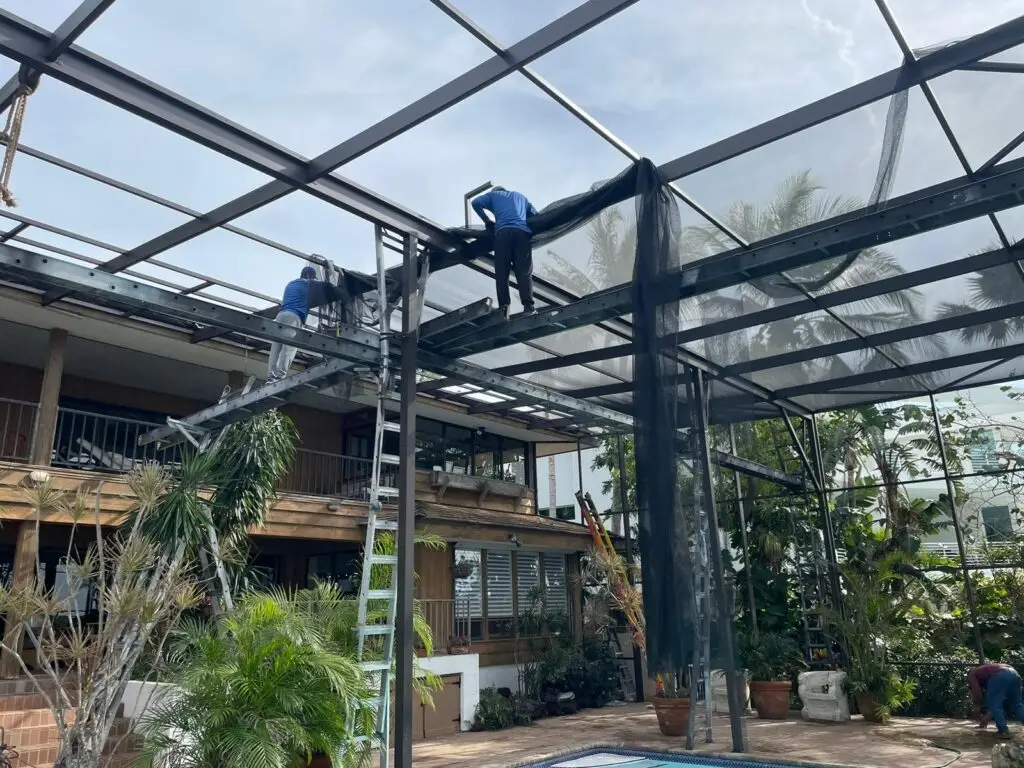
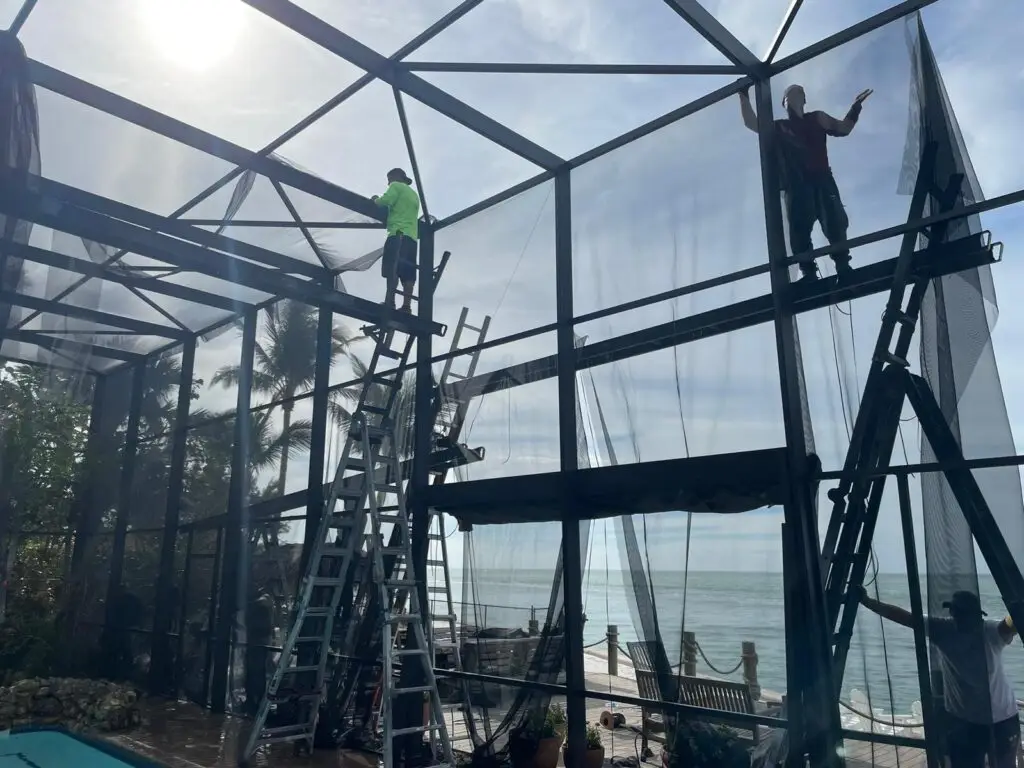
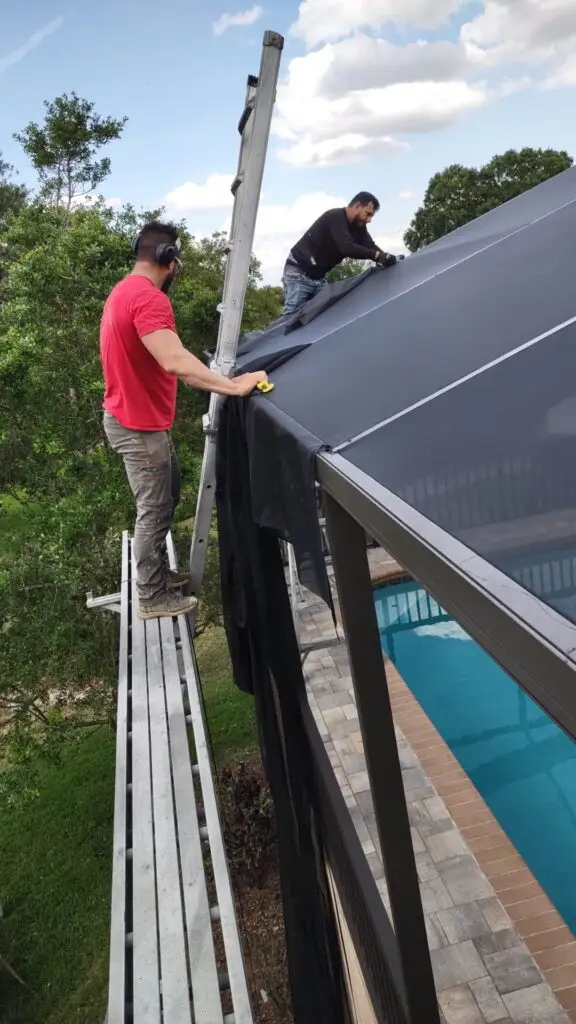
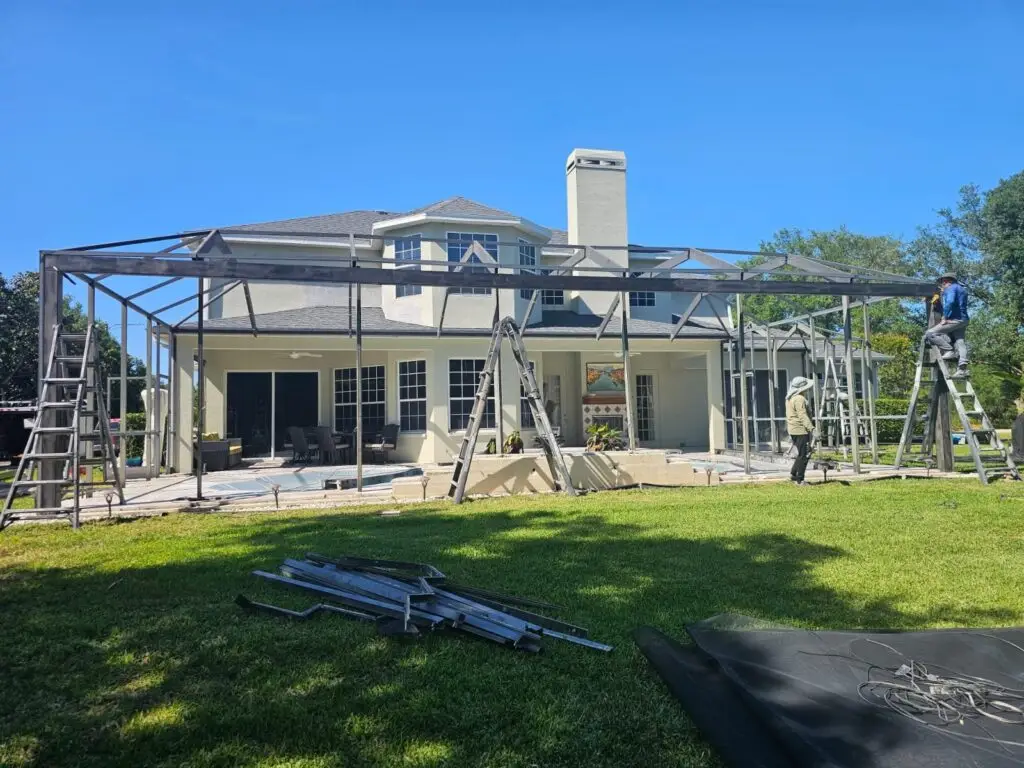
Request a Miami-Dade County Estimate
Send a few photos of your pool cage along with the property address in Miami-Dade County, and we will review the screen condition, frame, and any HOA requirements before responding. You will receive a written estimate with no obligation, and you can also call (844) 222-2115 if you would rather talk through the project first.
Last reviewed: October 27, 2026