
Screened In Porch Ideas for Florida Pool Cages
Thinking through screened in porch ideas for a Bradenton home means weighing your existing pool cage, HOA rules, and Florida sun and salt air together.
Get a Free Estimate Today With ABC Pool Cage Painting!
Request a free written estimate to see which screened in porch ideas fit your pool cage.
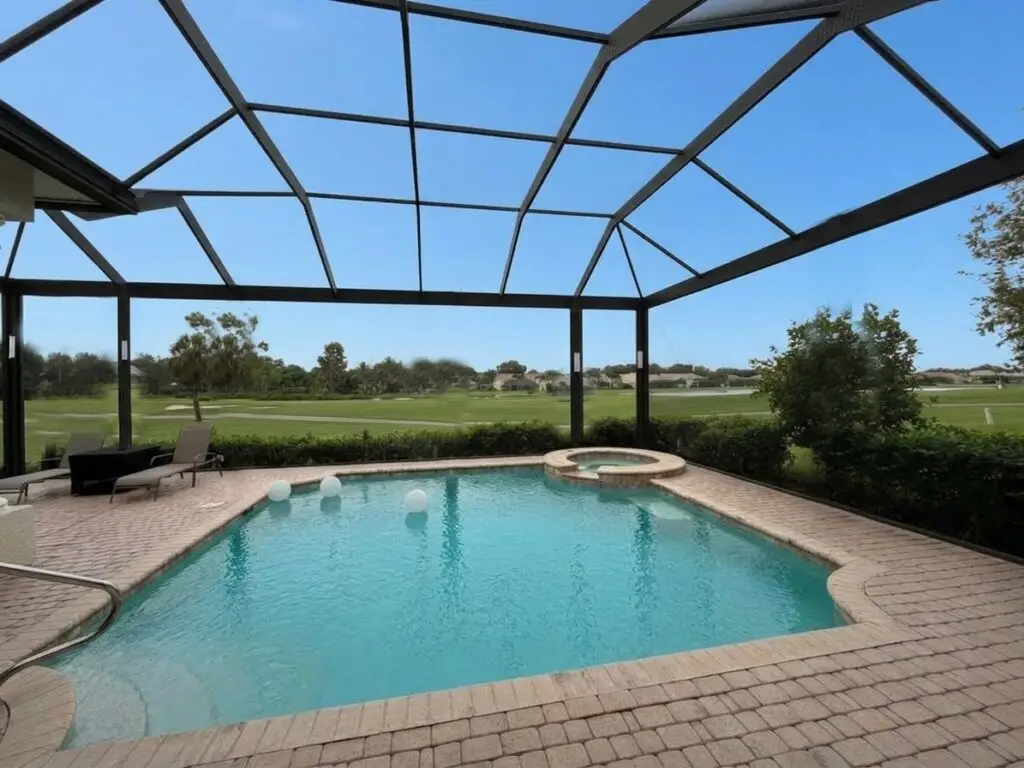
The best screened in porch ideas for Florida homes start with what you already have: an aluminum pool cage, patio enclosure, or screened in patio that can be repainted, rescreened, or reconfigured rather than torn out. Most Bradenton homeowners get further updating the existing structure than building something new.
What actually works depends on your cage’s current frame condition, the screen density you need for sun and bugs, any HOA or community color restrictions, and whether you want an open screen room feel or a more enclosed sunroom addition. A free written estimate is the fastest way to see what applies to your specific enclosure.
What Shapes Your Screened Porch Options
The age and frame material of your pool cage set the starting point. Older aluminum frames from the 1990s and early 2000s were often built with thinner gauge aluminum than cages installed in the last ten years, which affects how much weight new screen panels or a heavier tint can carry without re-bracing. A contractor should check fastener corrosion and panel flex before recommending any upgrade.
Roof style matters as much as frame condition. Dome and flat-roof cages shed rain and debris differently, which changes how screen tears develop over time and where repainting tends to chip first, usually along ridge seams and gutter lines. Sun exposure direction also plays in: south- and west-facing panels in Bradenton take the most UV load and fade or weaken faster than north-facing sections.
Many Bradenton communities, including deed-restricted neighborhoods near Lakewood Ranch and University Park, maintain approved color charts for pool enclosures and patio screen structures. Before any repaint or rescreen, it is worth pulling your HOA’s exterior modification guidelines, since approved colors are often limited to a handful of bronze, white, or sandstone shades.
- Frame gauge and fastener condition set load limits for new screens
- Dome vs. flat roofs wear differently at seams and gutters
- South/west-facing panels face the heaviest UV exposure
- HOA color charts often restrict repaint choices to a few approved shades
Screens, Color, and Layout Changes
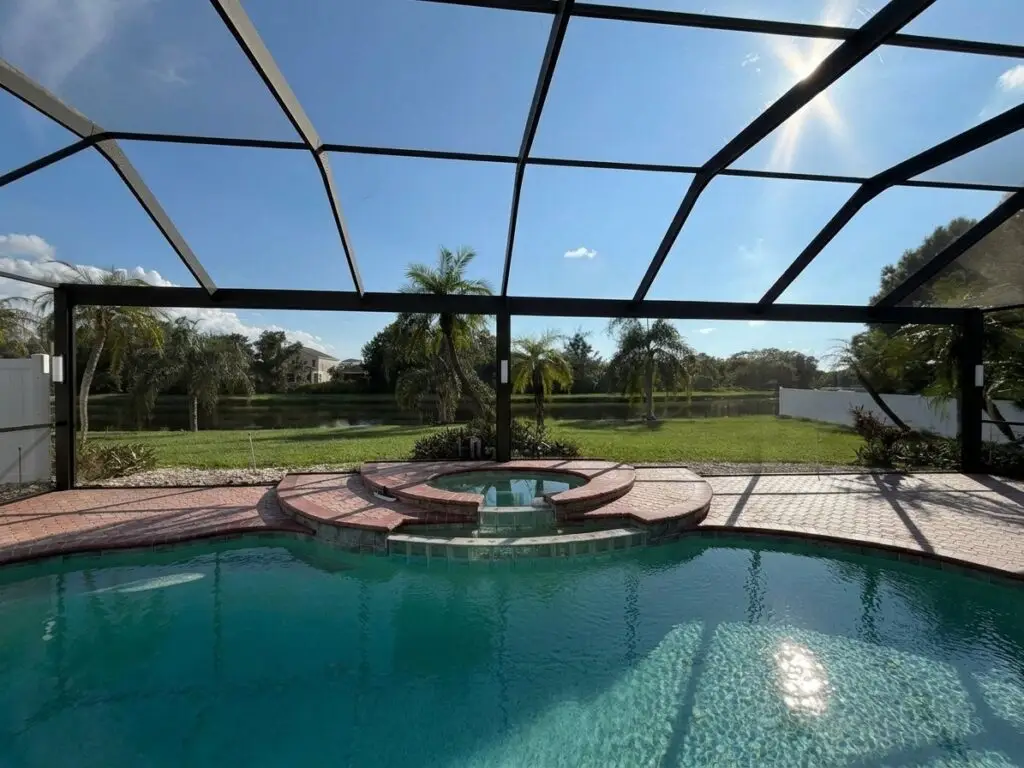
Standard 18×14 fiberglass screen is the most common choice for pool cages, but homeowners wanting more shade or privacy can step up to solar screen mesh, which blocks a higher percentage of direct sun and reduces glare on the pool deck. Heavier mesh does add some wind load, so a contractor should confirm the frame can handle it, particularly on older cages near open water or canal lots.
Repainting the aluminum frame in an HOA-approved color is one of the more cost-effective ways to refresh a screen room without replacing structural components, provided the existing aluminum is not pitted or oxidized beyond what a primer coat can seal. Pass-through doors added near the lanai or pool equipment pad are a common functional upgrade, giving direct access without walking around the full enclosure.
Some homeowners convert a section of their screen room into a more enclosed patio enclosure by adding vinyl panels or acrylic windows between existing aluminum posts, which extends usable time during cooler months without a full sunroom addition. This partial conversion keeps the original footprint and frame, so it typically does not trigger the same permitting review as new construction.
Common Mistakes When Planning Updates
Choosing a cage color before checking HOA or deed restrictions is one of the most common missteps we see around Bradenton. Many communities limit finish colors to approved shades of white, bronze, or beige. Confirming this first avoids repainting a cage that technically meets code but not the association’s palette.
Screen density is another area homeowners underestimate. Standard screen suits most pool enclosures, but homes near wooded lots or canals may want a heavier or pet-resistant mesh. Thinking only about shade or bugs, without factoring in storm debris or claws, often leads to a second rescreening sooner than expected.
Painting over corroded or pitted aluminum without addressing the corrosion first is a mistake that shows up within a year or two. Paint adheres poorly to active oxidation, and Florida’s humidity accelerates cure times, so rushing a second coat before the first has fully set can trap moisture and cause peeling.
- Verify HOA-approved frame and screen colors before ordering paint
- Match screen gauge to local debris, pets, and privacy needs
- Treat corrosion spots before any primer goes on
- Allow enough dry time between coats, especially in summer humidity
DIY Touch-Ups vs. Calling a Pro
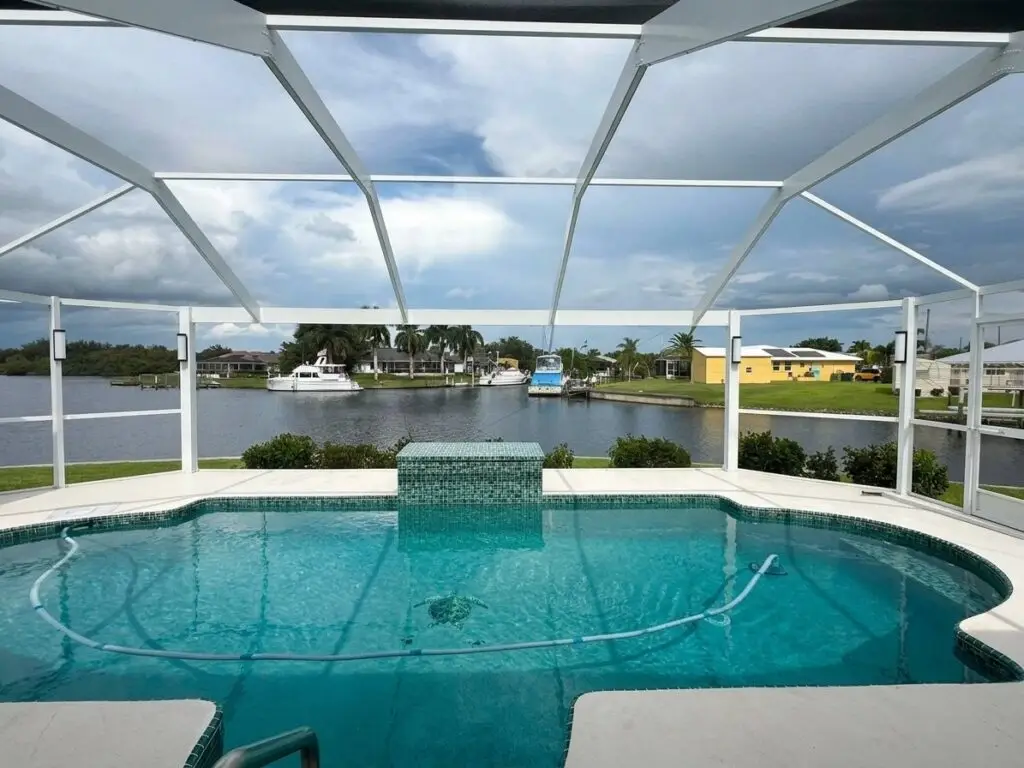
A handy homeowner can reasonably handle small jobs: patching a single torn screen panel, hosing down pollen and algae film, or re-tightening a loose spline on a door. These tasks don’t require special equipment and won’t affect the cage’s structural integrity if done carefully.
Full rescreening, frame straightening, or painting an entire enclosure is a different scope of work. Surface prep for paint involves pressure washing, sanding glossy or chalking areas, and spot-priming bare metal, steps that are easy to shortcut without the right products or experience. Skipping them shows up later as uneven color or early peeling.
Structural issues, bent panels, pulled fasteners, or frames that have shifted after a storm, call for a professional assessment regardless of how small the damage looks. A cage that’s out of square can stress new screen within months, so it’s worth having someone check alignment before investing in a cosmetic refresh.
How the work is done, step by step
- Initial walkthrough to assess frame condition, screen type, and any corrosion or structural issues
- Pressure washing the entire cage to remove salt residue, algae, and chalking paint
- Sanding and spot-priming bare or corroded aluminum before full painting begins
- Applying primer and topcoat in controlled weather windows to allow proper cure time
- Removing and replacing damaged screen panels with the agreed mesh type and color
- Final walkthrough to check fasteners, door alignment, and overall finish
Most Bradenton pool cage painting and rescreening projects run between three days and two weeks, depending on cage size, weather, and whether frame repairs are needed.
Frequently asked questions
Can I repaint my pool cage a different color if my HOA has restrictions?
Most HOAs in the Bradenton area approve a limited palette of bronze, white, and similar neutral tones for pool enclosures and patio screen enclosures, so we check your community guidelines before writing an estimate. If your HOA requires a color submission or sample, we can provide swatches to include with your application.
What screen density is best for Florida sun and bugs?
Standard 18x14 fiberglass screen handles everyday bug protection for a screened in porch or lanai, while a tighter weave, like a no-see-um mesh, cuts down on smaller insects but reduces airflow slightly. For stronger sun and UV blocking in a screen room or sunroom addition, a solar screen mesh is worth discussing during your estimate.
How long does it take to rescreen or repaint an existing pool cage?
A typical pool enclosure rescreen takes one to three days depending on size and panel count, while painting usually runs two to five days to allow for cleaning, priming, and cure time between coats. Weather, humidity, and access around landscaping can extend either timeline.
Can a screen room be converted into a more enclosed sunroom?
Yes, many screen rooms and pool enclosures can be upgraded with vinyl panels, acrylic windows, or other enclosure options to create a more usable sunroom for cooler months or rainy days. The existing aluminum frame is evaluated first to confirm it can support the added panels.
Will salt air near Bradenton affect how often I need to repaint or rescreen?
Properties closer to the coast, including areas toward Sarasota and Venice, tend to see faster oxidation and screen fatigue from salt exposure compared to inland homes. Regular rinsing of the frame and screens helps slow this process between service visits.
Do I need a permit to change screens or paint my patio enclosure?
Rescreening an existing patio screen enclosure or repainting the aluminum frame generally does not require a permit in Manatee County, since the structure itself is not being altered. Permits typically come into play only if the frame is being rebuilt or structurally modified.
Nearby Areas We Also Serve
ABC Pool Cage Painting serves homeowners throughout the greater Bradenton area and the surrounding Gulf Coast communities. Bradenton, Tampa, Sarasota, Naples, Fort Myers and Cape Coral.
Statewide details, colors and the full process are on our main pool cage painting page.
Recent Work
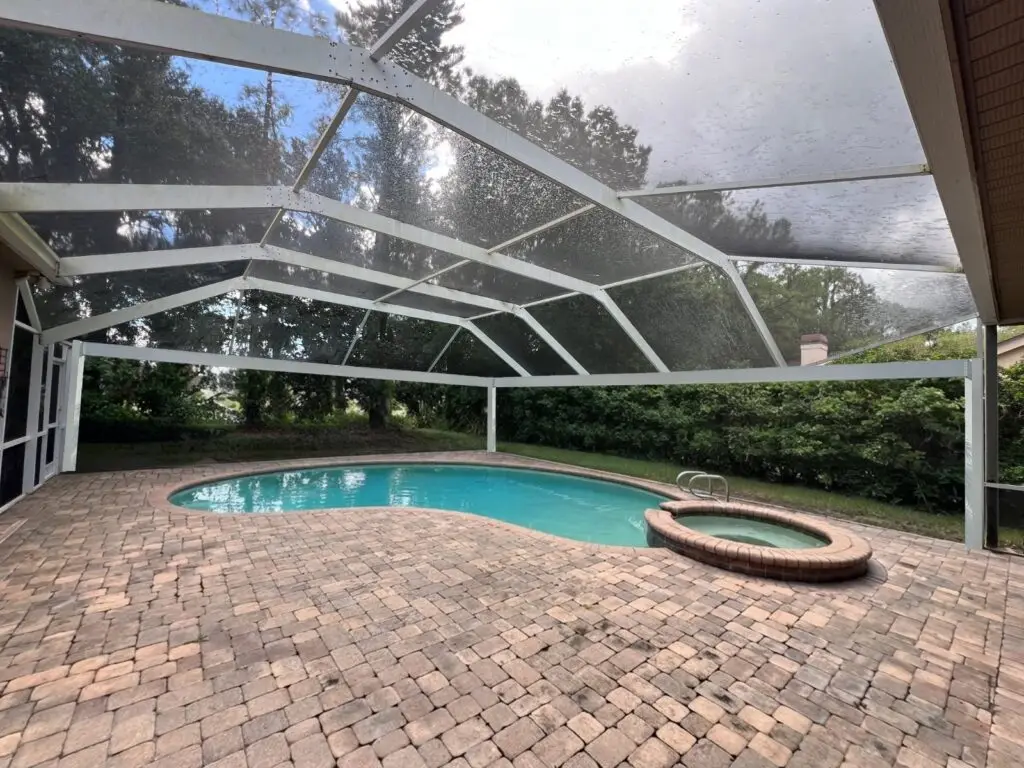
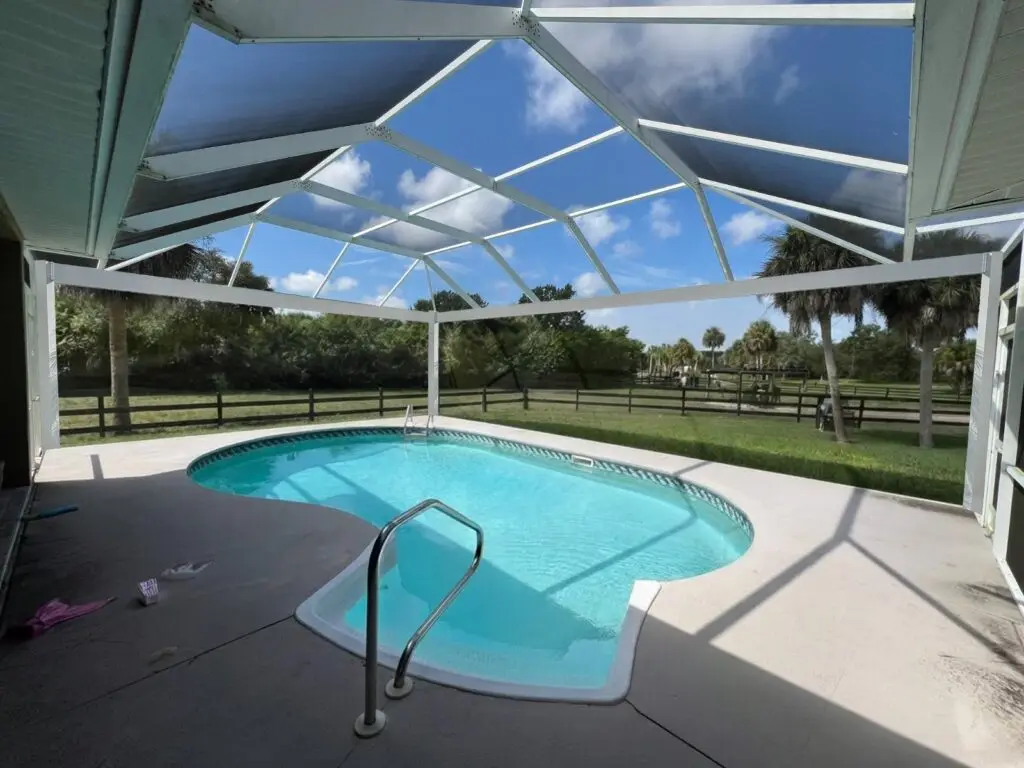
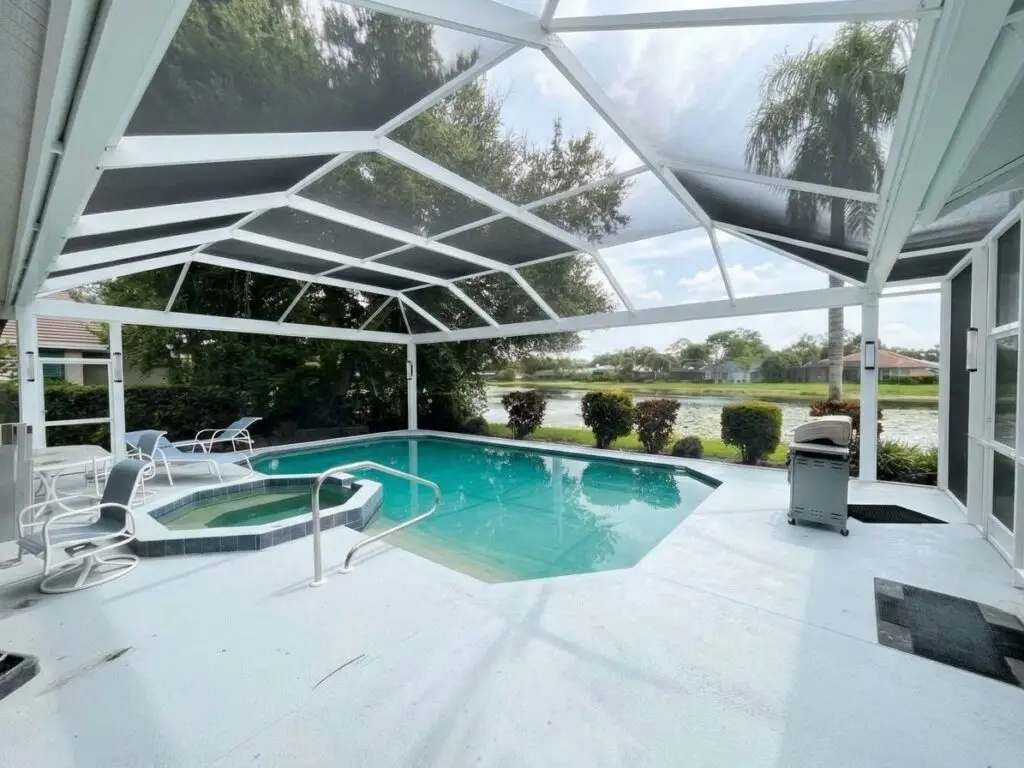
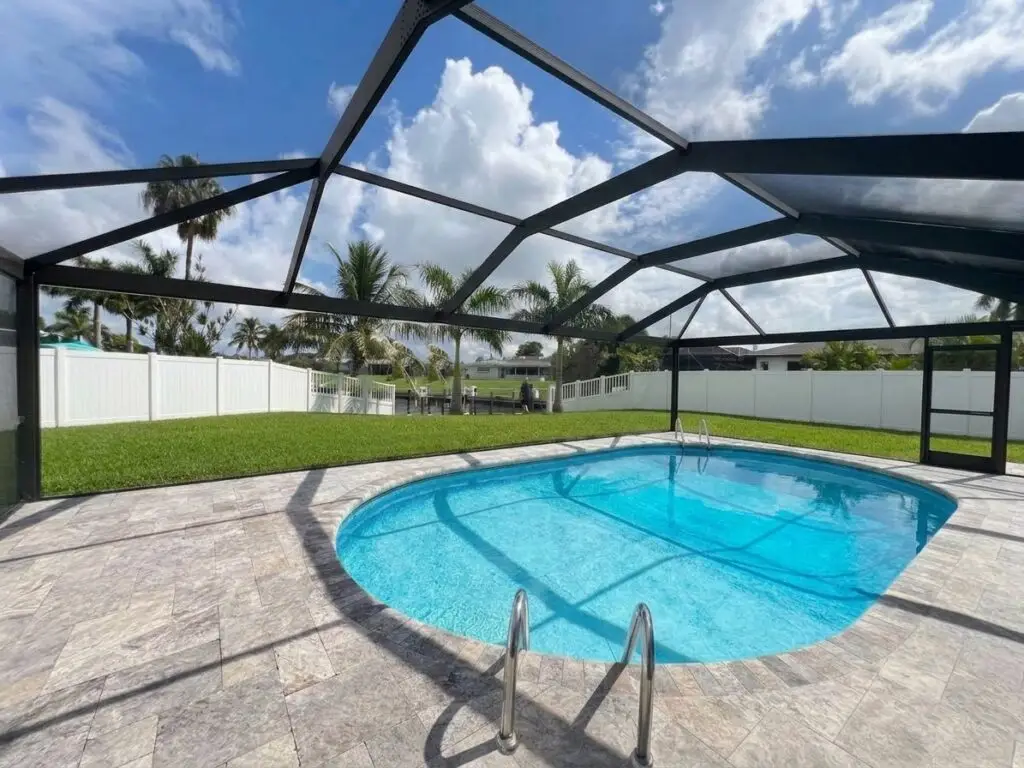
Get a written estimate for your pool cage
Send a few photos of your pool cage or patio enclosure along with your property address, and we will reply with a written estimate based on the size, condition, and screen or paint work needed. The estimate is free, with no obligation, and you can reach us at (844) 222-2115 if you prefer to talk through the details first.
Last reviewed: October 17, 2026